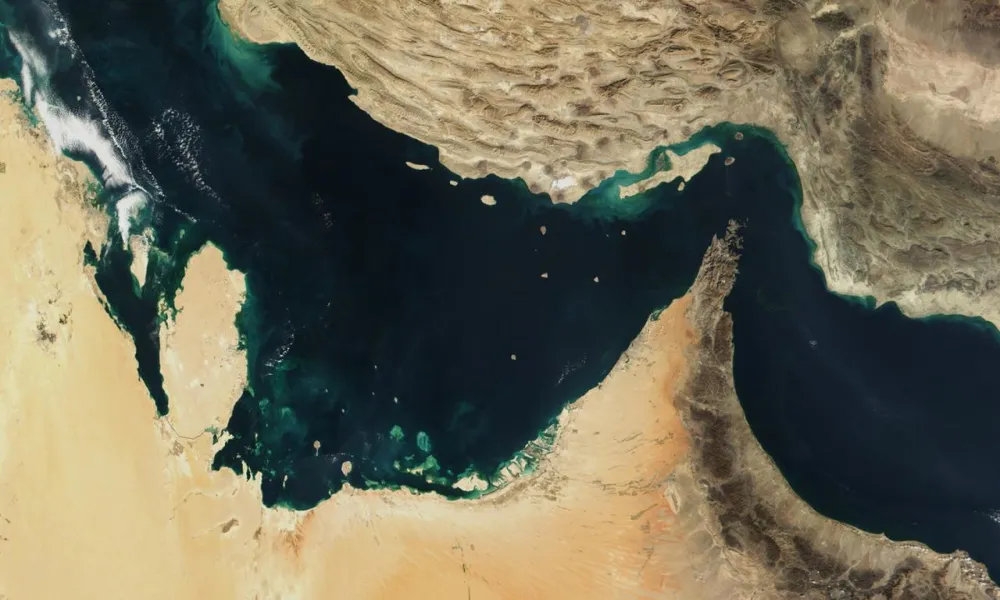

US President Donald Trump has called on allied countries to deploy naval forces to the Strait of Hormuz, urging them to help secure one of the world’s most important energy routes as the war involving the United States, Israel and Iran enters its third week.
In a post on Truth Social, Trump urged countries that rely on crude oil shipments passing through the strait to send warships to guarantee “the security of the passage”, promising American support for any deployment.
“I hope China, France, Japan, South Korea, Britain and others will send ships to the region,” he wrote, adding that “many countries” had already made commitments, without providing further details.
The US president reiterated that the American military had “defeated and decimated Iran, militarily and economically”. He also said the US Navy would “very soon” begin escorting oil tankers transiting the strait.
Speaking in a phone interview with NBC News, Trump also raised the possibility of additional strikes on Kharg Island, Iran’s main oil export terminal. He said US forces “might hit it a few more times for fun”, despite previously claiming that earlier bombardments had already “completely destroyed” the facility.
Iran’s Fars news agency, however, reported that the island’s oil infrastructure had not been damaged by the approximately 15 explosions heard there on Saturday.
Trump warned that Iranian energy facilities could become targets if freedom of navigation through the Strait of Hormuz is not restored. Under normal conditions, around 20 percent of the world’s hydrocarbons pass through the narrow waterway.
According to Reuters, the Trump administration has already rejected initiatives aimed at launching peace negotiations, with the president saying the conditions “are not good enough yet”.
Regional attacks continue
The escalation comes as the conflict continues to spread across the region.
In Israel, the health ministry said 108 people had been taken to hospitals over the past 24 hours due to the ongoing conflict with Iran, according to The Times of Israel. Some of the injuries may have occurred while civilians were attempting to reach shelters rather than from direct missile strikes.
Since the start of the war on 28 February, a total of 3,195 people have been hospitalised in Israel, with 81 still receiving treatment.
In Saudi Arabia, the defence ministry said four drones were detected and intercepted over Riyadh. Since the start of the war, the kingdom has been targeted by waves of Iranian drones and missiles aimed at energy infrastructure, US interests, military facilities and urban areas. Saudi authorities say at least two people have been killed and 12 injured in the attacks.
Iranian media also reported that residential areas in Shiraz, the capital of Fars province in southern Iran, were struck by US and Israeli attacks. According to the Tasnim news agency, several homes were completely destroyed and residents suffered significant economic losses.
Gulf States targeted in new wave of strikes
A new wave of Iranian attacks struck Gulf states overnight, further widening the geographical scope of the conflict.
Saudi Arabia said it intercepted and destroyed ten drones over Riyadh and eastern regions of the kingdom. Iran’s Revolutionary Guards, meanwhile, said they had launched missiles at US forces stationed at Prince Sultan Air Base near Riyadh.
In Bahrain, powerful explosions were heard overnight in the capital Manama, according to journalists from Agence France-Presse. Authorities say they have intercepted 125 missiles and 203 drones since the start of the war, reporting two fatalities.
In Kuwait, multiple drones struck the capital’s international airport, damaging the radar surveillance system, according to the country’s civil aviation authority. No injuries were reported.
In Iraq’s Kurdistan region, a drone strike forced the suspension of operations at the Lanaz refinery west of Erbil after a fire broke out at the facility. Officials from the region’s ministry of natural resources told Reuters that operations would remain halted until the damage is assessed.
Meanwhile, the US embassy in Baghdad issued an urgent advisory calling on American citizens to leave Iraq immediately after the embassy compound was targeted in a rocket attack overnight. The embassy warned of a serious threat from “terrorist militia groups linked to Iran”.
Lebanon front remains active
Israel also launched new strikes early Sunday on the southern suburbs of Beirut.
Lebanon was drawn into the war on 2 March after Hezbollah opened fire on Israel, saying it was retaliating for the killing of Iran’s supreme leader. Israel responded with a large-scale bombing campaign that has killed more than 800 people in Lebanon and displaced over 800,000, according to Lebanese authorities.
Against this backdrop, Israel and Lebanon may hold direct talks in the coming days, according to a report by the Israeli newspaper Haaretz. Lebanese officials said Beirut is forming a delegation, though no date has been set and the government wants clarity on a full ceasefire before negotiations begin.
There has been no immediate comment from the Israeli government on the report.