Iranian forces launched a new wave of missile attacks on Israel in the early hours of Tuesday, targeting areas including Tel Aviv and Jerusalem, according to state broadcaster IRIB. Explosions were reported in Jerusalem following repeated alerts from the Israeli military. Air defence systems were activated across multiple regions, with interceptions underway. In Tel Aviv, six people were reported lightly injured, while emergency services deployed rescue teams to several impact sites across central Israel. The Israeli army said missiles were also fired towards northern and southern parts of the country, with damage reported in multiple locations.
Israel intensifies strikes in Lebanon
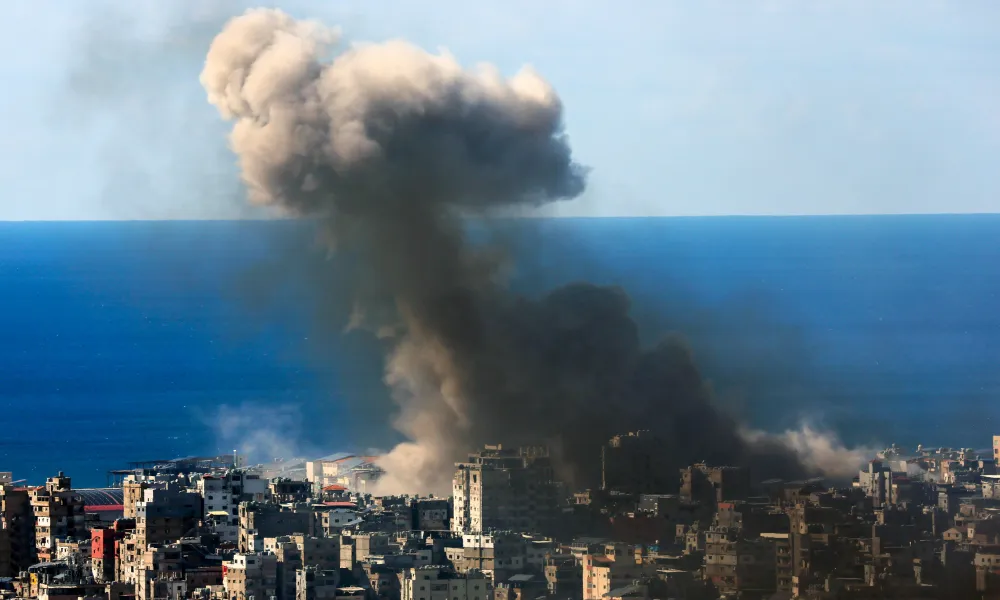
At the same time, Israel continued heavy airstrikes in Lebanon, particularly in the southern suburbs of Beirut, an area considered a stronghold of Hezbollah. According to Lebanese authorities, at least two civilians were killed and five injured in a strike on the village of Bsalmoun, southeast of Beirut. Overnight, at least seven additional strikes were reported in southern Beirut, while Israeli aircraft were heard flying at low altitude over the capital. The Israeli military also issued evacuation warnings for coastal villages near Tyre, stating it was conducting operations against Hezbollah. Lebanon has already recorded more than 1,000 deaths and the displacement of around one million people since the escalation began.
Gulf states edge closer to involvement
Saudi Arabia and the United Arab Emirates are moving closer to a more active role in the conflict, according to reporting by The Wall Street Journal. Riyadh has allowed US forces to use air bases within its territory, with officials suggesting it may only be a matter of time before Saudi Arabia becomes directly involved. The kingdom has previously warned that its patience in the face of Iranian attacks is limited.
US deploys thousands of Marines to region
More than 2,000 US Marines are expected to enter the Middle East theatre on Friday, coinciding with a deadline set by President Donald Trump for Iran to reopen the Strait of Hormuz. According to The Wall Street Journal, the USS Tripoli, USS New Orleans and approximately 2,200 Marines from the 31st Marine Expeditionary Unit will be transferred to US Central Command (CENTCOM). Additional forces from the 11th Marine Expeditionary Unit are also expected to deploy in the coming weeks.
Conflicting signals on diplomacy
The military escalation comes amid mixed signals on diplomacy. President Trump announced a five-day pause on planned strikes against Iran, citing “productive” discussions with an unnamed Iranian official and suggesting progress towards ending hostilities.
Iranian officials, however, denied that any direct negotiations had taken place. Foreign Minister Abbas Araghchi said no talks had been held with the United States during what he described as “24 days of imposed war”, though he confirmed receiving indirect messages via third countries. Reports from Axios suggested possible contacts involving US envoys Steve Witkoff and Jared Kushner, and potential meetings with Iranian representatives in Pakistan, though these claims were also denied by Tehran.
Oil markets reacted sharply to the shifting signals. Prices initially dropped following Trump’s announcement but rebounded in early Asian trading. Brent crude remains above $100 per barrel, reflecting continued uncertainty over the Strait of Hormuz, a key global energy route.
War expands across multiple fronts
The latest developments underline the widening scope of the conflict, now spanning direct exchanges between Iran and Israel, sustained Israeli operations in Lebanon, and growing involvement from Gulf states and the United States. With military activity intensifying and diplomatic channels unclear, the region remains on a volatile trajectory.