Trump Says He Is Considering US Pulling Out of NATO

US president calls the alliance a “paper tiger” in interview with The Telegraph.

Header Image

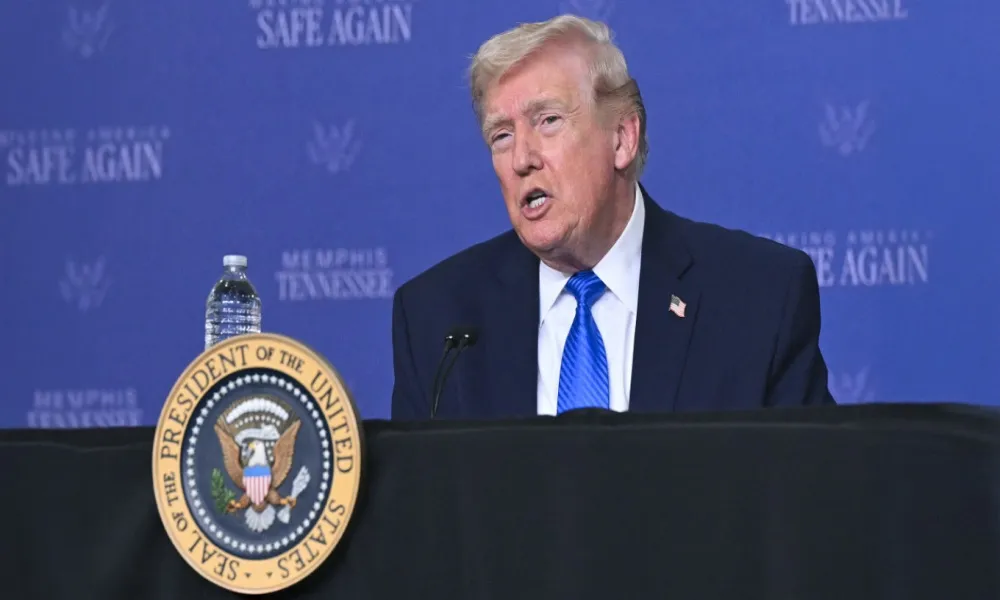
US President Donald Trump has said he is seriously considering withdrawing the United States from NATO, describing the transatlantic military alliance as a “paper tiger” in remarks that could further strain relations with European partners.

In an interview published by the UK newspaper The Telegraph, Trump criticised NATO members for refusing to support US efforts to reopen the Strait of Hormuz, which has been effectively blocked by Iran amid the ongoing war in the Middle East.

“I would say it’s beyond reconsideration,” Trump said when asked whether Washington should rethink its commitment to the alliance.

“I was never swayed by NATO. I always knew they were a paper tiger and Putin knows that too.”

Dispute over support in the Iran war

Trump has repeatedly criticised Western allies for refusing to join US efforts to assemble a naval force to restore navigation through the Strait of Hormuz, a critical global energy corridor.

The waterway, through which roughly one-fifth of the world’s oil and liquefied natural gas typically passes, has been severely disrupted since the conflict between the United States, Israel and Iran escalated earlier this year.

Tehran has effectively restricted passage through the strait in response to the initial US-Israeli strikes that began the war on 28 February.

Rubio calls for reassessment of NATO ties

Trump’s remarks were echoed by US Secretary of State Marco Rubio, who suggested Washington may have to reassess its relationship with NATO after the conflict ends.

Speaking to Fox News host Sean Hannity, Rubio said he had long been a strong supporter of the alliance but questioned its value if European countries restrict US military operations.

“For decades one of NATO’s main benefits was having bases in Europe that allowed the United States to project power,” Rubio said.

“If we have reached a point where NATO means we cannot use those bases to defend America’s interests, then the alliance becomes a one-way street.”

Rubio added that while Washington had not asked NATO partners to carry out air strikes against Iran, the refusal of some countries to allow the use of their military facilities had raised serious questions about the alliance.

European restrictions on US military operations

Tensions have increased after several European countries reportedly limited US military access to facilities or airspace during operations related to the Iran conflict.

Italy is reported to have denied landing permission to a US aircraft en route to the Middle East earlier this week.

Meanwhile, Spain closed its airspace to US aircraft involved in missions connected to the war.

These decisions have intensified disagreements within the alliance over how to respond to the regional conflict.

UK defends NATO alliance

British Prime Minister Keir Starmer defended NATO on Tuesday, describing it as “the single most effective military alliance the world has ever seen”.

“It has kept us safe for many decades, and we are fully committed to NATO,” Starmer said during a press conference in London.

Starmer also announced that the United Kingdom would host a meeting of around 35 countries to discuss diplomatic and security measures aimed at reopening the Strait of Hormuz and restoring freedom of navigation.

Global economic stakes

The closure of the Strait of Hormuz has already had significant global repercussions.

The narrow maritime passage between Iran and Oman is one of the most important energy routes in the world. Under normal conditions, about 20 percent of global oil and liquefied natural gas shipments pass through the strait.

Disruptions to traffic since the start of the conflict have caused sharp increases in international oil and gas prices, raising concerns about energy supply and economic stability worldwide.

Comments Posting Policy

The owners of the website www.politis.com.cy reserve the right to remove reader comments that are defamatory and/or offensive, or comments that could be interpreted as inciting hate/racism or that violate any other legislation. The authors of these comments are personally responsible for their publication. If a reader/commenter whose comment is removed believes that they have evidence proving the accuracy of its content, they can send it to the website address for review. We encourage our readers to report/flag comments that they believe violate the above rules. Comments that contain URLs/links to any site are not published automatically.