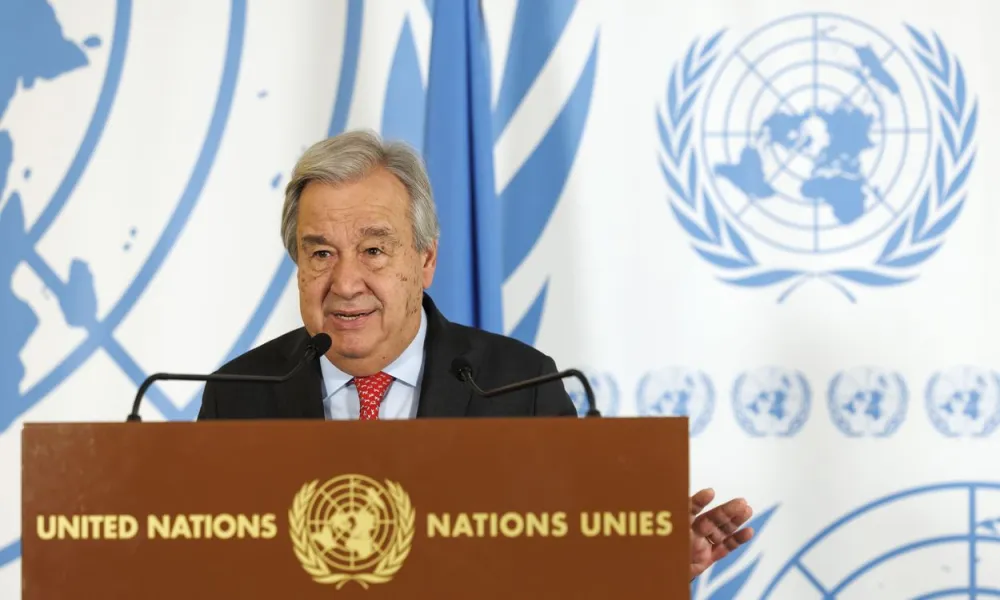
The term of António Guterres as Secretary-General of the United Nations will end later this year, and the process to identify his successor has formally begun. Four candidates, two men and two women, have been nominated following the close of the submission deadline.
The next Secretary-General will take office amid a challenging global environment marked by ongoing conflicts, pressure on international law and financial constraints within the organisation.
Many observers also argue that the time may have come for the first woman to lead the United Nations.
Michelle Bachelet (Chile)
Michelle Bachelet served as the first female President of Chile and previously held the positions of Minister of Health and Minister of Defence.
The 74-year-old also has extensive experience within the United Nations system. She served as UN High Commissioner for Human Rights and earlier headed UN Women, the UN entity dedicated to gender equality.
Her candidacy was proposed by Brazil and Mexico. However, Chile itself is no longer backing her nomination following the election of the country’s new right-wing populist president, José Antonio Kast. Analysts note that her positions on human rights issues could face resistance from the United States, which holds veto power in the United Nations Security Council.
Rafael Grossi (Argentina)
Rafael Grossi currently heads the International Atomic Energy Agency. In that role, the 65-year-old oversees nuclear programmes worldwide and is responsible for nuclear safety monitoring.
Grossi is frequently involved in sensitive diplomatic issues, including negotiations over Iran’s nuclear programme and efforts to ensure safety at nuclear facilities during the war in Ukraine, particularly at the Zaporizhzhia nuclear power plant.
He was nominated by Argentina and is widely viewed by some analysts as a leading candidate due to his experience working with major powers such as the United States, China and Russia.
Rebeca Grynspan (Costa Rica)
Rebeca Grynspan is an economist and former Vice-President of Costa Rica, serving between 1994 and 1998.
The 70-year-old currently heads the United Nations Conference on Trade and Development. Her work focuses on global economic policy, sustainable development, international trade and reducing inequalities between countries.
She received recognition for her involvement in shaping the grain export agreement negotiated early in the war in Ukraine, which helped maintain global food supplies.
Macky Sall (Senegal)
Macky Sall served for many years as President of Senegal. During his tenure, he focused on infrastructure development and maintaining political stability.
The 64-year-old also served as chair of the African Union and frequently represented African interests on the global stage. However, his presidency also drew criticism from opponents who accused him of authoritarian tendencies.
Sall was nominated by Burundi and is the only candidate not from Latin America. Since the UN Secretary-General position traditionally rotates among world regions, many diplomats believe that Latin America’s turn may favour candidates from that region.
Selection process continues
Beginning in mid-April, the candidates will present their platforms and answer questions from UN member states through an interactive online dialogue.
From July, the United Nations Security Council will begin successive rounds of voting until one candidate secures a majority without facing a veto from any of the five permanent members.
Additional nominations may still be submitted before the voting process begins. The final candidate recommended by the Security Council must then be approved by the United Nations General Assembly, with a decision expected in early autumn.
Source: skai.gr