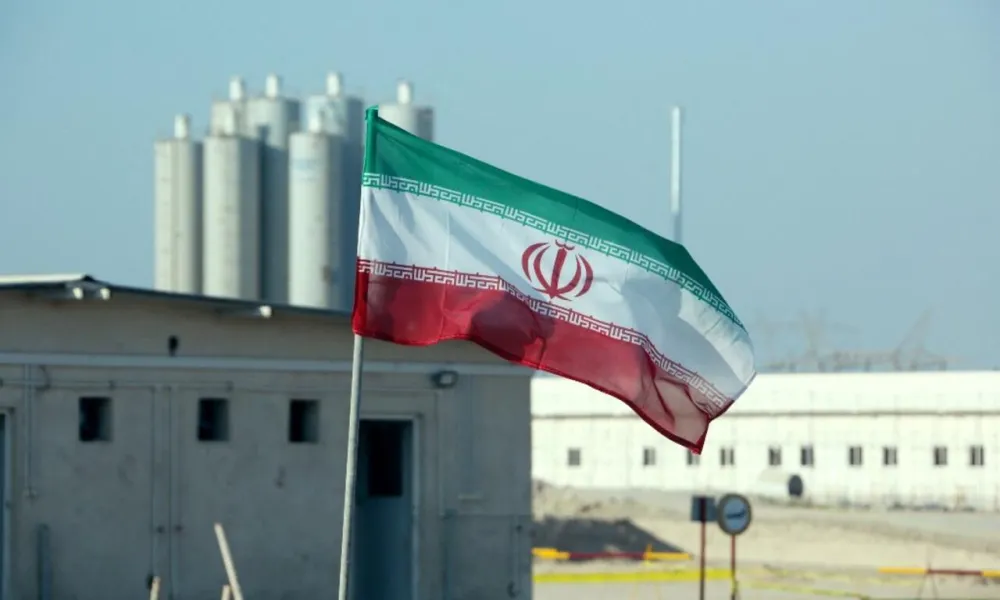
Iran's Foreign Minister Seyed Abbas Araghchi wrote to UN Secretary-General António Guterres and members of the Security Council on 3 April 2026, accusing the United States and Israel of conducting repeated armed strikes against Iranian nuclear facilities since 28 February, including attacks in the vicinity of the active Bushehr Nuclear Power Plant. Araghchi warned that the strikes risk radioactive contamination across the wider region and said the failure of international bodies to condemn the attacks had emboldened those responsible.
The letter, a follow-up to an earlier communication dated 23 March, catalogues seven separate incidents at four nuclear sites between 1 and 27 March. It was addressed to Guterres and Security Council members, with a copy sent to IAEA Director General Rafael Mariano Grossi. The Iranian Embassy in Nicosia also issued a press statement, summarising the broader military and diplomatic situation and describing the conflict as having entered its 38th day.
The attacks Iran describes
According to the letter, the Natanz nuclear facility was struck twice on 1 March and again on 21 March. The Bushehr Nuclear Power Plant site was targeted on three separate occasions: on 17 March, when a projectile landed 350 metres from the plant; on 24 March, when a projectile struck within the broader perimeter of the site; and again on 27 March. Also on 27 March, Araghchi says the Heavy Water Production Plant at Khondab-Arak and the Ardakan-Yazd Uranium Processing Site were both hit.
Araghchi describes the repeated strikes near Bushehr as "extremely alarming," noting that the plant is operational and subject to IAEA comprehensive safeguards. He argues the attacks violate Article 56 of Additional Protocol I to the Geneva Conventions, which prohibits strikes on installations containing dangerous forces, including nuclear power stations, where such action may cause the release of hazardous material. He also invokes Article 55, which obliges parties to a conflict to protect the natural environment from widespread, long-term and severe damage, and warns of potential radioactive contamination of the Persian Gulf, regional atmosphere and terrestrial ecosystems.
The letter further references UN Security Council Resolution 487 (1981) and several IAEA General Conference decisions as legal frameworks the attacks allegedly breach.
Iran's criticism of international inaction
A significant portion of the letter is directed at the UN Security Council and the IAEA, which Araghchi accuses of failing to condemn the strikes or take preventive action. He writes that this inaction has "inflicted irreparable blow upon the credibility" of both bodies and their safeguards systems. He warns that if attacks on safeguarded facilities continue without condemnation, member states' confidence in the non-proliferation regime will erode further, and says the consequences of such a breakdown "would not be confined to Iran."
Araghchi also levels pointed criticism at IAEA Director General Grossi, accusing him of disclosing sensitive safeguards-related information about Iran's nuclear programme during media interviews in March 2026, in violation of the IAEA Statute and Iran's Comprehensive Safeguards Agreement with the agency. He further accuses Grossi of making statements that "suggest the likelihood of the use of nuclear weapons against Iran," which he describes as "deeply reprehensible" and as normalising nuclear threats against a signatory to the Non-Proliferation Treaty. Iran has formally requested that the letter be registered as a Security Council document and circulated as an INFCIRC document by the IAEA.
The broader picture from the embassy
The Nicosia embassy's press statement, issued separately, presents a wider view of the conflict from Tehran's perspective. It states that more than 2,000 Iranian lives have been lost since fighting began and describes attacks on civilian infrastructure, emergency response vehicles and sites of historical significance. It accuses certain Western media outlets of framing what it calls rescue operations involving American pilots on Iranian soil as acts of heroism, while deflecting attention from civilian casualties.
The statement says Araghchi has held consultations with his counterparts from Austria, Pakistan and Egypt, pressing for a complete ceasefire and condemnation of attacks on civilian infrastructure. It notes that peaceful nightly gatherings have continued across Iranian cities and that neighbouring countries have delivered humanitarian assistance. On the economic dimension, the statement cites a Reuters report from 3 April referencing a Food and Agriculture Organization assessment of rising global food prices in March, and an Arab News/Asharq Al-Awsat report from 2 April attributing increases in energy and fertiliser costs in part to the conflict.
Tehran has warned against accepting temporary ceasefires that it believes Washington could use to regroup and rearm, the statement says, while European officials have reportedly cautioned against targeting civilian infrastructure and warned of the risk of an uncontrollable escalation.
A wider war
The embassy's Press Statement sets the nuclear warnings against a broader humanitarian picture. Iran's Health Ministry reported more than 2,000 killed and over 26,500 injured since 28 February, with victims ranging in age from eight months to 88 years. The US-based rights group HRANA put the toll at 3,546 killed as of early April, including 1,616 civilians and at least 244 children, while the International Federation of Red Cross and Red Crescent Societies cited at least 1,900 dead and 20,000 injured. Independent verification of any of these figures inside Iran remains impossible due to reporting restrictions.