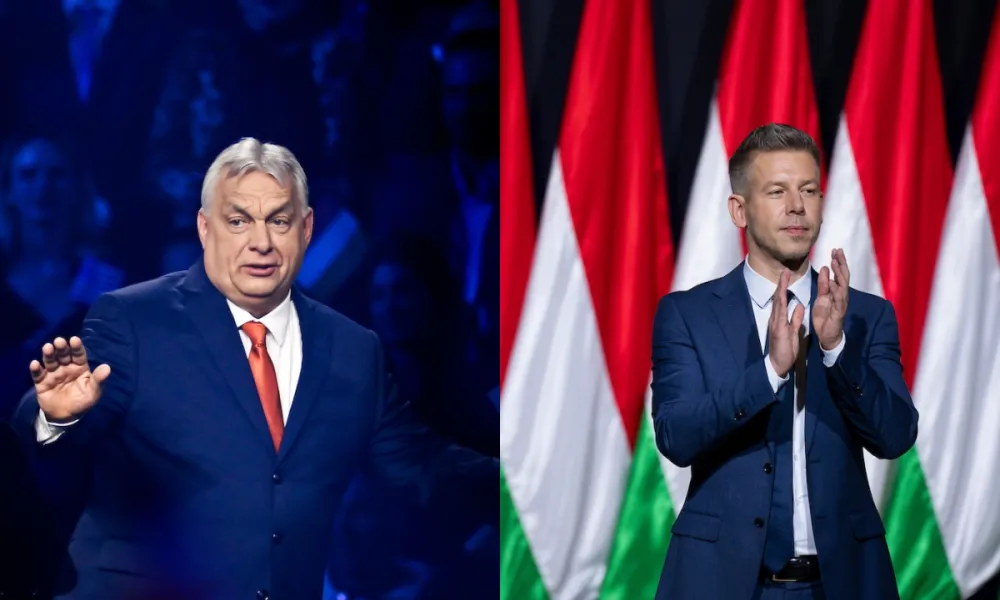

Hungary’s opposition leader Peter Magyar has secured a decisive victory over outgoing Prime Minister Viktor Orban, ending the latter’s 16-year hold on power in a closely watched national election.
Although the vote count has not yet been completed, with 66.69% of ballots counted, Magyar’s Tisza party is projected to win 137 seats—well above the two-thirds majority required to control parliament. Orban’s Fidesz party is expected to secure 55 seats, while the Mi Hazánk party is projected to win seven.
Conceding defeat
Magyar said in a Facebook post that Orban had personally congratulated him on his electoral victory.
In a brief address, Orban acknowledged defeat, describing the result as “painful for us, but clear”. He conceded that the mandate to govern had not been granted to his party, while congratulating Tisza on its success.
“We will serve our country and the Hungarian nation from the position of the opposition,” Orban said, thanking the 2.5 million voters who supported Fidesz and pledging not to disappoint them. He added that despite the setback, he would not step down from political life, insisting: “We never give up.”
One of EU's most significant elections
Orban also called on his supporters to rebuild their communities, noting that without the burden of governing, the party would focus on regrouping and recovery in the days ahead.
The election saw record voter turnout, with participation reaching 77.8% by early evening—significantly surpassing the previous high of 70.5% recorded in 2002. Polling stations closed at 7pm local time.
The contest had been widely described by analysts as one of Europe’s most significant elections this year, offering voters a choice between granting Orban a fifth consecutive term or ushering in change under the conservative, pro-European Magyar.
Turning point
Orban, the European Union’s longest-serving leader, has been a polarising figure both domestically and internationally. Over his 16 years in power, he has faced criticism for curbing media freedoms, undermining democratic institutions, and restricting minority rights—allegations he has consistently denied.
His tenure has also been marked by strained relations with the EU, including repeated use of Hungary’s veto powers to block key decisions. Most recently, he opposed a €90 billion EU loan package to Ukraine.
Magyar’s projected victory signals a potential turning point for Hungary, with implications likely to be felt across the European political landscape.