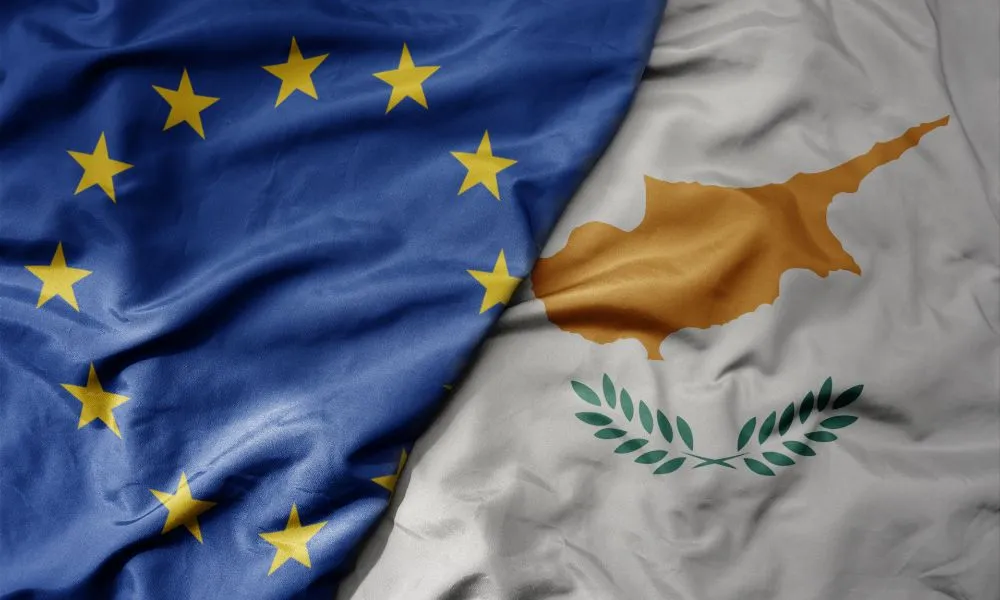

The Republic of Cyprus’s relationship with the European Union is both historic and singular. Nestled at the crossroads of Europe, Asia and Africa, Cyprus joined the EU in 2004 as a divided island, marking one of the few instances in EU history where a member state entered while part of its territory remained outside the effective control of its government. Over two decades later, Cyprus’s EU membership has shaped its economic trajectory, diplomatic positioning and aspirations for peace, even as it continues to be shaped by Europe’s evolving challenges and ambitions.
Early Relations and the Road to Accession
The foundations of Cyprus’s European integration precede its formal accession by decades. In 1973, Cyprus signed an association agreement with the then European Economic Community, laying the groundwork for closer economic ties and collaboration.
The process toward full membership officially began on 3 July 1990, when the Republic of Cyprus submitted its application to join the European Community, reflecting a strategic choice by successive governments to anchor the island politically and economically within Europe.
In 1993 the European Commission issued a positive opinion on Cyprus’s application, and in 1994 the EU Corfu Summit confirmed that the next enlargement phase would include Cyprus alongside Malta.
Formal accession negotiations began in 1998, and after several years of detailed negotiation and reforms, the Accession Treaty was signed in Athens on 16 April 2003 by the President of the Republic of Cyprus and European leaders.
Membership: 1 May 2004 and Its Legal Specificities
On 1 May 2004, Cyprus became a full member of the European Union along with nine other countries, a landmark expansion that reshaped the Union’s geographic and political landscape. However, Cyprus’s accession was marked by a unique protocol — Protocol 10 — attached to the Treaty of Accession, which stipulated that EU law (the acquis communautaire) would be suspended in areas where the Republic of Cyprus does not exercise effective control, namely the northern part of the island.
This provision acknowledged the island’s political division following the Turkish invasion of 1974 but did not make a political settlement a precondition for accession. The European Council recognised that Cyprus’s inclusion could itself support renewed efforts toward reunification, even as EU membership crystallised the Republic’s international status.
Joining the Eurozone and Progress on Schengen
Cyprus’s integration deepened with the adoption of the euro on 1 January 2008, bringing the island into the Eurozone, the EU’s monetary union. Membership in the Eurozone committed Cyprus to shared fiscal and monetary frameworks and facilitated deeper economic integration with the rest of the bloc.
Today, Cyprus is also in the process of joining the Schengen Area, which would abolish systematic border controls with other Schengen states and further integrate the island’s mobility and security frameworks into Europe’s core systems.
Political and Economic Impact of EU Membership
By joining the EU, Cyprus gained not only economic benefits but significant diplomatic and legal protection as a sovereign state. EU membership has woven Cyprus into Europe’s legal and institutional frameworks, granting Cypriots EU citizenship and representation in EU institutions, including six seats in the European Parliament.
Economically, the European Commission’s forecasts indicate that Cyprus is expected to record one of the highest growth rates in the Eurozone in 2025, trailing only Ireland and Malta, and outpacing the EU average by several percentage points. Growth is projected to continue through 2027, while inflation gradually aligns with EU norms and unemployment declines further. Public debt is also projected to decrease as a share of GDP, reflecting the stabilising influence of EU fiscal frameworks.
Cyprus and EU Policy Influence
Over the years, Cyprus has exercised influence within the EU in several areas. European trade remains central to the Cypriot economy, with a high proportion of exports and imports tied to EU markets. Cyprus also participates in shaping EU policies on migration, maritime affairs, security cooperation and regional development.
Cyprus served its first Presidency of the Council of the EU from 1 July to 31 December 2012, focusing on maritime policy and negotiations on the Multiannual Financial Framework, while emphasising hospitality and consensus-building.
In 2026, Cyprus began its second Presidency of the EU Council, underscoring its continuing engagement and leadership potential within EU institutional processes.
The Cyprus Problem and EU Membership
The intersection between EU membership and the unresolved Cyprus problem remains one of the most complex dimensions of the island’s European story. Because the entire island is legally EU territory, but EU law is suspended in the northern areas, the accession process both reflected and reinforced the political reality of division.
Despite this, EU membership has provided a framework within which Cypriot leaders and European partners continue to pursue reunification efforts, viewing EU involvement as supportive of a peaceful, negotiated settlement. The EU’s consistent position has been that any durable solution must respect both the acquis and internationally recognised principles of sovereignty and rights.
Two decades after accession, Cyprus’s relationship with the European Union embodies both opportunity and challenge. Its strategic location has made it a gateway between regions; its EU membership has reinforced economic resilience and international engagement; and its dual presidencies exemplify a commitment to active participation in Europe’s future.
Cyprus’s EU journey is a testament to how a small, divided nation can find strength and agency within a multilateral partnership, balancing national interest with collective European objectives. As the island continues to integrate — economically, politically and institutionally — it exemplifies the enduring promise of European unity in a rapidly changing world.