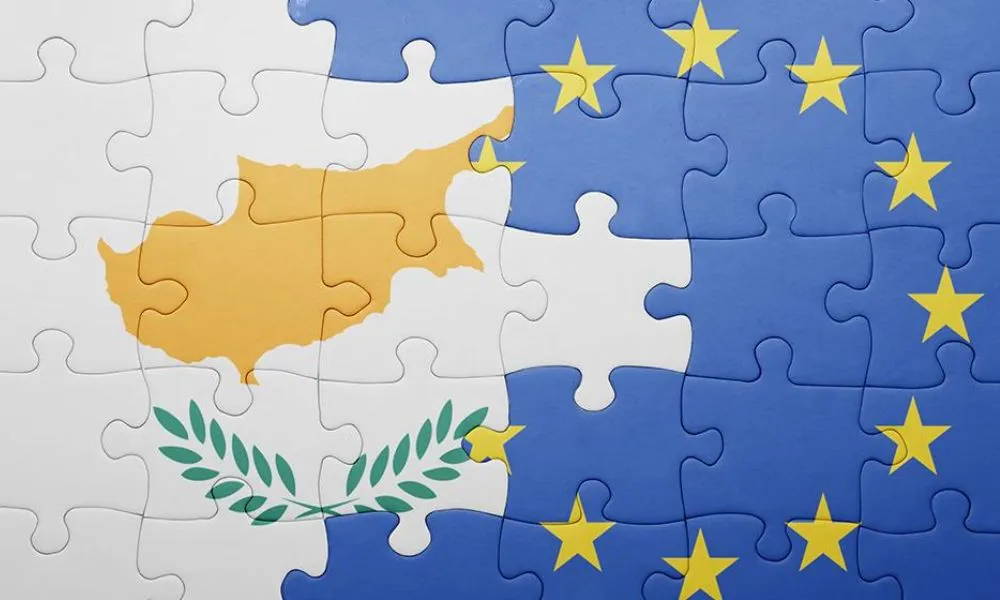

Cyprus’s relationship with the European Union is the result of decades of political choices, negotiations and strategic positioning. From early association talks to full membership, from euro adoption to two EU Presidencies, the country’s European path has unfolded alongside the unresolved Cyprus issue and profound changes within the Union itself. This timeline traces the most important milestones of that journey, highlighting how Cyprus has participated in, influenced and been shaped by the European project.
1973
Cyprus signs an Association Agreement with the European Economic Community (EEC), establishing the first formal framework for political and economic cooperation.
3 July 1990
The Republic of Cyprus submits its official application to join the European Communities.
1993
The European Commission issues a positive opinion on Cyprus’s application, recognising its eligibility despite the island’s division.
1994
The European Council in Corfu confirms that Cyprus will be included in the next phase of EU enlargement.
1998
Accession negotiations between Cyprus and the EU formally begin.
16 April 2003
Cyprus signs the Treaty of Accession in Athens.
1 May 2004
Cyprus becomes a full member of the European Union.
Under Protocol 10 of the Accession Treaty, EU law is suspended in areas where the Republic of Cyprus does not exercise effective control, while the entire island remains EU territory.
2004–2008 | Markos Kyprianou
Cyprus appoints its first European Commissioner, Markos Kyprianou, responsible for Health and Consumer Protection.
1 January 2008
Cyprus adopts the euro and joins the Eurozone.
2008–2014 | Androulla Vassiliou
Androulla Vassiliou serves as European Commissioner, initially for Health and later for Education, Culture, Multilingualism and Youth.
July–December 2012
Cyprus holds the rotating Presidency of the Council of the European Union for the first time, focusing on EU maritime policy and negotiations on the Multiannual Financial Framework 2014–2020.
2014–2019 | Christos Stylianides
Christos Stylianides serves as European Commissioner for Humanitarian Aid and Crisis Management.
2019–2024 | Stella Kyriakides
Stella Kyriakides assumes the Health and Food Safety portfolio, playing a central role during the COVID-19 pandemic.
2020–2023
Cyprus participates in EU-wide responses to the pandemic, energy challenges and migration pressures, while benefitting from Recovery and Resilience funding.
2025
European Commission forecasts place Cyprus among the three fastest-growing economies in the Eurozone.
2026 | Costas Kadis
Costas Kadis serves as European Commissioner for Fisheries and Oceans.
2026
Cyprus assumes the rotating Presidency of the Council of the EU for the second time, under the motto “An Autonomous Union. Open to the World.
Cyprus has six Members of the European Parliament and is in the process of joining the Schengen Area.
EU law remains suspended in the northern areas of the island, while Turkish Cypriots who hold or are eligible for EU documents are EU citizens.