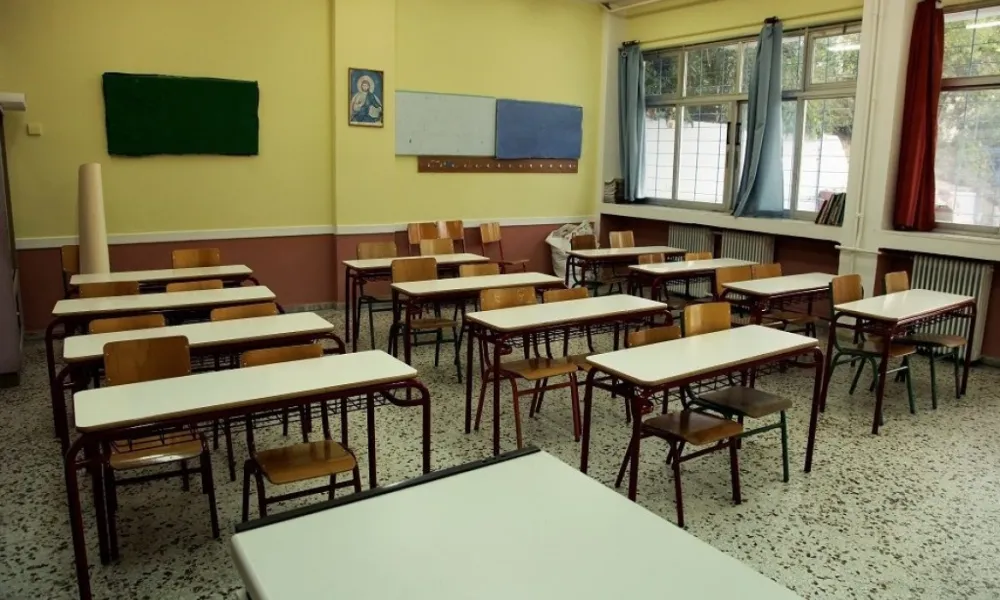
Following recent developments around the British Bases, six schools in Akrotiri, Trachoni, Episkopi and Asomatos did not operate yesterday and will remain closed today. The current crisis brings back to the forefront the question of how prepared our schools are to handle such situations — an issue also examined in a recent European study on “preparedness education.”
Yesterday found the educational community of Limassol in a state of disruption after developments concerning the British Bases in Akrotiri and a drone incident in the area. The events had an immediate impact on school operations, as six school units did not function for safety reasons. These include two secondary schools and four primary schools in the communities of Akrotiri, Trachoni, Episkopi and Asomatos.
The decision to suspend school operations was taken early in the morning; however, in some cases students had already been transported to their schools before the directive was issued. In those instances, parents were informed to collect their children, while arrangements were made to ensure that students who had already arrived returned home safely. Bus routes were organised for this purpose, and teachers remained on school premises until the departure process was completed. Arrangements were also made for students who temporarily remained on school grounds until they were picked up by their parents.
According to a statement issued yesterday by the Ministry of Education, the six schools in the wider area of the British Bases in Akrotiri will also remain closed today for precautionary reasons.
This disruption once again raises the question of whether schools are adequately prepared for crisis situations, whether related to natural disasters or security issues.
Education for Crises
This issue is at the centre of a recent European report on so-called “preparedness education,” which examines how European education systems prepare students and school communities for crises. The concept of preparedness education refers to the development of knowledge and skills that help students understand and respond to risks such as natural disasters, technological accidents, pandemics and human-made crises, including armed conflicts.
The aim is for students to develop basic safety skills, learn to recognise risks and know how to respond in emergency situations. The report focuses exclusively on pre-primary and primary education — that is, kindergarten and primary school. This choice is deliberate. Researchers explain that the foundations for basic safety skills and responses to risk are established at younger ages.
Are We Organised?
With regard to Cyprus, the report notes that primary schools operate within an organised framework of emergency plans. Specifically, each school is required at the beginning of the school year to prepare a Civil Defence Plan, which includes school evacuation procedures, risk assessments and notification protocols in the event of a crisis.
This plan does not remain theoretical. Schools are required to conduct at least two preparedness drills each year: one simulating natural disasters and one addressing human-made crises. These exercises aim to familiarise students and teachers with the procedures to be followed in dangerous situations. At the same time, schools’ preparedness actions are recorded electronically and evaluated within the broader supervision framework of the education system.
The report also notes that in Cyprus, preparedness education is included in the primary school curriculum through the subject of health education. Within this framework, students are informed about safety issues, risk prevention and crisis management. However, the same study highlights that preparedness education is not formally integrated into the pre-primary curriculum. In other words, at kindergarten level there is no explicit inclusion of preparedness education in the official programme.
A comparison with other European countries shows that preparedness education is gradually expanding across Europe. Around half of the countries participating in the study have already incorporated preparedness education into their pre-primary programmes, while nearly three-quarters have integrated it into primary education. Cyprus aligns with the European trend at primary level but not at pre-primary level, where several countries begin cultivating safety and risk-recognition skills from an earlier age.
A Gap in Teacher Training
Another finding of the report concerns the training of teachers themselves. In many European countries, including Cyprus, preparedness education is part of the school curriculum but is not a compulsory component of initial teacher training. In other words, teachers are expected to instruct students on how to respond to crisis situations without necessarily having received specialised training in this field.
According to the study, this represents an issue that warrants further examination and strengthening within the European education system.