
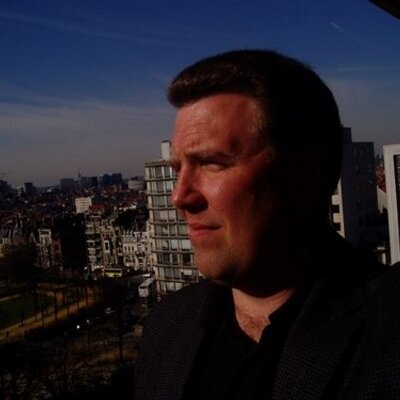
The conversation unfolded while we were waiting to be summoned for the press conference at Limassol port, ahead of the visit of the President of the Republic and the College of Commissioners. And in that suspended moment between arrivals and statements, I spoke with Ole Ryborg, Danish journalist and senior EU and NATO correspondent for DR, about a place geographically distant from Cyprus but increasingly central to Europe’s anxieties: Greenland.
“If you look at it over a long period, and still today,” Ryborg said, “you have two opposites where you cannot find a compromise.” On one side, the United States and Donald Trump, who “want to own Greenland”. On the other, Greenland and Denmark, who “do not want to sell”. “Between these two things,” he added, “there is no compromise.”
That absence of compromise, Ryborg argued, is precisely why Copenhagen and Nuuk have worked to move the discussion elsewhere, away from ownership and towards the language Washington itself prefers. “The Americans have been saying it’s a question of security,” he said. “So Denmark says: okay, then let’s talk about security.”
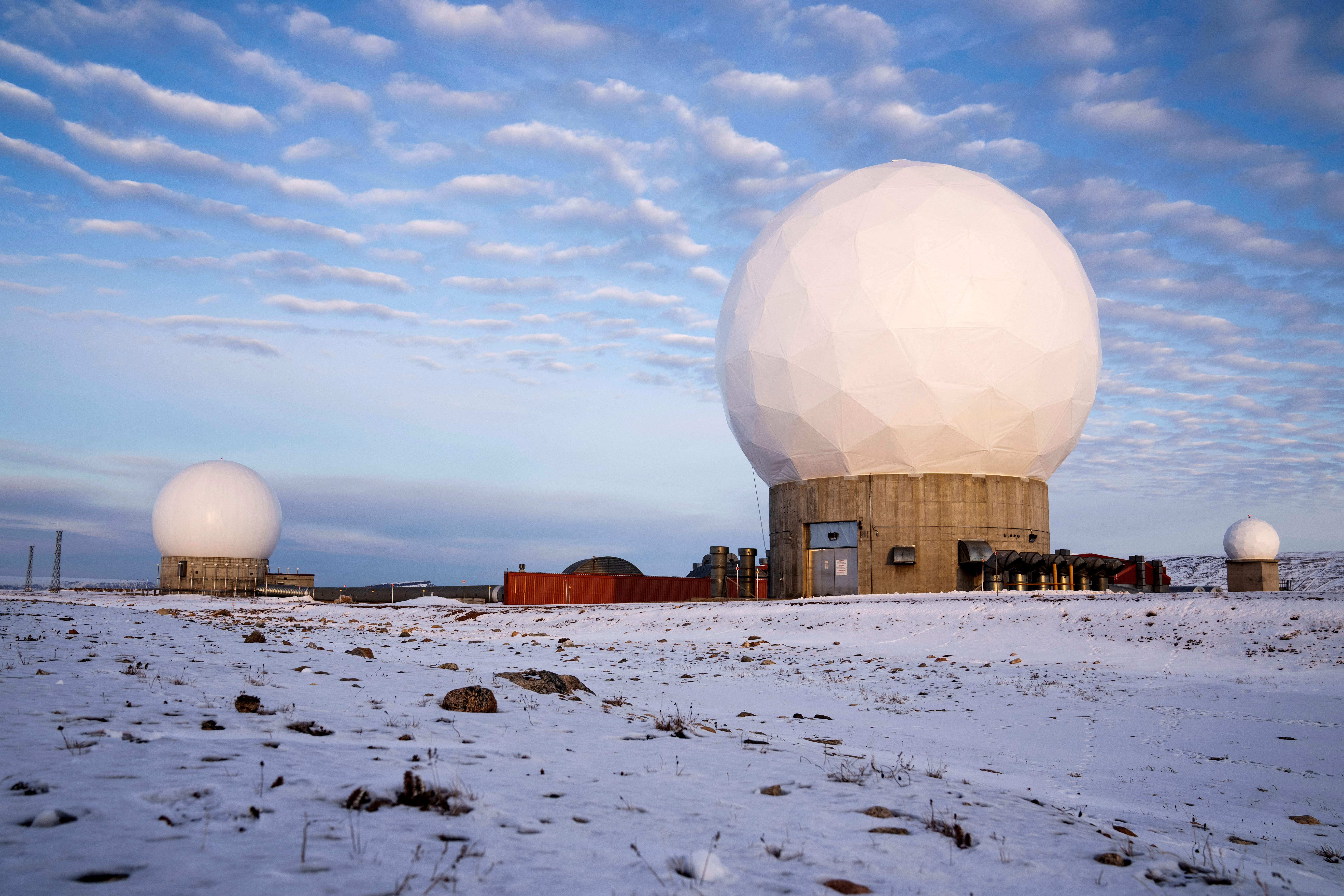
During the Cold War, the US operated more than 20 bases in Greenland, with around 10,000 soldiers. “Now they have one base and about 150 soldiers,” Ryborg said. “It’s the Americans themselves who have withdrawn.” Access, he stressed, is already guaranteed. “There is an old treaty from 1951 that gives the Americans the right to establish bases in Greenland. So if it’s about security, they already have that.”
Making intentions visible
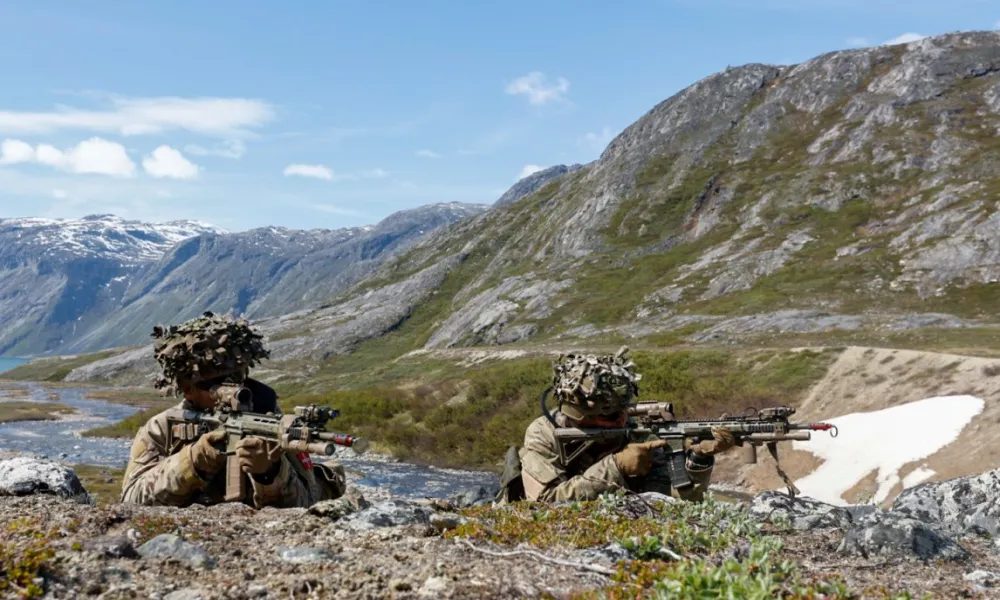
What Denmark is doing now, Ryborg explained, serves two purposes at once. Officially, Copenhagen is increasing its military presence to address Arctic security. Politically, it is making something else visible.
“They are inviting other countries,” he said, listing France, the UK, Sweden, Norway and Canada. “And they are discussing whether there should be a NATO mission in the Arctic, like you already have a Baltic and an eastern structure.” The effect is to demonstrate that, if security were truly the issue, it could be handled collectively. “If NATO takes care of security,” he said, “there is no need to buy Greenland.”
If the pressure continues regardless, the conclusion becomes unavoidable. “Then it shows the rest of the world that this is not about security,” Ryborg said. “It’s about wanting to own a territory.”
Denmark’s military exercises and diplomatic coordination, he argued, “increase the price for the US if they want to take Greenland by force”. In the sense of political cost. Any such move would immediately involve European allies. “You would have Danish soldiers, maybe German or French soldiers, involved,” he said. “And that would be very clear to the world.”
There is no illusion of a military confrontation. “Could Denmark fight the American military? Of course not,” Ryborg said. “Would they fight? Probably not.” But that is not the point. “The point is that it has been said no, very clearly, very publicly.”
He returned to the phrase several times. “A no is a no,” he said. “There is no way the Americans can have misunderstood this.”
NATO’s question mark
The Greenland dispute also exposes something more fragile: confidence in NATO itself. Ryborg broke the alliance down into two parts. “NATO is a political treaty commitment,” he said. “And it is a common military structure, with plans and command.”
The plans exist, he noted, and have existed for decades. What is under strain is credibility. “It only works as long as potential enemies believe that, if there is an attack, there will be a forceful defence.” When US leaders repeatedly question whether they would honour those commitments, “that question mark grows”.
Yet Greenland has also produced an unexpected counter-signal. “You see Europeans deciding to have Denmark’s back,” Ryborg said. “Tiny little Denmark.” He pointed to similar dynamics elsewhere. “Ask people from the Baltic states. They don’t feel alone. And look at Ukraine. When the Americans said they wouldn’t pay anymore, Europeans stepped up.”
Europe, he argued, is learning to act even when NATO’s political centre wobbles.
The win-win world is dying
Ryborg’s recent analysis takes this further, placing Greenland within a broader transformation of global politics. For decades, Europe believed that trade, interdependence and legally binding agreements reduced the risk of conflict. “The more we trade, the less likely we end up in conflict,” he said, describing a philosophy that justified energy dependence on Russia, outsourcing to China and reliance on US security.
“That world has changed,” he said bluntly. “The geopolitical world has changed with the Russians, the Chinese and the Americans.” Interdependence is no longer seen as mutual restraint, but as leverage. “They see this as a weakness we can exploit.”
In his analysis for DR.DK, Ryborg argues that the United States now benefits from a “politically weak and divided Europe”, one that protests verbally but rarely acts. “The US wants a Europe with weak leaders,” he writes, because weak leaders “have a low pain threshold” and avoid confrontation even when they hold powerful tools.
That logic, he warned, extends beyond trade wars and tariffs. If Europe does not demonstrate political will, the erosion of rules becomes normalised. “The win-win world is dying,” he said during our conversation. “Not completely. But it is dying.”
Why Greenland matters to everyone
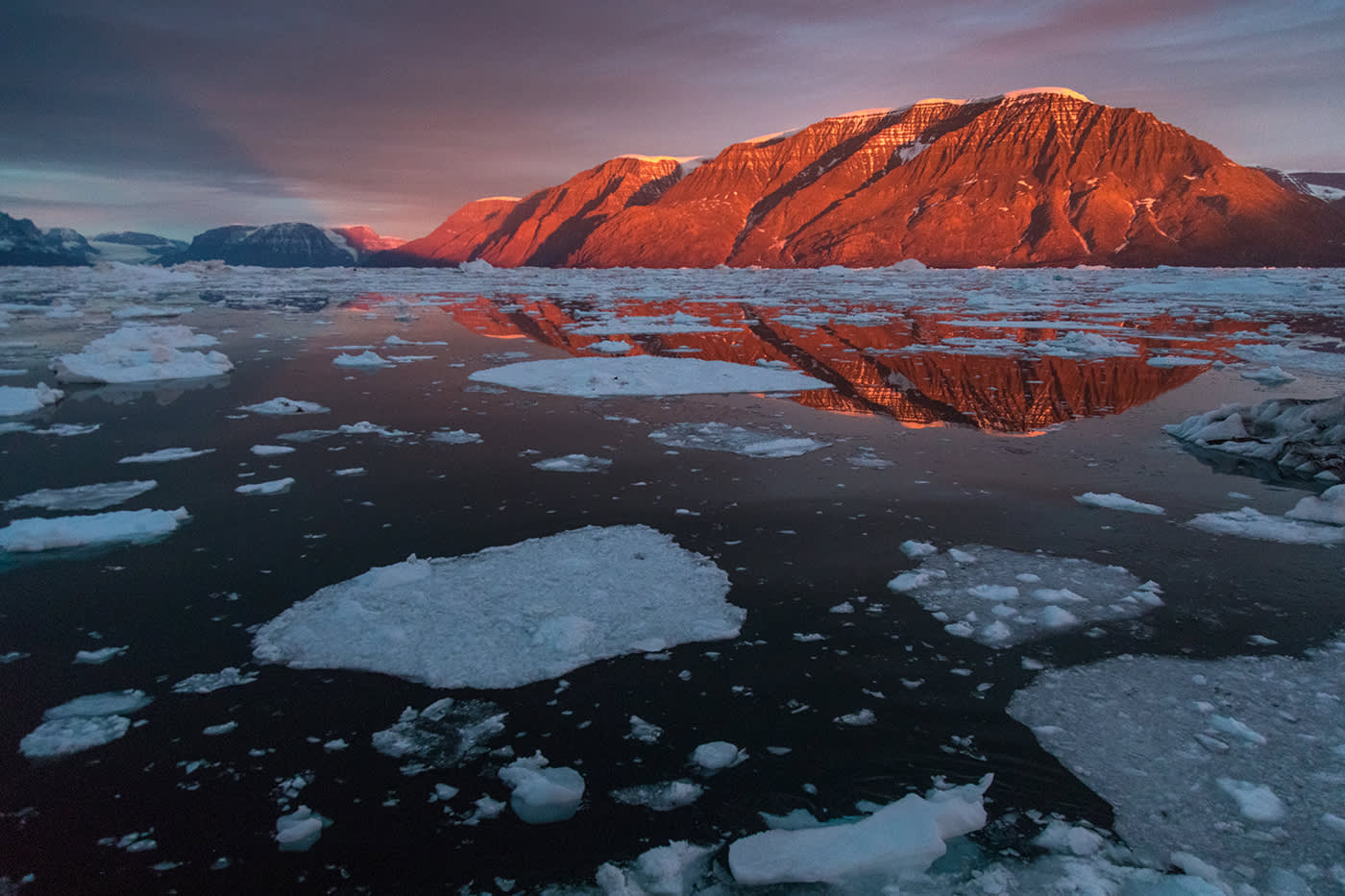
For Ryborg, Greenland is a signal. “If the Americans can do it,” he said, “what signal does that send to the rest of the world?” Including, he added pointedly, places like Cyprus, where questions of guarantees, alliances and credibility are not abstract.
As we were finally called toward the press conference, the Arctic felt far from the Mediterranean sun. Yet the conversation lingered. Greenland, in Ryborg’s telling, is about whether Europe can still draw lines, say no, and mean it.
“This is a period where things that used to be unthinkable are now being discussed,” he said. “And that alone should worry us.”
Ole Ryborg is a Danish journalist and senior EU and NATO correspondent for DR (Danmarks Radio), Denmark’s public broadcaster. He is based in Brussels and has covered European politics, security, transatlantic relations and NATO affairs for many years.