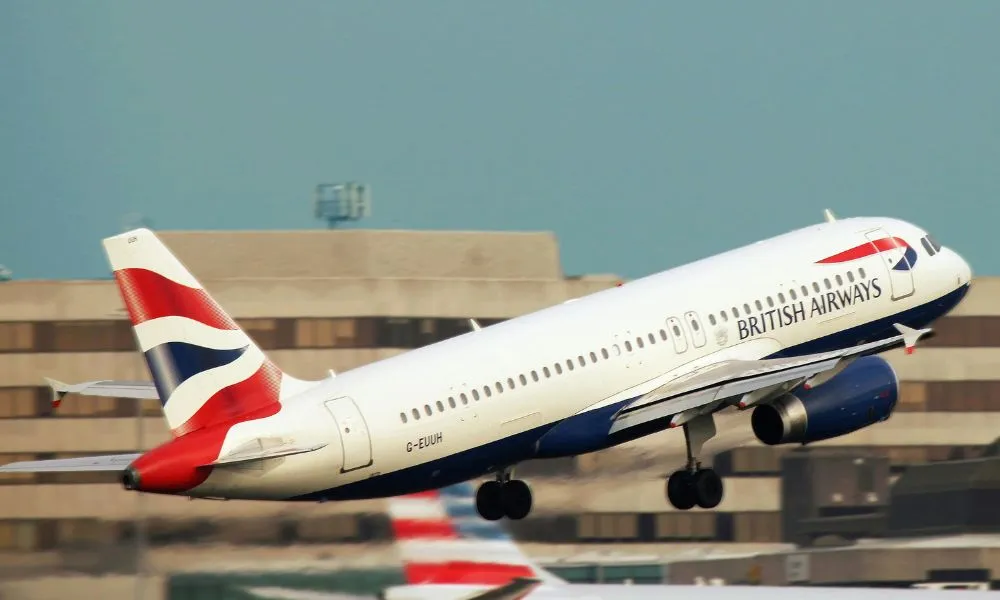

Passengers flying out of Heathrow Airport will no longer need to wrestle with tiny toiletry bottles or transparent plastic bags at security. Britain’s busiest airport has completed the full rollout of next-generation CT scanners across all its terminals, allowing liquids of up to two litres to remain inside cabin baggage, alongside laptops and other electronics.
Heathrow says it is now the largest airport in the world to have fully deployed the new technology, marking a significant – and long-delayed – shift in airport security rules.
What Changes for Passengers
The new scanners, based on computed tomography (CT) technology, produce far clearer 3D images of cabin bags. As a result:
- Liquids can remain in containers of up to two litres
- Electronics no longer need to be removed from bags
- Clear plastic liquid bags are no longer required
The change applies only to flights departing from Heathrow. Passengers are still advised to check the rules at the airport they are flying back from, as restrictions may differ.
Heathrow Leads, Others Lag
While Heathrow is now the most high-profile airport to scrap the 100ml limit, it is not the first. Gatwick Airport, along with airports in Edinburgh, Birmingham, Bristol and Belfast, has already introduced higher liquid limits after installing similar scanners.
However, many UK airports that have the equipment in place are still awaiting approval from the Department for Transport to officially lift the 100ml cap, leading to a patchwork of rules that continues to confuse travellers.
Efficiency Gains – With Caveats
Heathrow argues the new scanners will speed up the passenger experience without compromising safety. The airport says the technology can process “thousands of passengers an hour with significantly greater efficiency, while maintaining high safety and security standards”.
That said, a recent report by consumer group Which? found that the heightened sensitivity of the scanners has, at some airports, resulted in more bags being searched manually after screening.
A Promise Years in the Making
The end of the 100ml rule has been repeatedly promised – and repeatedly delayed. Former prime minister Boris Johnson pledged back in 2019 that the restriction would be scrapped by 2022, a plan derailed by the pandemic.
In December 2022, the government announced what it called the “biggest shake-up of airport security rules in decades”, setting a June 2024 deadline for new scanners to be installed nationwide. That deadline was missed by larger airports, while smaller ones that had already eased restrictions were briefly forced to reinstate them, sparking frustration across the aviation sector. The EU also reverted to the 100ml rule in mid-2024, further muddying the waters.
Heathrow’s €1bn Bet
Heathrow chief executive Thomas Woldbye said the airport’s £1bn upgrade programme would allow passengers to spend “less time preparing for security and more time enjoying their journey”.
Among the world’s ten busiest airports, Heathrow is currently the only one to have scrapped the 100ml rule for international departures.
Confusion Remains
A spokesperson for the Department for Transport stressed that airports are responsible for installing and operating security equipment, urging passengers to continue checking local rules before travelling.
The Advantage Travel Partnership warned that airports setting their own timelines has fuelled confusion. Chief executive Julia Lo Bue-Said said passengers have been “tripped up” by inconsistent messaging, calling on airports and government to coordinate more clearly.
For now, Heathrow passengers can finally retire their tiny shampoo bottles – but anyone flying elsewhere should keep them close at hand.
Source: bbc