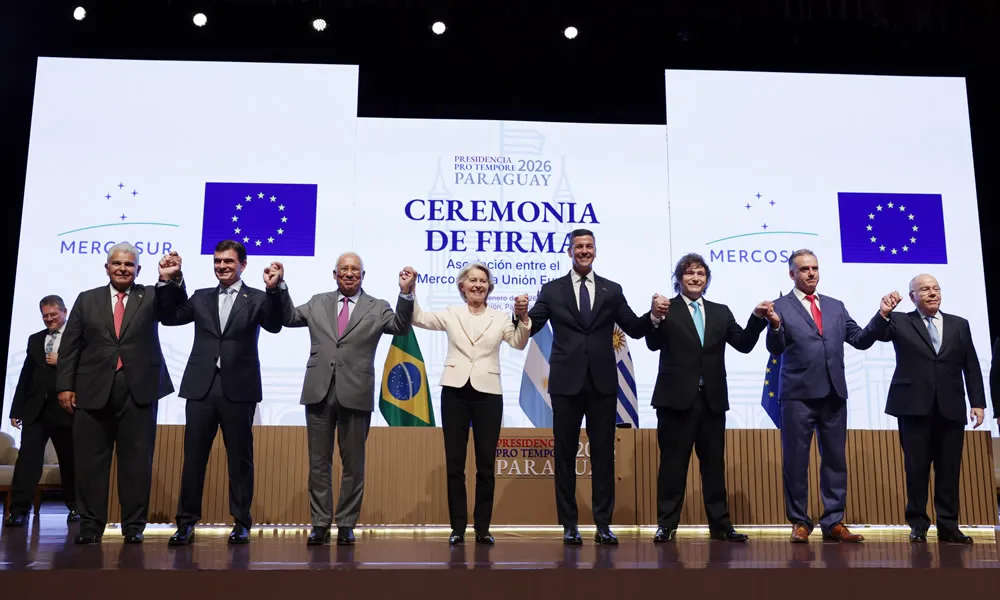

MEPs adopted the new regulation aimed at preventing harm to Europe’s agricultural sector following the liberalisation of trade with Mercosur countries. The text, already agreed informally with EU member states, passed with 483 votes in favour, 102 against and 67 abstentions.
How the safeguard mechanism will work
The regulation sets out the conditions under which the EU may temporarily suspend tariff preferences granted under the EU–Mercosur trade agreement for agricultural imports from Argentina, Brazil, Paraguay and Uruguay, if these imports are shown to damage EU producers.
Under the new rules, the European Commission will be required to launch an investigation when imports of sensitive agricultural products increase by an average of 5 percent over three years and, at the same time, import prices are at least 5 percent lower than comparable EU prices. The Commission had initially proposed a higher annual threshold of 10 percent.
Sensitive products covered by the mechanism include poultry, beef, eggs, citrus fruits and sugar.
An investigation may also be requested by a member state, or by a natural or legal person representing the production sector, or by an association acting on the sector’s behalf, where there is a risk of serious harm.
The Commission will be required to submit a report to Parliament at least every six months assessing the impact of imports of sensitive products.
Rapporteur’s statement
Gabriel Mato, Parliament’s standing rapporteur on the Mercosur agreement and an MEP with the European People's Party, said the safeguards provide a credible protection framework.
“The safeguard clauses mean that the EU–Mercosur agreement is accompanied by a balanced and reliable mechanism to protect our agricultural sector,” Mato said. “They strengthen market monitoring, establish clear and objective criteria for identifying disruptions, and allow faster action for sensitive products when there are signs of harm. This will give farmers stability and predictability, while preserving the overall balance of the agreement.”
Once formally approved by the Council, the regulation will be published in the Official Journal of the European Union. It will apply once the interim EU–Mercosur trade agreement enters into force.