
Klara Lindström was in Cyprus for a panel discussion on Ukraine’s EU accession, marking four years since Russia’s full-scale invasion. An analyst at the Stockholm Centre for Eastern European Studies (SCEEUS) at the Swedish Institute of International Affairs (UI), she has worked at the Swedish Embassy in Moscow and served in Ukraine in 2021. In her interview with Politis to the Point at the premises of the European Union House in Nicosia, Lindström offered a clear and unambiguous assessment of the war’s trajectory and the European future for Ukraine.
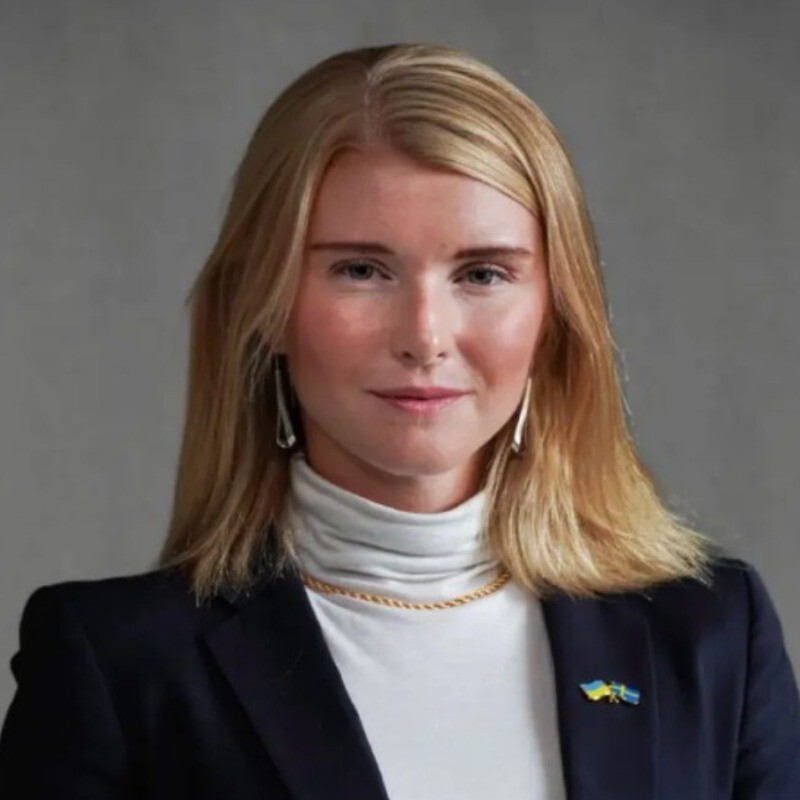
When asked what makes more sense today than before 2022, she reflects on the very conception of war:
“I think it is always very difficult to imagine a full-scale invasion,” she said. “It is difficult to imagine war because it is something so human, but at the same time not human. It is something that is so common, yet still not normal.”
War was already ongoing when she was in Ukraine in 2021. During her time in Moscow between 2018 and 2020, she said Russia was on “a very militaristic track.” Looking back, she says that it was clear for her that conflict was present and that Russia’s direction was not positive.
“In hindsight, I was aware of the fact that a war was already ongoing, which was not always paid attention to across Europe. But secondly, I was aware of where Russia was headed, and that it was not a positive trajectory.”
Lindström describes Russia’s objective in one word.
“It’s imperialism,” she said. “It’s about restoring some kind of past Russian greatness, which, of course, does not exist.”
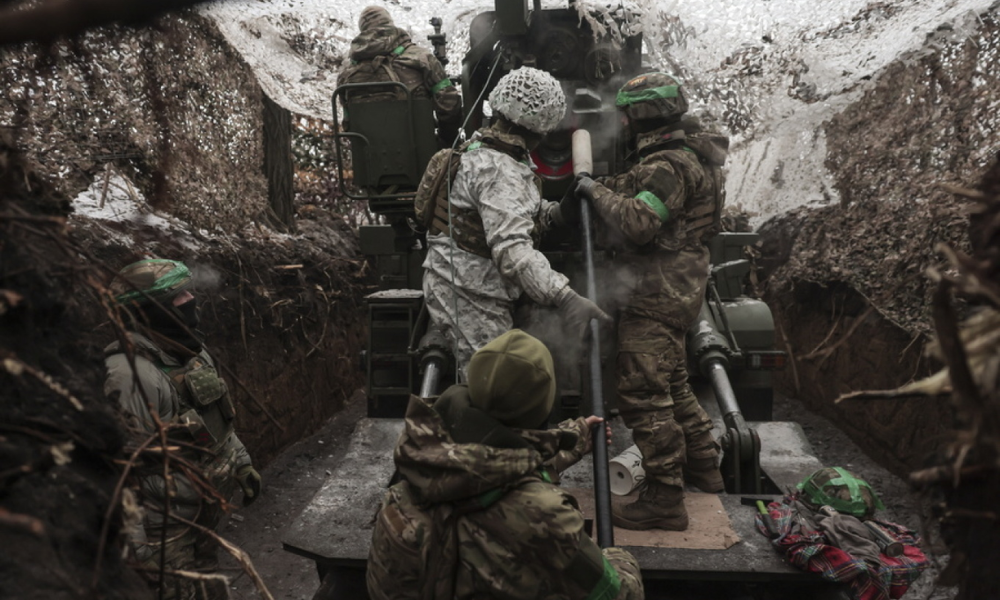
She refers to militarism and authoritarianism as part of the ideological mix surrounding that ambition. She points to Georgia in 2008 and Chechnya earlier as examples of Russian military action in violation of international law. She sees continuity in those actions and in the invasion of Ukraine.
“I think that’s becoming ever more clear. Maybe it wasn’t recognised at the time, but now the continuity in Russian imperialism is evident.”
Misconceptions in western debate
She identifies several misconceptions that, in her view, continue to shape discussion across Europe.
“One misconception is that the war is about territories,” she said. “But it’s not about certain territories, it’s about Ukraine’s existence as a whole, as a culture, as a people.” She says Ukrainians understand that a territorial compromise would invite Russian troops closer ahead of a renewed aggression.
Another misconception concerns NATO. “There’s this idea that any Ukrainian attempts to join the military alliance is what triggered the war. But that is not the case.” She traces the origins back to 2014 and the Association Agreement between Ukraine and the European Union. She describes it as Ukraine’s attempt to move toward a European democratic state. She says Russia could not accept that path.
She also addresses the belief that Russia cannot lose. “Russia has lost many wars,” she said. She mentions another assumption, that instability would follow any change of leadership in Moscow and that stability must therefore be preserved. She calls that a misconception.
For long-term peace in Europe, she says there would need to be “a very deep and systemic shift in Russia.” She describes this as generational. “I’m not sure I will be alive to see it.”
Enlargement as strategy
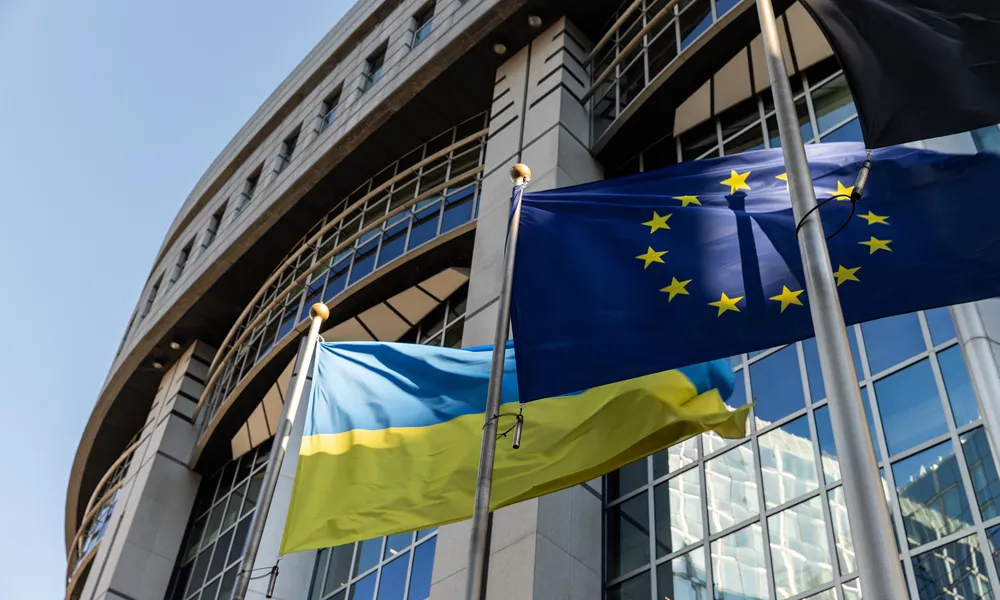
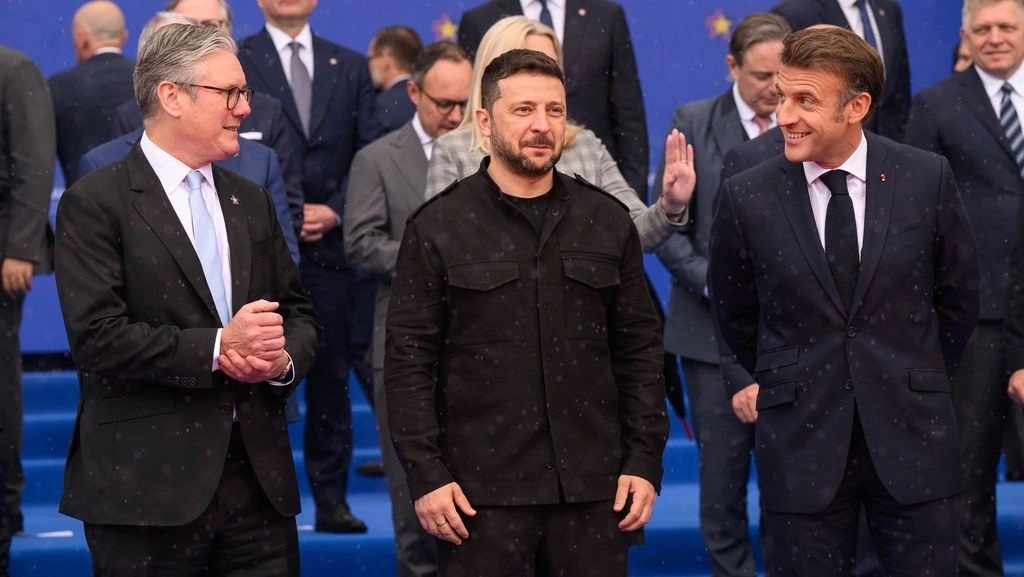
On Ukraine’s EU accession, Lindström speaks in strategic terms. “I see EU enlargement and Ukraine’s EU accession in particular, but also enlargement as a whole, as one of the key tools for the EU to ensure its strategic interests and to have more geopolitical agency.”
She acknowledges that accession requires legislation, benchmarks and transition periods, but describes the broader framework for this enlargement as geostrategic. Asked whether the European Union can credibly advance accession negotiations with a country at war, she answers directly.
“Yes, I absolutely think it’s possible.”
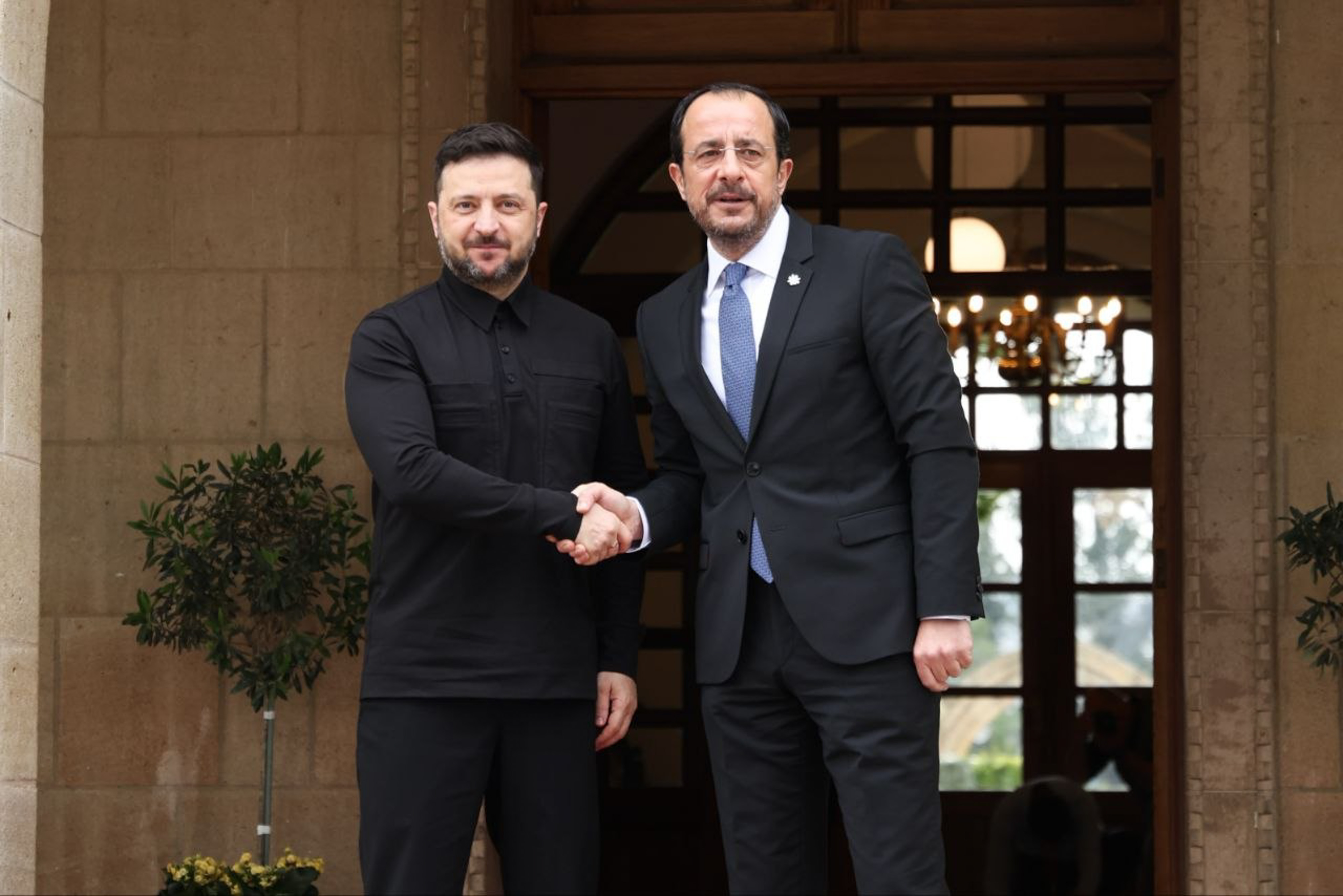
She refers to Cyprus as an example of how political obstacles can be managed during accession negotiations. She says the main obstacle for Ukraine is not the absence of technical solutions but a lack of political will among member states.
Concerns about escalation, she says, are often misunderstood. “When we are too careful, we signal weakness to Russia, and that invites further aggression. We must be very bold, very decisive.” Membership in the European Union, she adds, is not a security guarantee. She notes that belonging to institutional structures matters and describes EU accession as a civilizational choice in favour of democracy and human dignity.
Threat perception, she notes, differs across Europe. “In the Nordic-Baltic region, so I’m Swedish, the threat assessment is clear and solid, and the sense of urgency is strong.” After several days in Nicosia, she observed that the sense of urgency is different in the south.
Asked whether Sweden views Eastern European security as inseparable from its own, she answers without hesitation. “100%.” What happens in Ukraine, she says, is a security issue for all of Europe.
Opportunity and reform
For smaller EU member states, she describes Ukraine’s accession as opportunity, risk and structural change at the same time. She says that Ukraine has the largest and most battle-experienced armed forces in Europe and that modern warfare has evolved significantly since 2022. Europeans, she argues, must learn from Ukrainian experience if their own defence investments are to remain relevant.
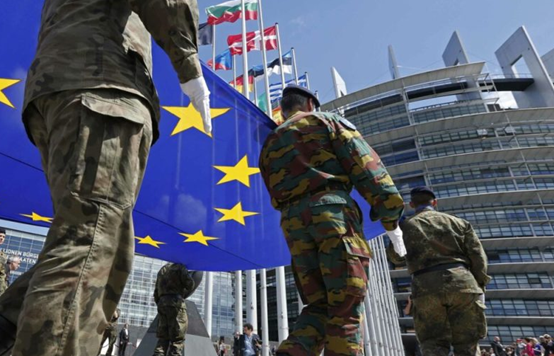
Lindström also speaks about socioeconomic dimensions. “Enlargement is also a prosperity project.” She refers to agriculture, food security, value chains and digital innovation. Ukraine, she says, has a young and skilled workforce. Enlargement would also require internal reforms within the European Union. She notes that political willingness to discuss those reforms remains limited.
The most dangerous illusion
Four years into the war, she returns to what she considers one central misunderstanding. “I can be quite frustrated with these so-called negotiations, talks, or rather theatres,” she said. She says they are based on the false belief that a territorial deal is available and that Russia is interested in ending the war.
From her time in Ukraine, she emphasises that Russia shows through actions that it is not interested in ending the war. Ukrainians, she says, understand that this is a long-term struggle. In parts of the West, she senses expectations of a near-term conclusion. She describes that as wishful thinking.
A new cold war
Asked about the effects of current US policy, she says that European cooperation has often developed under external pressure.
“With Russia as an antagonistic imperial threat and the US being as unpredictable as it is, Europeans may come together and come out stronger from this,” she said.
Asked how she sees the conflict evolving, she answers plainly. “I think a new Cold War of sorts would be a best-case scenario.”
Lindström divides her time between Stockholm and Kyiv. She says being on the ground is essential to understanding Ukrainian perspectives. EU accession, she notes, involves reforms at local level, not only negotiations in Brussels.
She speaks about learning Ukrainian. “For me, that has been one of the most eye-opening experiences.” She says that Russian and Ukrainian are distinct languages and that learning Ukrainian changed her perspective on the region. She describes Kyiv as a city where theatres are open and tickets sell out even during war, where culture continues to flourish under extreme conditions.
“You sometimes really need to fight for what you believe in,” she said. She speaks about freedom, autonomy and the value of human life. “If we, with inspiration from Ukrainians, can rediscover that in us as Europeans, then I think there’s hope for Europe.”
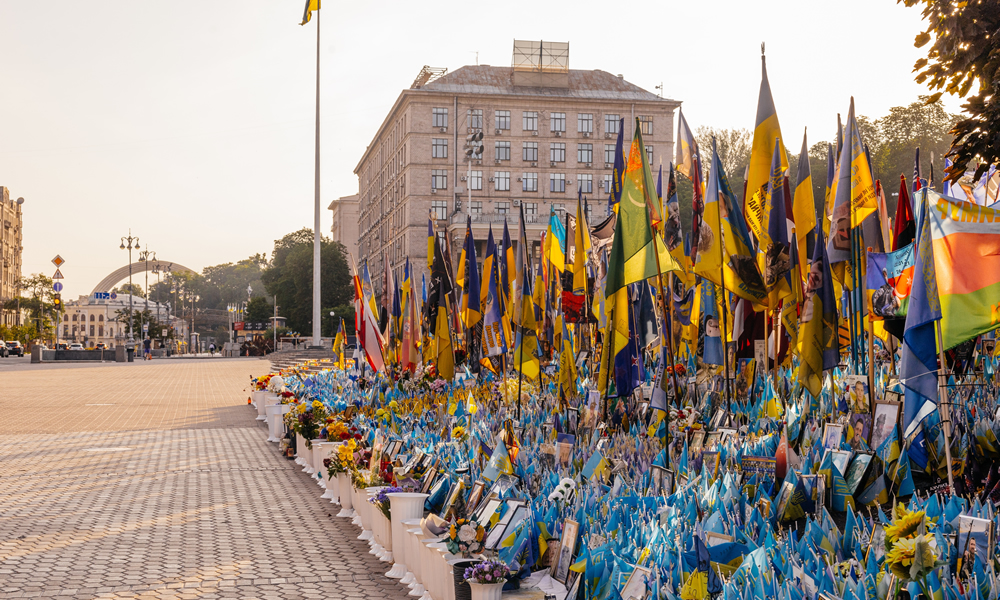
Kyiv, Ukraine - 12 June 2025: Many blue and yellow Ukrainian Flags and Photos on the Independence Square (also called "Maidan") honoring the fallen Soldiers in the Russian-Ukrainian War. Alexandra Lande / Shutterstock.com