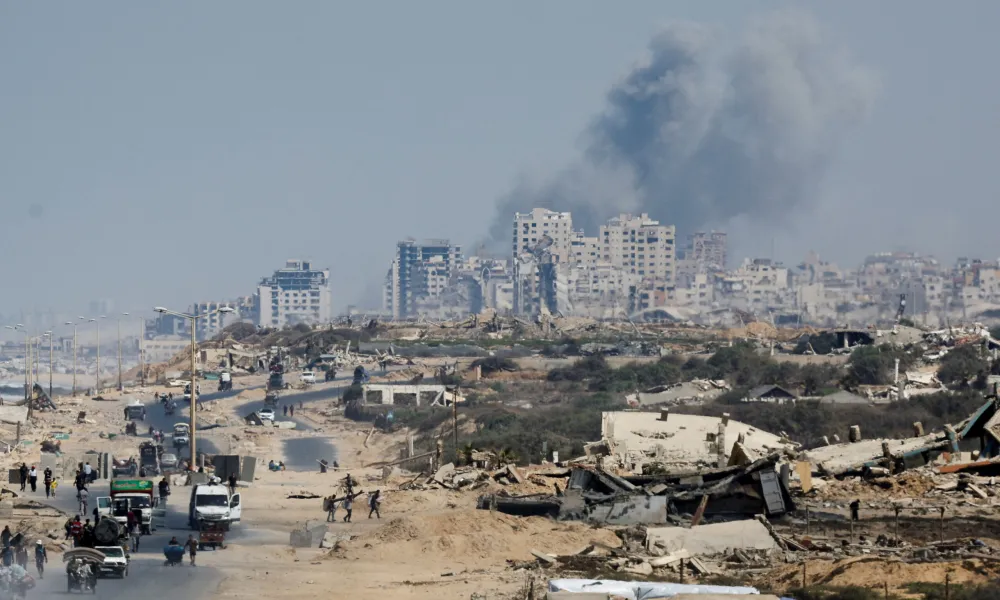

Israeli airstrikes and tank shelling intensified across the Gaza Strip overnight on Sunday, destroying several homes, according to eyewitnesses cited by Reuters. The escalation comes as Palestinians cling to hope that a US-brokered peace plan might finally bring an end to the months-long war.
The flare-up in violence precedes planned negotiations in Cairo, where Egypt is expected to host delegations from Hamas, Israel, the United States, and Qatar to discuss the implementation of the Donald Trump peace proposal - currently seen as the most advanced effort yet to halt the conflict.
On Saturday, former US President Donald Trump announced via his Truth Social platform that Israel had agreed to an “initial withdrawal line” within Gaza, and that a ceasefire would take effect immediately once Hamas confirmed its acceptance.
Heavy bombardment in Gaza City
Despite those developments, the situation on the ground remains dire. In Gaza City, designated by Israel as one of Hamas’s last strongholds, the Israeli Defence Forces (IDF) continued to carry out strikes. Leaflets warned displaced residents not to return, citing the area as an "active combat zone."
Witnesses reported intensified Israeli air attacks throughout the day on Sunday. Overnight, drones reportedly dropped bombs on rooftops, and Israeli soldiers detonated vehicles suspected of carrying explosives, flattening dozens of homesin the Sabra and Sheikh Radwan neighbourhoods.
“Where is Trump?”: Hope turns to frustration
The renewed bombardments left many Palestinians questioning the timeline and credibility of the proposed ceasefire.
“Where is Trump in all of this?” asked Rami Mohammed Ali, a 37-year-old displaced resident now living near the coast in western Gaza City. “The explosions don’t stop. Drones are dropping bombs everywhere. Nothing has changed. Where is the truce Trump promised us?”
According to AlJazeera, 19 Palestinians were killed and several others injured in Sunday’s attacks.
At the same time, Gaza faces acute shortages of food and fuel, especially since Israel sealed off the main road from the south to the north. Amjad Al-Shawa, head of the Palestinian NGOs Network, said dozens of children are now suffering from malnutrition, and elderly residents are in urgent need of medical and humanitarian care.
The proposed map
Hamas has accepted several core elements of Trump’s 20-point ceasefire plan, which outlines a phased Israeli withdrawal, the release of Israeli hostages and Palestinian prisoners, and the end of hostilities. However, some critical issues remain unresolved.
The most contentious is the question of disarmament, a key demand from Israel, but one Hamas has left open for further negotiation.
“Progress will depend on whether Hamas accepts the proposed map, which shows the Israeli army maintaining control over much of Gaza,” said a Palestinian official close to the talks. He noted that Hamas may demand a clear, binding timeline for Israel’s full withdrawal, something likely to dominate the opening phase of the Cairo discussions.
Hostages and the Trump plan
Trump’s plan stipulates that all Israeli hostages, alive and deceased, be released within 72 hours of the deal's acceptance. But confusion surrounds when exactly that countdown begins. Israeli Prime Minister Benjamin Netanyahureportedly approved the timeline days before Hamas offered its response.
Israel says 48 hostages remain, including 20 believed to be alive.
Sources close to Hamas told Reuters that the release of live hostages could happen quickly. However, recovering the bodies of the deceased from the devastated ruins of Gaza may take considerably longer.
On Friday, Trump declared he believed Hamas was showing signs it was “ready for lasting peace,” and called on the Netanyahu government to halt aerial bombardments to allow the deal to proceed.
Mounting pressure on Netanyahu
Inside Israel, Netanyahu faces mounting, and conflicting, pressures. On one side are the families of hostages and war-weary civilians urging a resolution. On the other, his far-right coalition partners are threatening to collapse the government if military operations pause.
Finance Minister Bezalel Smotrich warned on X that stopping the war would be a “grave mistake.” He and National Security Minister Itamar Ben-Gvir have both vowed to withdraw support for the government should Netanyahu agree to a ceasefire.