
A senior member of Turkey’s ruling party has issued a strongly worded warning to Athens over its ties with Israel, linking the relationship to developments in the Aegean and Eastern Mediterranean.
Speaking at an event in Ephesus, Eyüp Kadir İnan also addressed Hagia Sophia’s conversion into a mosque and criticised the use of ancient Greek names in Turkey’s Aegean region.
The Secretary-General of Turkey’s ruling Justice and Development Party (AKP) and İzmir MP made the remarks during the closing ceremony of the TÜGVA Summer Schools.
They were published by the pro-government newspaper Hürriyet and reproduced on 19 August by the Haberler website, which cited Anadolu Agency as its source.
Warning directed at Greece
Addressing Greece specifically, İnan linked Greek-Israeli relations to developments in the Aegean and Eastern Mediterranean.
“We are addressing the entire world: No one should make plans based on the Israeli occupation,” he said.
“We similarly warn Greece, just across the sea. Do not try to create space for yourselves in the Aegean and the Mediterranean by relying on Israel. This dangerous game, which may appear advantageous to you today, will bring about your end tomorrow,” he added.
Hürriyet described the remarks as one of the strongest foreign policy messages delivered during the AKP official’s speech.
References to Hagia Sophia
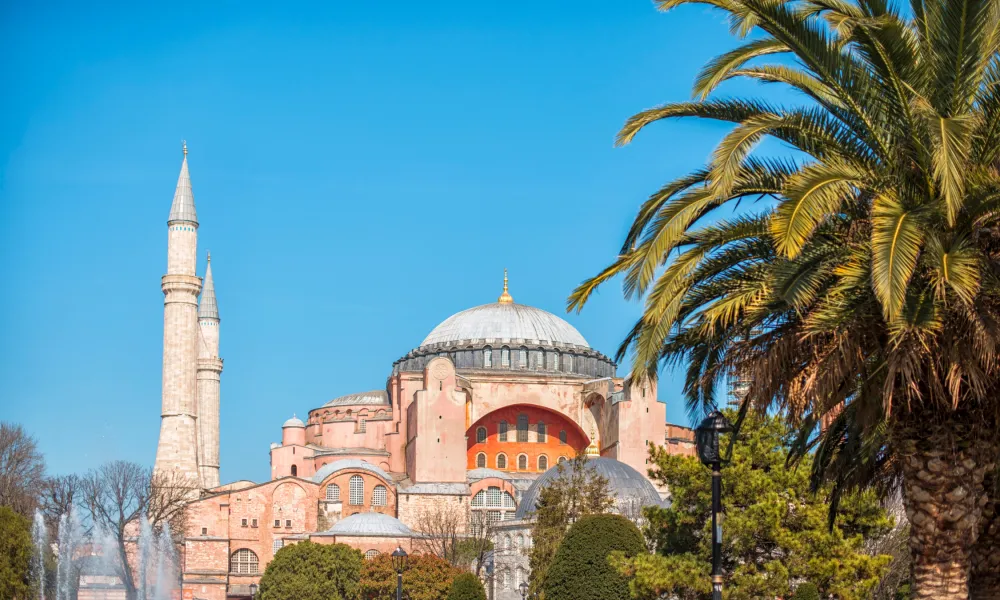
İnan also referred to the conversion of Hagia Sophia into a mosque, citing an earlier statement by Turkish President Recep Tayyip Erdoğan.
“Hagia Sophia will break its chains,” he said, adding that Erdoğan had “shattered those chains”.
The event was also attended by Energy and Natural Resources Minister Alparslan Bayraktar and the Turkish President’s son, Necmeddin Bilal Erdoğan.
Criticism of Greek place names
İnan also criticised the use of ancient Greek names in Turkey’s Aegean region.
According to Hürriyet, he objected to Greek names being used for locations, businesses and local products, while emphasising the historical significance of the name “Selçuk”.
He also referred to missionary activity in the region, arguing that Turkey allows different religions to be practised freely but would not accept what he described as the “exploitation of this tolerance”.
“Our tolerance comes from our nobility. However, we will never make concessions to those who interpret it as weakness,” he said.
Source: CNA