
The security risk remains heightened around the British Bases, with the possibility that a miscalculation could have repercussions beyond the Bases themselves, international relations expert Petros Zarounas told CNA. He added that the prospect of a broader regional escalation is real, even though Gulf states that have come under attack appear, for now, to favour de-escalation.
Looking ahead to developments in Iran, Zarounas said the most likely outcome, one that would be viewed as a success by the Trump administration, would be reform within the existing regime rather than its outright collapse.
He also argued that Nicosia should engage diplomatically with Iran, with which it maintains relations, in order to prevent future actions that could harm Cyprus. At the same time, he said the Republic should call on the European Union to activate Article 42 of the Lisbon Treaty on mutual defence assistance to ensure effective protection against potential strikes.
Zarounas added that now is not the time to raise the issue of renegotiating the status of the British Bases. However, within the framework of the Cyprus–UK strategic dialogue, he said Nicosia should insist on being informed if the Bases are to be used by non-Commonwealth countries.
Threat concentrated around the bases
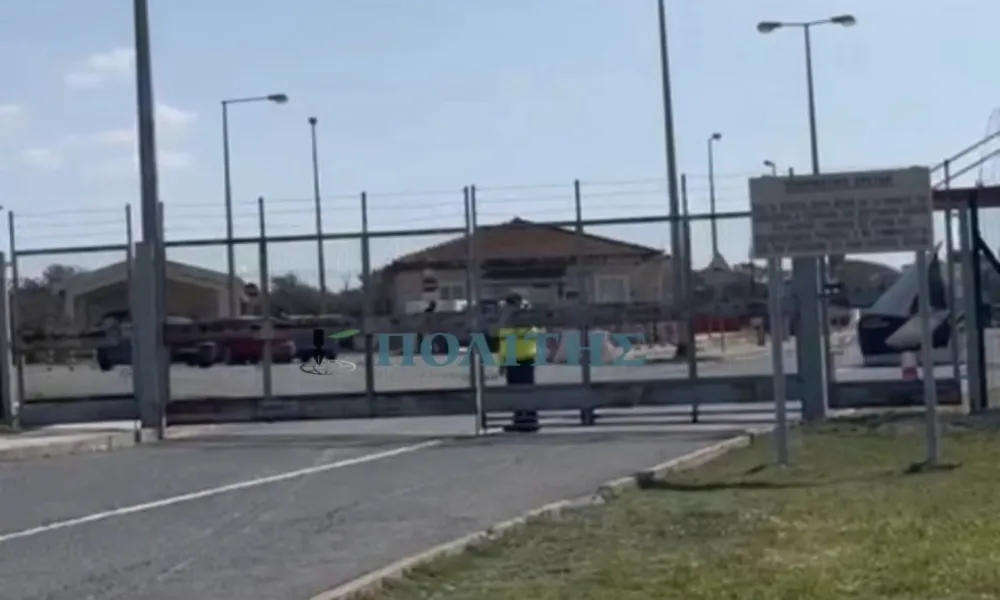
“At this stage, the threat is concentrated mainly on the Akrotiri Base and potentially Dhekelia,” Zarounas said when asked about the risks facing Cyprus.
He noted that the United Kingdom appears to have become more directly involved in the conflict, first by granting facilities to the United States at British Bases, both in Cyprus and elsewhere, such as Diego Garcia in the Indian Ocean.
He also referred to a joint statement by the UK, France and Germany indicating support for the United States against Iran on what was described as a defensive basis. However, he pointed out that this “defensive logic” includes targeting Iranian missile launchers, meaning that strikes would occur on Iranian territory.
“This is not as peaceful as the term ‘defensive’ suggests,” he said.
Zarounas argued that Iran’s strategy appears aimed at broadening the conflict in order to generate international pressure on the US and Israel. In that context, Tehran may activate regional proxies, including Hezbollah in Lebanon and Iraq and possibly the Houthis, while developments could also affect the fragile truce in Gaza.
He said the type of drone used in the strike against the Bases suggests that Hezbollah in Lebanon, which operates similar Iranian-made systems and is geographically closer to Cyprus, could be the likely actor.
“If the logic is to strike all Bases that could be used against them, Iran may have given direction to target Akrotiri,” he said, warning that as long as the war continues, similar attacks could recur.
He also cautioned that even if missiles are not deliberately aimed at Cypriot territory, there is a risk of malfunction or miscalculation. “If missiles are falling on Akrotiri, there is always the possibility that one could go off course and land on our territory by mistake,” he said.
For that reason, he stressed, Cyprus must activate all available defensive systems, whether anti-aircraft or anti-ballistic. “Fortunately, Cyprus has systems capable of protecting against both missile and drone threats,” he said, particularly for communities near Akrotiri.
He added that the Government should also provide clear civil defence guidance to residents in nearby areas, outlining precautionary measures and response plans.
Diplomatic action toward Iran and the EU
Beyond preventive measures, Zarounas said Cyprus should pursue diplomatic action in two directions.
First, given its diplomatic ties with Tehran, the Republic should convey that actions affecting Cyprus must be avoided, or it would be difficult for Nicosia to remain a constructive voice within the EU.
Second, he said Cyprus should call on EU partners, under Article 42 of the Lisbon Treaty, to provide mutual defence assistance, including interception systems against drones and missiles, to complement Cyprus’s existing capabilities.
“At European level, Article 42 can be activated to protect Cyprus,” he said, noting that the EU is already supporting Ukraine against Iranian-made drones used by Russia.
Not the time to renegotiate the bases
Responding to calls for renegotiating the status of the British Bases, Zarounas said this is not the appropriate moment. Instead, within the strategic dialogue with the UK, Cyprus should emphasise that actions that endanger the Republic must be avoided and that, under the Treaty of Establishment, Britain should consult Cyprus before granting facilities to non-Commonwealth countries.
Risk of broader war
Asked about the likelihood of a wider regional conflict, Zarounas said the risk exists. Gulf states such as Qatar, the United Arab Emirates and Saudi Arabia possess significant air capabilities but are currently seeking to avoid escalation. However, if the conflict becomes prolonged and their interests suffer major damage, they may be compelled to react.
Regarding other global actors, he said Russia remains focused on Ukraine and is unlikely to become directly involved, though it may provide intelligence support. China, which relies heavily on oil from Iran and the Gulf, has expressed concern and may offer satellite intelligence but appears unwilling to escalate further.
Regime change or reform
Zarounas argued that recent events suggest the primary objective of the operations may not have been nuclear or ballistic programmes but regime change.
He said the timing of the strikes was linked to intelligence about a high-level meeting involving Supreme Leader Ali Khamenei, and that once verified, existing operational plans were activated in what appeared to be an attempt to “decapitate” the regime.
Looking ahead, he outlined two scenarios. The more optimistic and likely outcome would be internal reform within the regime, possibly led by more moderate figures willing to compromise with the United States and Israel on nuclear limits, missile capabilities and human rights issues.
Such a compromise, he said, would allow President Trump to claim significant achievements at limited cost.
The alternative scenario would be outright regime collapse, potentially leading to chaos, especially given the absence of a clear alternative leadership and the presence of significant ethnic minorities that could seek autonomy. This, he warned, would be a far more destabilising and unpredictable outcome.
Source: CNA