
Foreign Minister Constantinos Kombos met with his Saudi Arabian counterpart Prince Faisal bin Harham Al Saud on Tuesday to discuss the “profoundly concerning situation in the region”.
In a post on social media, Kombos said he “conveyed Cyprus’ firm support and solidarity in light of unjustifiable and indiscriminate attacks against Saudi Arabia and our Gulf partners.”
The Cypriot FM added: “De-escalation, through dialogue and effective diplomacy, is imperative for safeguarding regional peace and security.”
Kombos is flying to a nearby Gulf country on Wednesday before returning to Cyprus.
Solidarity with Gulf partners
The trip is part of an effort by Cyprus to show solidarity with its Gulf partners who have been dragged into the conflict after the US-Israel attack on Iran – launched on February 28, 2026 – triggered a wave of Iranian drone and missile attacks against neighbouring countries allied to the US.
Iran claims the attacks on neighbours are focused on US military bases, though they have also hit civilian infrastructure such as hotels and energy installations – the latter in response to attacks on energy infrastructure by Israel and the US.
Gulf countries losing patience
So far, the Gulf states have not retaliated militarily against Iran, limiting themselves to air defences to intercept Iranian drones and missiles. Some have warned Tehran, however, that their patience is not infinite.
Should the Gulf states join the US and Israel in attacking Iran, this runs the risk of significant escalation, while introducing the prospect of boots on the ground, though there are no such indications at present. These same countries are Iran’s neighbours and will wish to maintain the option of calming, if not improving, regional relations post-conflict.
Also, if they join the fray, Iran could expand drone and missile target options to create mayhem. For now, the impact has created insecurity, and impacted tourism and energy flows, but an escalation could have more drastic consequences.
What next?
With both the US and Israel suggesting the war’s objective is to eliminate Iran’s nuclear and missile capabilities, it remains to be seen when and how they will deem this criterion fulfilled.
Israel also harbours a desire to see an uprising of the people replace the current government in Tehran – hence its targeting of the regime’s security apparatus – but has not made this a condition to end the war.
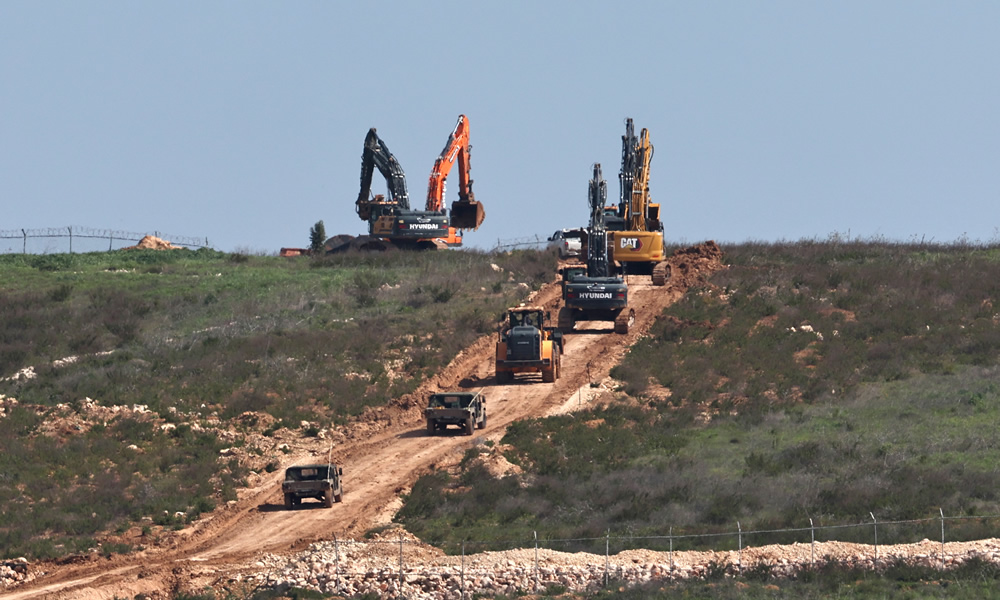
Israeli bulldozers and excavators, escorted by military vehicles, manoeuvre on the
Lebanese side of the border on Tuesday. EPA/ATEF SAFADI
The question on most people’s lips now is what will US President Donald Trump do next? Is he seeking an off-ramp? On what conditions? Does he want to open the Strait of Hormuz and then continue bombing or stop? Will he bomb Iran’s power plants, triggering another tit-for-tat assault on energy infrastructure in the region, with all the environmental damage that entails? Or is he simply buying time until US forces can take the strategically vital Qeshm Island to better control the chokepoint on the Strait? Perhaps Kharg Island which is strategically vital for Iran’s oil exports? Or even a bridgehead somewhere else to apply more pressure on Tehran?
Contingency planning for civilian evacuations
It’s possible that very few people really know what’s coming next. But in the midst of this regional war, now in its 25th day, Cyprus continues to make available for use its infrastructure and human resources to support foreign countries wishing to use the island for humanitarian and evacuation purposes.
Through the activation of its Special National Plan ‘ESTIA’, Cyprus allows foreign countries to send troops to the island as part of contingency planning for the possible evacuation of non-combatants from nearby warzones – specifically the hundreds of thousands of foreign nationals living in the region.
According to defence sources, Cyprus plays host to around 250 French troops, as well as a significant number from Canada.
Politis has learnt that around 1,200 US troops are also expected on the island – solely as part of the contingency planning for civilian evacuations if needed from nearby conflict zones.
Separate sources confirmed that the aim is to be ready for a worst-case scenario where a conflict escalates to the point that foreign nationals are under threat and need to be evacuated but have no commercial means of transport available. The current concern is that Israel’s war with Hezbollah in Lebanon leads to a serious deterioration in the region. Another scenario is that Iran’s conflict with Gulf neighbours escalates requiring mass evacuations.
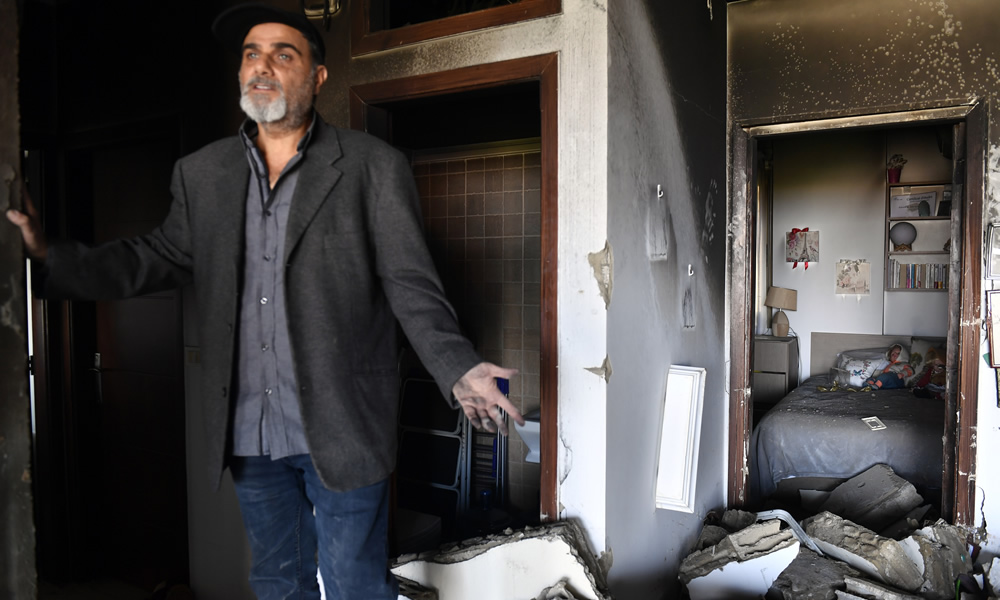
A man stands at a damaged apartment following an overnight Israeli airstrike
targeting a building in Bshamoun, southeast of Beirut, Lebanon. EPA/WAEL HAMZEH
The same precautionary measures were taken in previous times of regional conflict when foreign countries feared that thousands of their nationals might require evacuation. After the Hamas onslaught of October 7, 2023, and subsequent brutal war in Gaza which spread to Lebanon, multiple countries stationed troops in Cyprus – including Germany and Portugal – as a contingency for civilian evacuations, particularly in the final months of 2023.
According to sources, the government has always been transparent about hosting foreign troops to help with potential humanitarian evacuations – hence it’s activation of the ESTIA plan, which has been used in the past, including for small numbers of evacuations in 2024 and 2025.
During the current conflict, although activated, ESTIA has yet to be used. On Cyprus’ part, the state provides the necessary infrastructure and personnel to support evacuations on the ground if needed, while foreign countries are responsible for the actual evacuations.
Sources were keen to highlight that Cyprus will not be used for any offensive purposes. After so much effort to ensure the British Bases are not used for offensive missions, there is no chance Cyprus would allow any such mission from its soil, stressed one source.