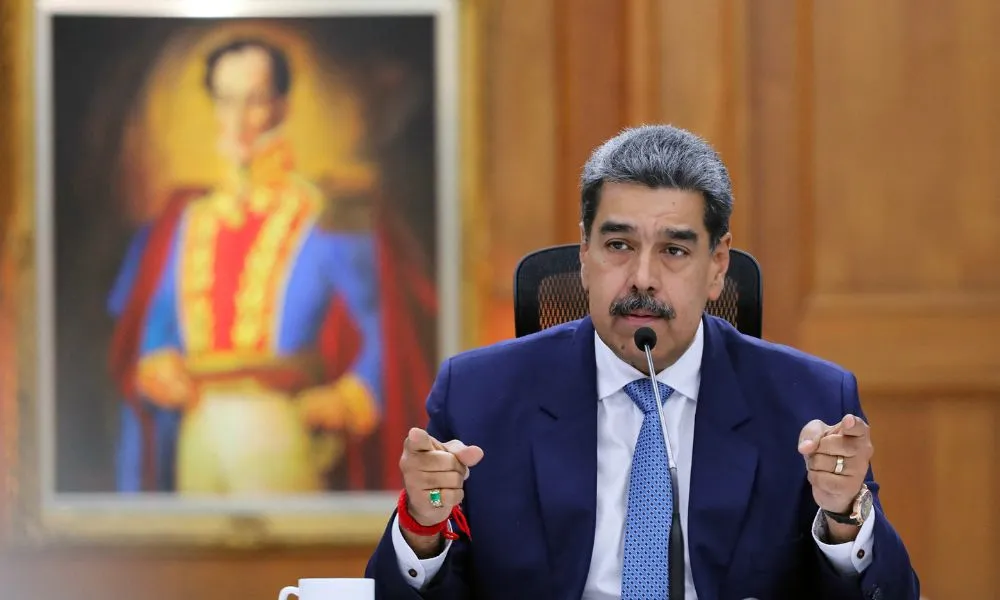

The arrest of Venezuelan President Nicolás Maduro by US forces, following a large-scale military operation that shook Caracas with explosions, triggered an immediate wave of international reactions. While some countries welcomed the move as the end of an authoritarian era, others warned of a dangerous breach of international law and a serious threat to regional and global stability. Below is a roundup of the main reactions, listed in alphabetical order by country or organisation.
Argentina
President Javier Milei welcomed the US strikes, repeating his trademark slogan in support of “freedom moving forward” and openly siding with Donald Trump. Milei has positioned himself as one of Trump’s closest ideological allies in Latin America.
Brazil
President Luiz Inácio Lula da Silva condemned what he described as a serious violation of Venezuela’s national sovereignty. He warned that the bombings and the capture of the president crossed unacceptable limits and risked destabilising South America as a whole. Lula called on the United Nations to respond decisively.
China
Beijing said it was “deeply shocked” and strongly condemned the use of force by the United States against a sovereign state. China’s foreign ministry accused Washington of blatant violations of international law and of endangering peace and security in Latin America and the Caribbean.
Colombia
President Gustavo Petro ordered troops to be deployed along the border and denounced the US attack as an assault on regional sovereignty. He warned that the operation could worsen the humanitarian situation and called for an emergency meeting of the Organisation of American States and the United Nations.
Ecuador
President Daniel Noboa welcomed the US action, saying the time had come for “narco-Chavista criminals” to face justice. He addressed opposition figures and the Venezuelan people directly, urging them to reclaim ownership of their country.
European Union
The EU urged respect for international law while reaffirming its commitment to a peaceful and democratic transfer of power in Venezuela. Foreign policy chief Kaja Kallas said she had called for restraint in talks with US Secretary of State Marco Rubio. Commission President Ursula von der Leyen expressed solidarity with the Venezuelan people and stressed that any solution must comply with the UN Charter.
France
President Emmanuel Macron called for a peaceful and democratic transition, saying the Venezuelan people had been freed from Maduro’s dictatorship. He urged that the transition respect the popular will and move swiftly, backing opposition figure Edmundo González Urrutia.
Germany
Chancellor Friedrich Merz said Maduro had led his country to ruin and played a destabilising role in the region, accusing him of links to drug trafficking. Germany reiterated that it had not recognised the 2024 election results and urged all sides to avoid further escalation and seek a political solution in line with international law.
Iran
Tehran strongly condemned the US military operation, calling it an illegal act and a flagrant violation of Venezuela’s sovereignty and territorial integrity. Iran described the attack as part of Washington’s hostile policy against one of Tehran’s key allies in Latin America.
Israel
Foreign Minister Gideon Saar welcomed what he described as the removal of a dictator who led a network of terrorism and drug trafficking. He hailed the moment as historic and praised Donald Trump as acting like the leader of the free world.
Italy
Prime Minister Giorgia Meloni described the US operation as legitimate and defensive in nature, while stressing that foreign military action is not, in itself, a solution for ending totalitarian regimes.
Mexico
Mexico’s foreign ministry condemned the unilateral US bombings, warning that they placed regional stability at serious risk.
Poland
Prime Minister Donald Tusk said the government would assess the broader consequences of the attack, noting that such developments affect the entire world and require careful preparation for a new international reality.
Russia
Moscow’s foreign ministry described the military attack as deeply alarming and unacceptable, arguing that ideological hostility had overridden economic pragmatism. Venezuela has long been regarded as Russia’s main ally in South America.
South Africa
Johannesburg called the US operation a clear violation of the UN Charter, stressing that unilateral use of force is illegal and undermines the stability of the international order.
Spain
Prime Minister Pedro Sánchez said Madrid would not recognise an intervention that violates international law, even though it does not recognise the Maduro government either. He warned that the US action could push the region into instability and conflict, calling instead for a fair, dialogue-based transition.
Turkey
Turkey’s foreign ministry urged all parties to exercise restraint in order to avoid damaging consequences for regional and international security.
Ukraine
Without explicitly referring to the US operation, Foreign Minister Andrii Sybiha denounced what he described as widespread crimes, repression and violations of fundamental freedoms by the Maduro regime, noting its close alliance with Russia.
United Kingdom
Prime Minister Keir Starmer said all countries must respect international law and confirmed that Britain did not take part in the US operation. He added that London would not mourn the end of Maduro’s rule and announced talks with Washington in the coming days on the issue.
United Nations
UN Secretary-General António Guterres expressed concern over the escalation and the lack of respect for international law. He warned of a dangerous precedent and called on all sides to engage in inclusive dialogue, with full respect for human rights and the rule of law.