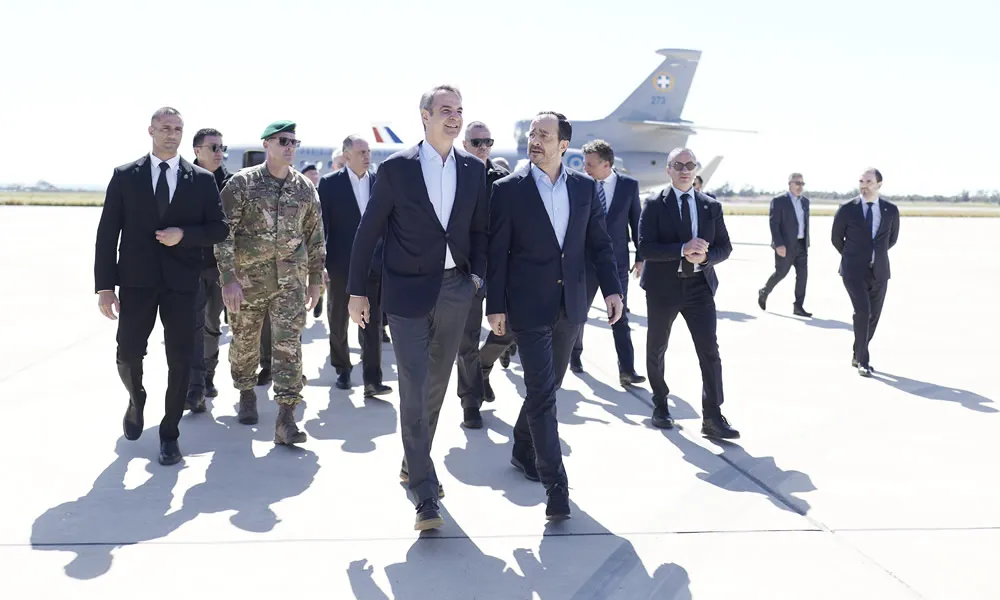

President Nikos Christodoulides’ hastily arranged trip to Athens on Saturday for talks with Greek Prime Minister Kyriakos Mitsotakis indicates that particularly critical diplomatic activity and consultations are under way behind the scenes on the Cyprus issue.
Officially, the discussions will focus on coordination between Athens and Nicosia ahead of the next diplomatic steps, according to statements by the Cypriot President. Christodoulides also said that the meeting had been requested by the Greek Prime Minister, although this has not been confirmed by Athens.
According to information emerging from the United Nations headquarters and Brussels, the latest activity is also directly linked to the broader bargaining surrounding relations between the European Union and Turkey.
UN Personal Envoy
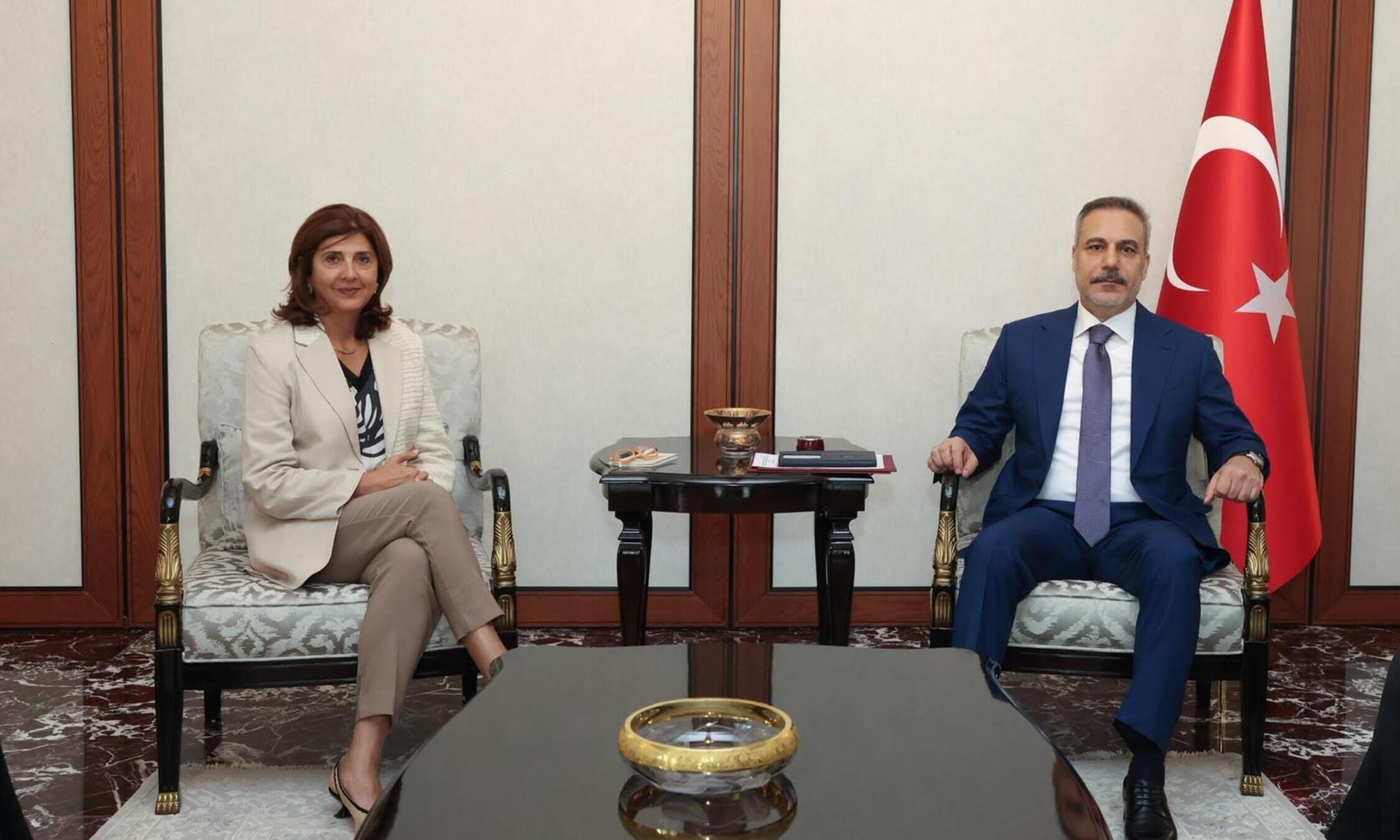
The UN Secretary-General’s Personal Envoy on Cyprus, María Ángela Holguín, appears to be playing a decisive role in the developments. Her meeting with European Commission President Ursula von der Leyen and her contacts in Ankara with Turkish Foreign Minister Hakan Fidan reinforce the assessment that the Cyprus issue is now being discussed in parallel with the concessions Turkey is seeking from the European Union.
According to information circulating in Brussels, preparatory work has begun at both technical and political level for the modernisation of the EU-Turkey Customs Union, as well as for Ankara’s possible participation in SAFE, the European financing instrument aimed at strengthening the defence industry.
These are two key Turkish objectives that could be used either as leverage or as an incentive for Ankara to adopt a more constructive stance on the Cyprus issue.
For Nicosia, however, the development carries significant risks. The Cypriot side does not want progress in EU-Turkey relations to be detached from Turkey’s obligations towards the Republic of Cyprus and from substantive moves on the Cyprus problem.
The concern is that Ankara could agree to take part in a new negotiating process while simultaneously securing assurances that the European benefits it seeks would continue to be considered even in the event of another deadlock.
On this point, a European diplomatic source told Politis that these concerns may well be the product of Greek Cypriot insincerity. In reality, the Greek Cypriot side speaks of renewed momentum and expresses its willingness to reach a settlement while banking on the assumption that Turkey is not currently ready to move forward.
This assessment, the source said, is also reflected in the cautious stance maintained so far by Tufan Erhürman.
By contrast, reports that Turkey appears prepared to accept a proposal by the UN Secretary-General for a new 5+1 conference, while seeking guarantees that its European agenda will not be frozen if the process collapses and Ankara attributes responsibility to the Greek Cypriot side, are causing considerable nervousness within Christodoulides’ inner circle.
Such an arrangement would create a new and complex field of pressure for Nikos Christodoulides, as any disagreement on his part during the negotiations could be portrayed as a retreat or a lack of political will.
Athens also has its own reasons for concern, particularly regarding Turkey’s participation in SAFE. Greece has raised serious objections, pointing to the fact that Turkey continues to maintain its casus belli in the event that Greece extends its territorial waters to 12 nautical miles.
For the Greek government, it is difficult to accept that a country threatening an EU member state with war could gain access to European defence funding without strict conditions.
The visit of the UN Secretary-General to Cyprus from 27 to 29 July therefore takes on added significance. His contacts with the two communities will not be limited to exploring the prospects for a resumption of negotiations.
They will also serve as a test of whether a broader package can be shaped, linking the Cyprus issue, the Customs Union, European defence and Greek-Turkish relations within a single negotiating framework.
The Christodoulides-Mitsotakis meeting is aimed precisely at establishing a common position ahead of this critical phase.
For Athens and Nicosia, the key objective is to ensure that Turkey’s European prospects do not become a reward without meaningful concessions, but rather a tool for securing specific and irreversible steps on the Cyprus problem and in EU-Turkey relations.