
By Yiota Hadjicosta and Yiannis Pazouros
A year has passed since the devastating wildfire that swept through the Limassol district, but in many parts of the region time appears to have stood still.
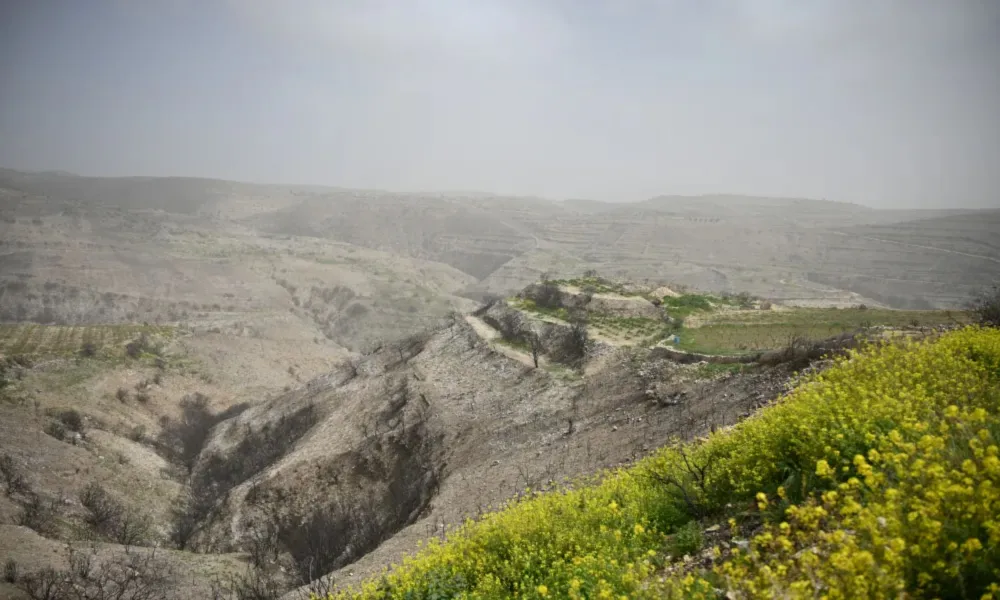
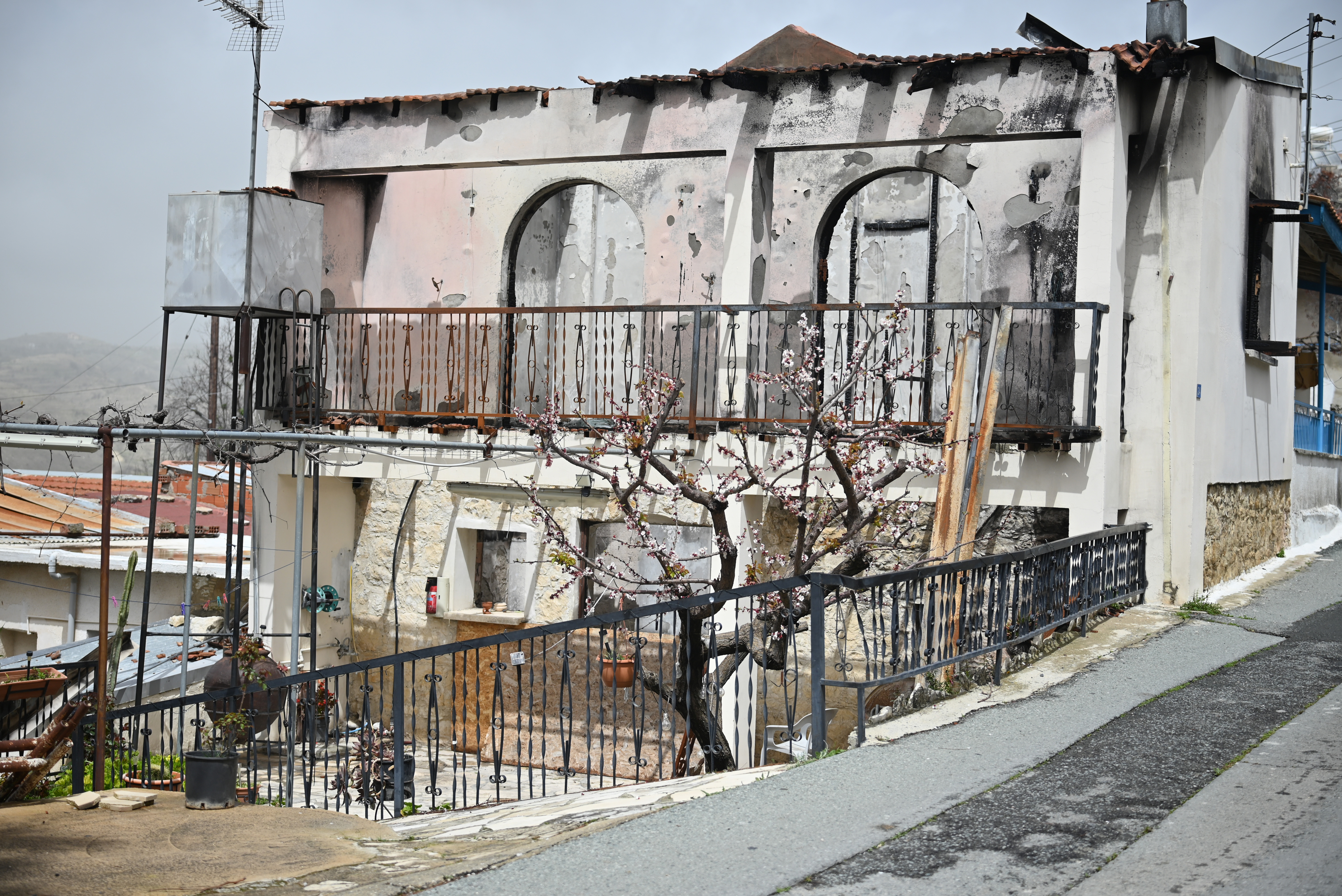
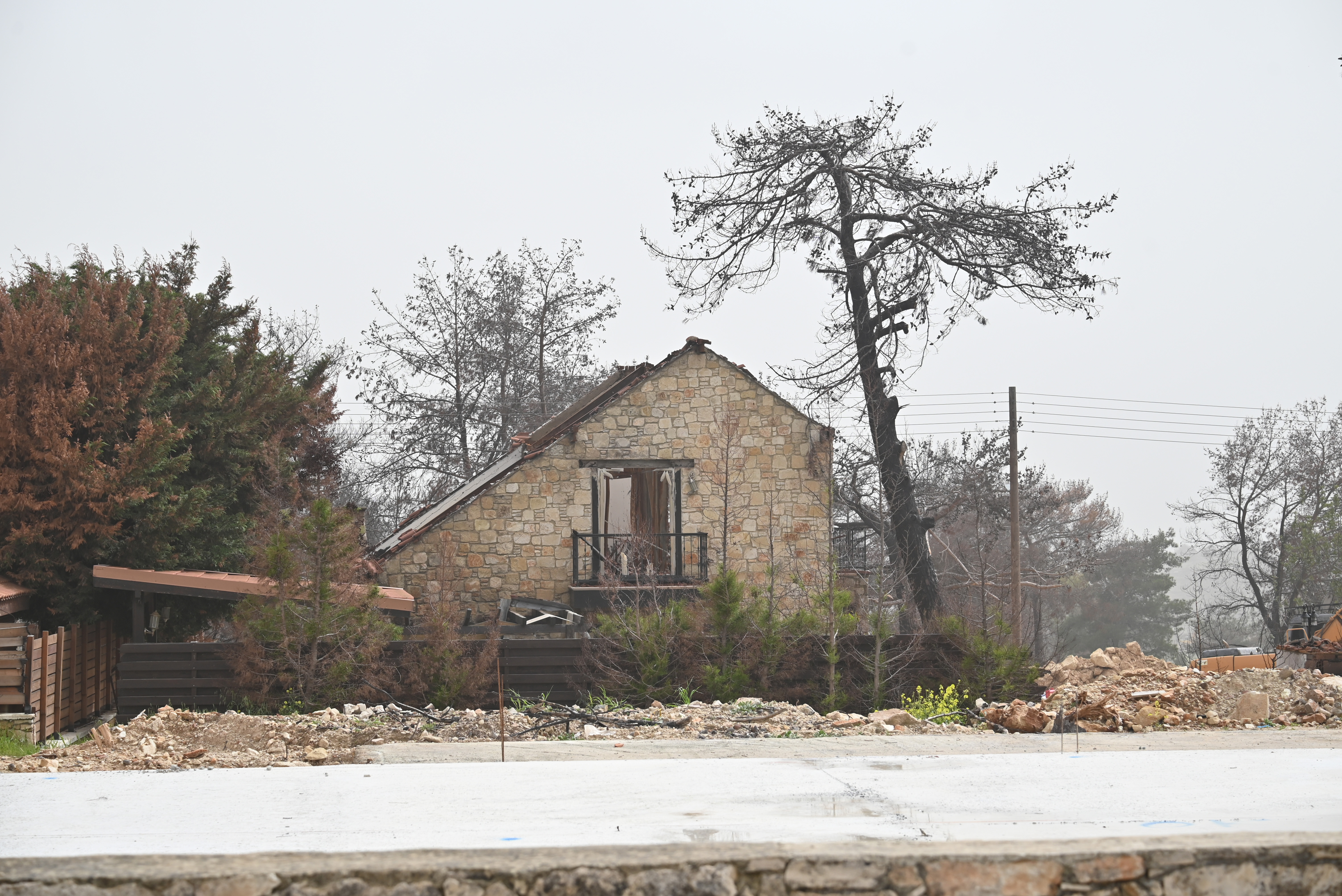
Blackened tree trunks still line the hillsides. Burnt homes remain visible in affected villages. Across once-fertile land, nature is still struggling to recover.
Some residents have returned to a sense of normality. Others have rebuilt. Some are still waiting. Others left and never came back.
What many share is the memory of a darkened sky, roads choked with smoke and the realisation that everything they owned could disappear within hours.
On 23 July 2025, wildfire tore through the mountainous Limassol region, leaving behind a trail of destruction. An elderly couple lost their lives, 211 homes were completely destroyed, 440 properties were affected and 125 square kilometres of land were reduced to ashes.
Beyond the statistics lie families whose lives changed overnight and who learned how quickly a lifetime of memories can be reduced to whatever fits inside a single bag.
Jason's regret
Jason experienced the 2025 wildfire alongside his family. Their home was destroyed and, for a period, they stayed with friends in Erimi.
One year later, he speaks with the quiet sadness of someone who still wonders what could have been done differently.
"It was moving to see the way people responded. People who didn't know us were incredibly generous to all the residents in the affected areas," he told Politis.
What continues to trouble him is the lack of an effective early-warning system.
"I don't feel anger and I don't want to blame anyone. It was a disaster unlike anything we had experienced before in this country," he said.
"What upset us greatly, however, was that we never received any message telling us we needed to leave the village. We made the decision to evacuate on our own."
He remembers how quickly events unfolded.
"There was no time. We took one bag, our dog and our passports."
"We didn't manage to take anything else. Fortunately, friends hosted us in Erimi until the danger had passed. That is where we felt the love of our fellow human beings, and that is what we hold on to."
Throughout his account, Jason repeatedly returns to the solidarity shown by others. Residents received clothes, food, accommodation and financial support from people they had never met.
"We didn't have time to take anything. We left with a bag, our dog and our passports in hand."
Financial support, but memories lost
In Vouni, Socrates Menelaou lost his holiday home.
He once lived permanently in the village and worked there as a café owner, but was forced to leave in 2015. Even so, he never abandoned the place he loved and continued to return to maintain his property until it was completely destroyed by the fire.
For him, the loss is measured less in financial terms and more in memories and a lifelong connection with the village.
He acknowledges that financial assistance was provided despite bureaucratic delays.
According to Menelaou, permanent residents received €10,000, with an additional €2,000 for each dependent, while the company XM donated €10,000 to every affected family.
"It was significant support during all the destruction we experienced," he said.
But no compensation, he adds, can recreate a home as it once was or replace possessions whose value was purely personal.
Invisible wounds
Recovery from a wildfire does not end when burnt land is cleared or the first compensation payments are made.
Some of the damage cannot be measured in reports or statistics.
It is the fear that comes with every rise in temperature. The anxiety triggered by the sound of a siren. The uncertainty felt by elderly residents who wonder whether they would have enough time to evacuate if another wildfire broke out.
Many residents continue to seek answers about the absence of timely warnings during the disaster.
Their demands remain largely the same: better vegetation management, more firebreaks, faster emergency response, stronger coordination among government services and an alert system capable of reaching every mobile phone in time.
The people affected are not asking for miracles.
They are asking not to be left alone in the face of a wildfire. They want to know when to evacuate, which route to follow and where to go. Above all, they want the state to be present before it is too late.
Life returns, memory remains
Green shoots have begun to appear on once-blackened hillsides.
Fields are being cleared. Courtyards are being rebuilt. In some repaired homes, lights have been switched on once again.
Nature is trying to recover, just as the people are.
Some have managed to rebuild quickly. Others remain trapped in bureaucracy, rising costs and exhaustion. Some refuse to leave the places they love, even though every new summer brings fear. Others no longer feel safe in communities where they once felt protected.
One year on, residents remember those who did not survive.
They remember the elderly couple who lost their lives and whose final movements remain unclear. They remember the moment the sky darkened and the hurried escape carrying only a handful of belongings.
But they also remember the strangers who opened their homes, the volunteers who ran towards the flames and the people who saved lives and property without ever seeking recognition.
A year after the Limassol wildfire, the challenge is not only to remember what happened but to ensure lessons are learned.
The rollout of the CyAlert warning system is viewed as a first step. Yet in a country increasingly vulnerable to wildfires, many residents believe far more still needs to be done.