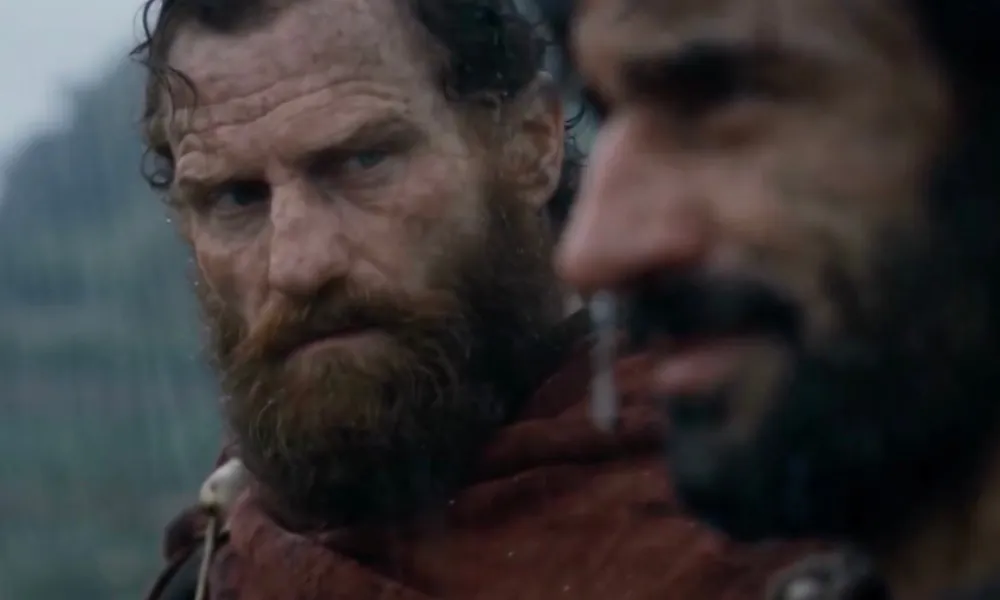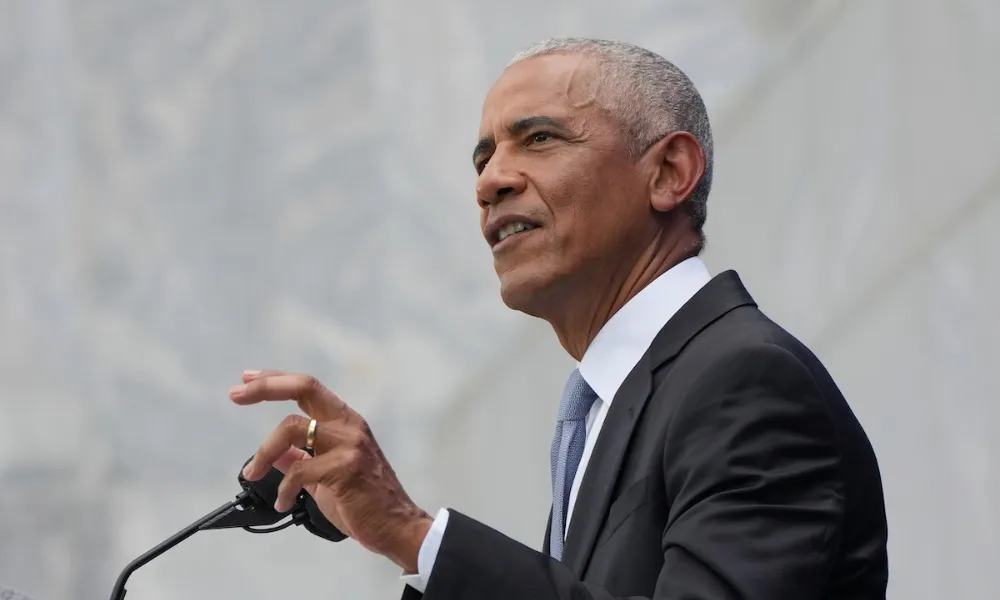

This week, Politis to the Point’s Phrase of the Day turns to elections and revolutions, two of the ways in which societies decide who holds power and on what terms. The theme was inspired by the elections in Brazil and Serbia, the marches taking place across Europe and, closer to home, the Democratic Rally’s (Disy) submission of its candidate for the presidential election.
Seven voices, seven moments
Each day features a figure who spoke after a victory, after a defeat or from the streets. The selection spans Cypriot, British, American, South African and Czech history, from an anti-colonial struggle in the 1950s to a presidential election in the 21st century.
Monday: Kyriakos Matsis
Kyriakos Matsis, Cypriot EOKA fighter: “We do not wage this struggle for money, but for virtue.”
Kyriakos Matsis was one of the best-known members of EOKA during the anti-colonial struggle against British rule. The phrase is attributed to him as his reply to a British offer of money in return for abandoning the struggle. In Greek, «Ου περί χρημάτων τον αγώνα ποιούμεθα, αλλά περί αρετής», it borrows from Herodotus, who records a similar remark about the ancient Greeks competing at the Olympic Games for an olive wreath rather than for wealth. Matsis was killed in Dikomo in November 1958 after refusing to surrender, and the phrase remains one of the most quoted in modern Cypriot history.
Tuesday: Emmeline Pankhurst
Emmeline Pankhurst, British suffragette leader: “We are here, not because we are law-breakers; we are here in our efforts to become law-makers.”
Emmeline Pankhurst founded the Women’s Social and Political Union in 1903 to campaign for women’s right to vote. She spoke these words at Bow Street Magistrates’ Court in London in October 1908, when she was tried over a leaflet calling on the public to “rush” the House of Commons. Some women in Britain won the vote in 1918, and equal voting rights followed in 1928, the year of her death.
Wednesday: Martin Luther King Jr.
Martin Luther King Jr., American civil rights leader and Baptist minister: “How long? Not long, because the arc of the moral universe is long, but it bends toward justice.”
Dr King delivered these words on 25 March 1965 on the steps of the Alabama State Capitol in Montgomery, at the end of the march from Selma. The marches were organised to demand voting rights for African Americans, and the first attempt, on 7 March, became known as “Bloody Sunday” after state troopers attacked the marchers. The image of the moral arc was adapted from a 19th-century sermon by abolitionist Theodore Parker. Months later, in August 1965, the Voting Rights Act was signed into law.
Thursday: Al Gore
Al Gore, Vice President of the United States: “While I strongly disagree with the court’s decision, I accept it.”
The 2000 US presidential election between Al Gore and George W. Bush came down to a few hundred votes in Florida. After weeks of recounts and legal challenges, the US Supreme Court halted the recount on 12 December 2000. Mr Gore, who had won the national popular vote, conceded the following day. His speech is often cited as an example of accepting an election result despite strong disagreement.
Friday: Nelson Mandela
Nelson Mandela, President of South Africa and anti-apartheid leader: “Never, never and never again shall it be that this beautiful land will again experience the oppression of one by another.”
Nelson Mandela spent 27 years in prison for his opposition to apartheid. In April 1994, South Africa held its first democratic elections in which citizens of all races could vote, and his party, the African National Congress, won. He spoke these words at his inauguration as president in Pretoria on 10 May 1994.
Saturday: Václav Havel
Václav Havel, Czech playwright, dissident and President of Czechoslovakia: “Truth and love must prevail over lies and hatred.”
In November 1989, a student march in Prague was violently dispersed by police, sparking mass demonstrations across Czechoslovakia. Within weeks, the communist regime collapsed in what became known as the Velvet Revolution for its largely peaceful character. Havel, a playwright who had been repeatedly imprisoned for his dissent, became the movement’s leading voice, and this phrase its motto. He was elected president on 29 December 1989.
Sunday: Barack Obama
Barack Obama, President of the United States: “It’s been a long time coming, but tonight, because of what we did on this day, in this election, at this defining moment, change has come to America.”
Barack Obama spoke these words in his victory speech at Grant Park, Chicago, on 4 November 2008, after being elected the first African American President of the United States. Coming 43 years after the Selma marches, his election was widely seen as a milestone in the history of civil rights in America.