
In a civilized society, respect is the baseline. And respect begins with the words we choose.
To help navigate modern conversations with decency, here is the essential, straightforward glossary of LGBTQ+ terms. You don't have to understand it all—you just need to use it.
The Basics of Identity: Sex vs. Gender
-
Sex: The biological categories of male and female, assigned to a person at birth on the basis of primary sex characteristics (genitalia) and reproductive functions. "Sex" also refers to sexual activity and intercourse.
-
Gender: A person’s innate sense of being a man, woman, non-binary, or another gender.
-
Gender Identity: A person’s innate sense of their own gender, whether male, female, or something else, which may or may not correspond to the sex assigned at birth.
-
Gender Expression: How a person expresses their gender outwardly. This could be through cues such as clothing, haircuts, behavior, and gendered norms or roles typically associated with masculinity and femininity across cultures.
-
Cisgender or Cis: Someone whose gender is the same as the sex they were assigned at birth. For example, a cis woman is someone who was assigned female at birth and continues to live and identify as a woman.
-
Pronoun: Words we use to refer to people’s gender in conversation—for example, "he", "she", or "they". Using a person’s correct pronouns is a fundamental baseline of respect.
Understanding the "Trans" Experience
-
Trans: An umbrella term to describe people whose gender is not the same as, or does not sit comfortably with, the sex they were assigned at birth. This includes transgender, transsexual, genderqueer, genderfluid, non-binary, agender, trans man, trans woman, trans masculine, and trans feminine.
-
Transgender Man: A man who was assigned female at birth. This may be shortened to trans man, or FTM (female-to-male).
-
Transgender Woman: A woman who was assigned male at birth. This may be shortened to trans woman, or MTF (male-to-female).
-
Person with a Trans History: Someone who identifies as male or female (a man or a woman), but was assigned the opposite sex at birth. This is increasingly used to acknowledge a trans past.
-
Transsexual: A more medical term used more commonly in the past (similar to homosexual) to refer to someone whose gender is not the same as, or does not sit comfortably with, the sex they were assigned at birth. While still used by some today, many prefer "trans" or "transgender".
-
Transitioning: The steps a trans person takes to live in their gender. Each person’s transition involves different things. For some, it involves medical interventions like hormone therapy and surgeries, but not all trans people want or are able to have this. It also involves social steps like telling friends and family, using different pronouns, dressing differently, and changing official documents.
-
Deadnaming: Calling someone by their birth name after they have changed their name. This term is often associated with trans people who have changed their name as part of their transition.
-
Passing: When a trans person is perceived to be the gender with which they identify, based on their appearance.
-
Gender Dysphoria: The discomfort or distress that a person experiences when there is a mismatch between their sex assigned at birth and their gender identity.
-
Gender Incongruence: The term used to describe the mismatch between a person’s gender and the sex they were assigned at birth. This is also the clinical diagnosis used by the NHS for someone who is trans.
-
Gender Reassignment: The phrase used in the Equality Act 2010 to describe the characteristic under which trans people are protected from discrimination in the workplace and wider society. It applies if a person is proposing to undergo, is undergoing, or has undergone a process to reassign their sex. It is generally used in legal contexts and commonly referred to as transitioning.
-
Gender Recognition Certificate (GRC): A certificate that enables trans people to be legally recognised in their affirmed gender and to be issued with a new birth certificate, if they choose. Currently, applicants must be over 18.
-
Gillick Competence: A term used in medical law to decide whether a child under 16 years of age is able to consent to their own medical treatment, without the need for parental permission or knowledge.
Beyond the Binary
-
Non-binary: A term for people whose gender doesn’t sit comfortably with "man" or "woman". Non-binary identities are varied; some people identify with some aspects of binary identities, while others reject them entirely.
-
Genderqueer: A term for people whose gender identity doesn’t sit comfortably with "man" or "woman". It is also used by people who reject binary gender roles and/or normative gender expression, often used similarly to non-binary.
-
Gender Non-conforming: A person whose gender expression doesn’t align with societal expectations of gender. Both cis and trans people can be gender non-conforming.
-
Intersex: A term used to describe a person who has biological attributes of both male and female sexes, or whose biological attributes do not fit with societal or medical assumptions about what constitutes male or female. Intersex people may identify as male, female, non-binary, or otherwise.
Attraction and Orientation
-
Orientation: An umbrella term describing a person's attraction to other people. This attraction may be sexual (sexual orientation) and/or romantic (romantic orientation).
The "Allo" Spectrum (Experiencing typical attraction)
-
Allo (Sexual and Romantic): Allo people experience sexual and romantic attraction, and do not identify as on the ace or aro spectrum. Allo is to ace and aro spectrum identities as straight is to LGB+ spectrum identities. Using words like this equalises experience so the alternative does not become labeled as the "normal," which is stigmatising.
-
Heterosexual/straight: Refers to a man who is attracted to women or to a woman who is attracted to men.
-
Homosexual: A term to describe someone who is attracted to someone of the same sex or gender. The term "gay" is now more generally used.
-
Gay: Refers to a man who is attracted to men. Some non-binary people also identify with this term. It is also used as a generic term for lesbian and gay sexuality (for example, some women define themselves as gay rather than lesbian).
-
Lesbian: Refers to a woman who is attracted to women. Some non-binary people may also identify with this term.
-
Butch: A term predominantly used to describe masculine lesbians.
-
Femme: A term predominantly used to describe feminine lesbians, though sometimes used more generally to describe feminine LGBTQ+ people.
-
Bi: Refers to someone who is attracted to more than one gender. Bi people may use terms like bisexual, pan, and queer. It is often used as an umbrella term for these identities.
-
Pan: Refers to a person whose attraction towards others doesn’t regard sex or gender.
The "Ace & Aro" Spectrum (Varying, rare, or absent attraction)
-
Ace and Aro / Ace and Aro Spectrum: Umbrella terms used to describe the wide group of people who experience a lack of, varying, or occasional experiences of romantic and/or sexual attraction. This includes terms like asexual, ace, aromantic, aro, demi, grey, and abro. People may use these in conjunction with terms like gay, bi, lesbian, straight, and queer to explain the direction of their attraction when they do experience it.
-
Ace: An umbrella term used specifically to describe a lack of, varying, or occasional experiences of sexual attraction, encompassing asexual, demisexual, and grey-sexual people.
-
Asexual: A person who does not experience sexual attraction. Some asexual people experience romantic attraction, while others do not.
-
Aro: An umbrella term used specifically to describe a lack of, varying, or occasional experiences of romantic attraction, encompassing aromantic, demiromantic, and grey-romantic people.
-
Aromantic: A person who experiences little to no romantic attraction. Aromantic people may or may not experience sexual attraction.
-
Abro (Sexual and Romantic): A word used to describe people who have a fluid sexual and/or romantic orientation which changes over time or over the course of their life.
-
Demi (Sexual and Romantic): An umbrella term used to describe people who may only feel sexually or romantically attracted to people with whom they have formed an emotional bond.
-
Grey (Sexual and Romantic): Also known as grey-A, this is an umbrella term which describes people who experience attraction occasionally, rarely, or only under certain conditions.
-
Spectrum: A term used to cover a variety of identities that have a root commonality or shared experience.
-
Platonic Partnerships: Relationships common among those on the ace and/or aro spectrum where there is a high level of mutual commitment. This can include shared life decisions, shared living arrangements, and co-parenting of children, and can involve more than two people. These partners may be monogamous or polyamorous.
The Broader Community & Culture
-
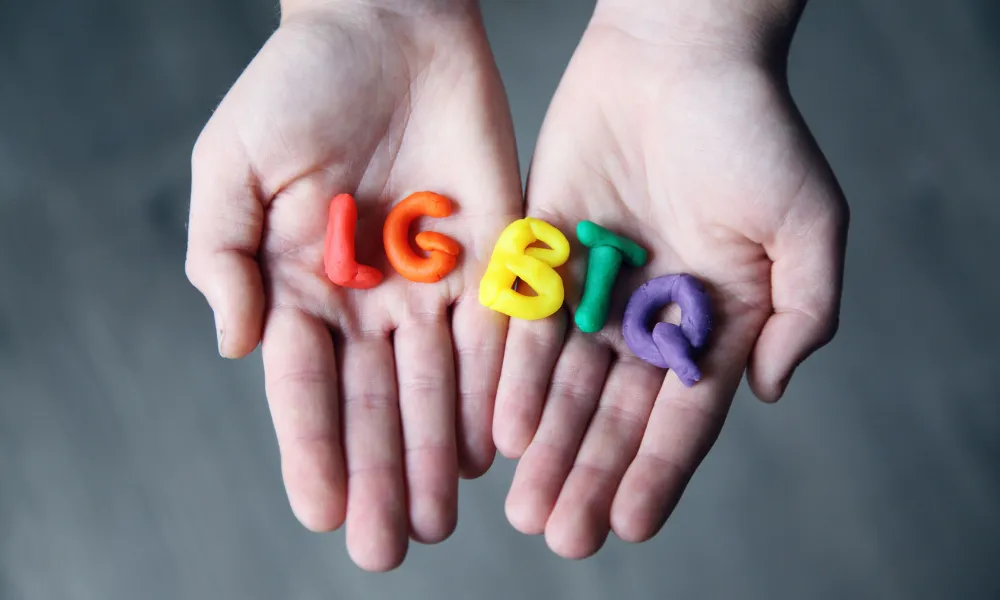
LGBTQ+: An acronym commonly used to describe people who are lesbian, gay, bi, trans, queer, questioning, and ace. Other variations include LGBT, LGBTQ, and LGBTI.
-
Queer: A term used by those wanting to reject specific labels of sexual orientation and/or gender identity, or to reject the perceived norms of the LGBTQ+ community (such as racism, sizeism, and ableism). Historically used as a slur and still viewed as such by some, it has been reclaimed and embraced by many others.
-
Questioning: The process of exploring your own sexual orientation and/or gender identity.
-
QTIPOC: An acronym that stands for Queer, Transgender, and Intersex People of Colour.
-
Ally: A straight and/or cis person who supports members of the LGBTQ+ community. Members of the LGBTQ+ community can also be allies to one another.
-
Coming Out: When a person first tells someone or others about their sexual orientation and/or gender identity.
-
Outed: When an LGBTQ+ person’s sexual orientation or gender identity is disclosed to someone else without their consent.
Prejudice and Medical Terms
-
Homophobia: Prejudice or negative attitudes, beliefs, or views about gay people, including the fear or dislike of someone because they are, or are perceived to be, gay.
-
Biphobia: Prejudice or negative attitudes, beliefs, or views about bi people, including the fear or dislike of someone who is, or is perceived to be, bi.
-
Lesbophobia: Prejudice or negative attitudes, beliefs, or views about lesbians, including the fear or dislike of someone because they are, or are perceived to be, a lesbian.
-
Transphobia: Prejudice or negative attitudes, beliefs, or views about trans people, including the fear or dislike of someone based on the fact they are, or are perceived to be, trans.
-
Undetectable: A term referring to a viral load in people living with HIV. HIV medication (antiretroviral treatment, or ART) works by reducing the amount of the virus in the blood to undetectable levels. This means the levels of HIV are so low that the virus cannot be passed on.
The Bottom Line: You don't need a personal revelation to use correct pronouns, names, and terminology. Politeness requires no explanation; it only requires a willingness to listen and use the language people ask you to use.