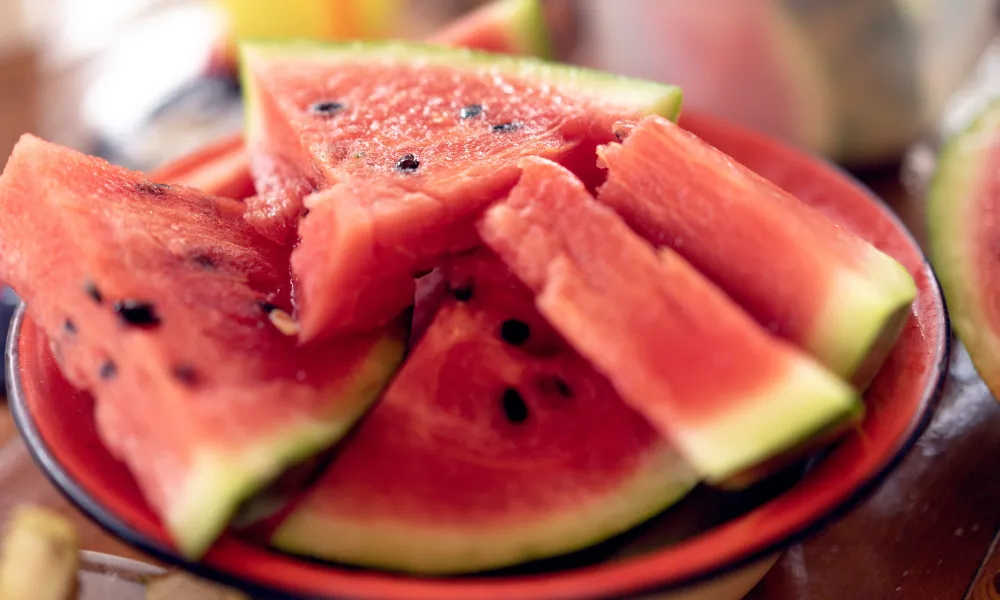

Watermelon pie is a traditional Cycladic dessert that embodies the philosophy of island cooking: simple ingredients, seasonal produce and minimal waste.
Made without pastry, the pie relies almost entirely on the quality of the fruit and the careful balance of moisture. The result is a dessert that captures the flavours of summer in every bite.
Choosing the right watermelon
A good watermelon is the foundation of a good watermelon pie.
The fruit is at its best between June and September, when it develops its fullest sweetness and aroma. Out-of-season watermelons tend to be more watery and less flavourful, making it harder to achieve a pie with the right consistency.
For the recipe, the ideal watermelon is ripe but not overripe, with firm, juicy flesh and strong sweetness. Varieties such as Crimson Sweet, Sugar Baby and Royal Sweet are particularly suitable.
The dessert also fits naturally into a sustainability-minded kitchen. Even part of the white rind can be used, provided it is cleaned and finely chopped, helping reduce food waste while adding texture.
Water, structure and texture
Watermelon is made up mostly of water, making it the most challenging ingredient in the recipe.
During baking, some of this moisture evaporates, concentrating the fruit's flavour. At the same time, the flesh softens and develops a creamy texture.
Flour plays a crucial role. Its starch absorbs moisture and swells when heated, helping the mixture set and giving the pie structure.
Too little flour leaves the pie unstable and difficult to slice. Too much creates a heavy, dry result that masks the fruit's flavour.
Draining the watermelon for 30 to 60 minutes before mixing is essential because it removes excess moisture without sacrificing texture.
The pie should also remain relatively thin, ideally between one and three centimetres, to ensure even baking.
Caramelisation and browning
Sugar and honey do more than sweeten the pie.
As moisture evaporates during baking, sugars become concentrated and begin to caramelise, creating richer flavours.
At the same time, Maillard reactions occur on the surface, producing the golden colour and toasted aromas associated with well-baked desserts.
The goal is a deep golden-brown finish rather than a dark or burnt crust, which can introduce bitterness.
Olive oil, sesame and spices
Olive oil is essential to the pie's texture.
It softens the structure of the dough-like mixture, reducing toughness and helping the pie remain moist after baking.
Sesame seeds add nutty aromas and a pleasant contrast in texture, while spices contribute depth and complexity.
Cinnamon enhances the perception of sweetness, cloves add richness, vanilla softens the flavour profile and lemon zest provides freshness. More adventurous versions may include cardamom, ginger or star anise, though the fruit should always remain the star of the dish.
A Mediterranean dessert
Watermelon pie reflects core principles of the Mediterranean diet: seasonal ingredients, olive oil, seeds, honey and fruit.
It can be served at room temperature or chilled, often with a sprinkle of cinnamon and a drizzle of honey.
Some modern and Cycladic variations include feta cheese, creating a sweet-and-savoury contrast inspired by the classic summer pairing of watermelon and feta.
Tips for the perfect watermelon pie
For the best results:
- Use ripe but not overly watery watermelon.
- Drain the fruit well before mixing.
- Add flour gradually until the mixture is thick but still spreadable.
- Grease the baking tray thoroughly and consider dusting it with semolina or sesame seeds.
- Keep the mixture in a relatively thin layer.
- Bake in a preheated oven at 180°C for 45-60 minutes, until golden brown.
- Allow the pie to cool before slicing so that the structure can fully set.
The science explains the reactions taking place in the oven, but ultimately it is the combination of ripe fruit, olive oil, honey, flour and spices that gives watermelon pie its enduring appeal and distinctly Cycladic character.
Source: cantina