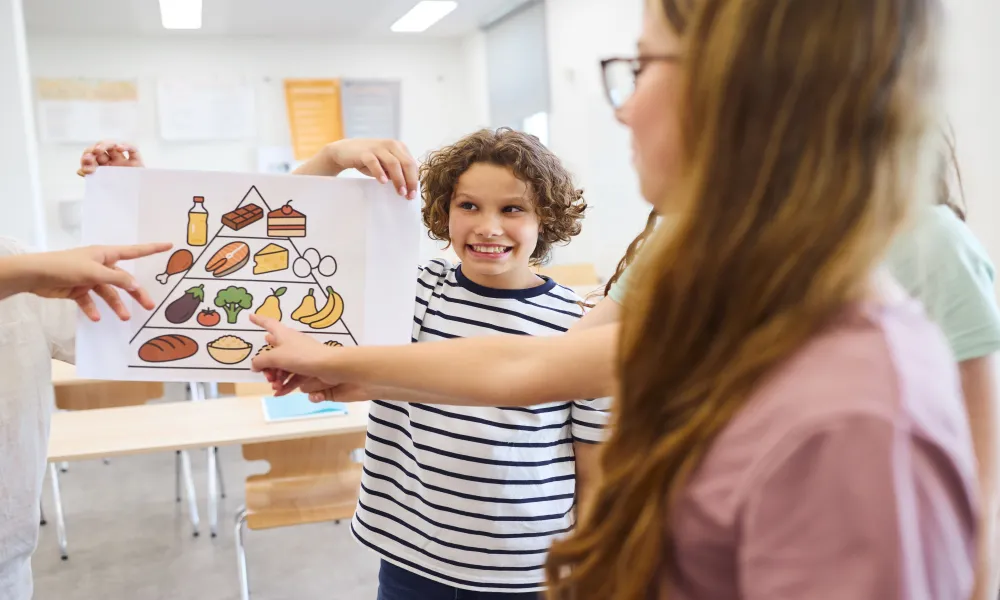

Professors from the Department of Dietetics and Nutrition at the University of Thessaly have published a 10-point guide to healthy eating for children, aimed at helping reduce childhood obesity rates.
The experts stress that parents play a crucial role in shaping children's habits and should act as positive role models by encouraging healthy eating and regular physical activity.
The 10 recommendations
The guide encourages:
- Daily physical activity.
- A variety of fruits and vegetables every day.
- Three main meals and one healthy snack each day.
- Eating breakfast daily.
- Drinking plenty of water.
- Consuming milk or yoghurt every day.
- Choosing a variety of cereals, preferably wholegrain.
- Limiting sugar, salt and foods high in both.
- Eating lean red or white meat two to three times per week while avoiding processed meats.
- Following a Mediterranean-style diet with olive oil, legumes, fish and seafood.
The guide also recommends:
- Using olive oil as the primary cooking fat.
- Eating legumes at least once a week.
- Consuming fish and seafood two to three times a week, including oily fish at least once weekly.
- Eating meals with the television switched off and gathering as a family as often as possible.
- Preparing meals at home using healthy methods and seasonal produce.
Parents set the example
Thanasis Tziamourtas, professor at the University's Department of Physical Education and Sport Science and chairman of the Department of Dietetics and Nutrition, told the Athens-Macedonian News Agency that poor nutrition and lack of physical activity remain the two biggest risk factors for childhood obesity.
He noted that research shows children with one obese parent are significantly more likely to become obese themselves, while the risk increases further when both parents are obese.
"We must first set the right example for our children by exercising and paying attention to our diet and weight," he said.
Importance of physical activity
Tziamourtas said insufficient physical activity is a major contributor to weight gain among children aged 12 to 14.
He argued that children should be encouraged to move as much as possible, noting that school exercise time is limited and many extracurricular activities do not involve physical movement.
Combined with sedentary forms of entertainment such as television and video games, this helps explain increasing obesity rates among children, he said.
"Both physical education teachers and families need to provide the motivation for children to develop a love of movement and physical activity," he added.
Research continues
Tziamourtas said researchers at the university's Exercise Biochemistry Laboratory are continuing to study how exercise and physical activity influence the body's functions and contribute to better health outcomes.
Source: AMNA