
The United Nations has released its third Global Ocean Assessment, revealing that the world's oceans are facing severe and accelerating stress from cumulative human activities. Compiled by nearly 600 scientists from 86 countries, the report covers data from 2021 to 2025, highlighting a sharp decline in marine biodiversity and a critical strain on oceanic systems driven primarily by pollution, climate change and large-scale industrial fishing.
According to the findings, sea level rise has accelerated dramatically, jumping from an average of 2 mm per year before 2015 to 4.3 mm per year in 2023. The data also reveals that 16 per cent of the total global ocean heat increase recorded since 1955 occurred after 2018, with the highest temperature spikes observed in the Atlantic Ocean alongside the southern regions of the Indian and Pacific Oceans.
Rising temperatures and data gaps
The assessment notes that despite technological advancements, significant gaps in scientific knowledge remain. Only 27 per cent of the global seabed has been mapped as of 2025, leaving deep-water ecosystems poorly understood at a time when they face imminent environmental threats.
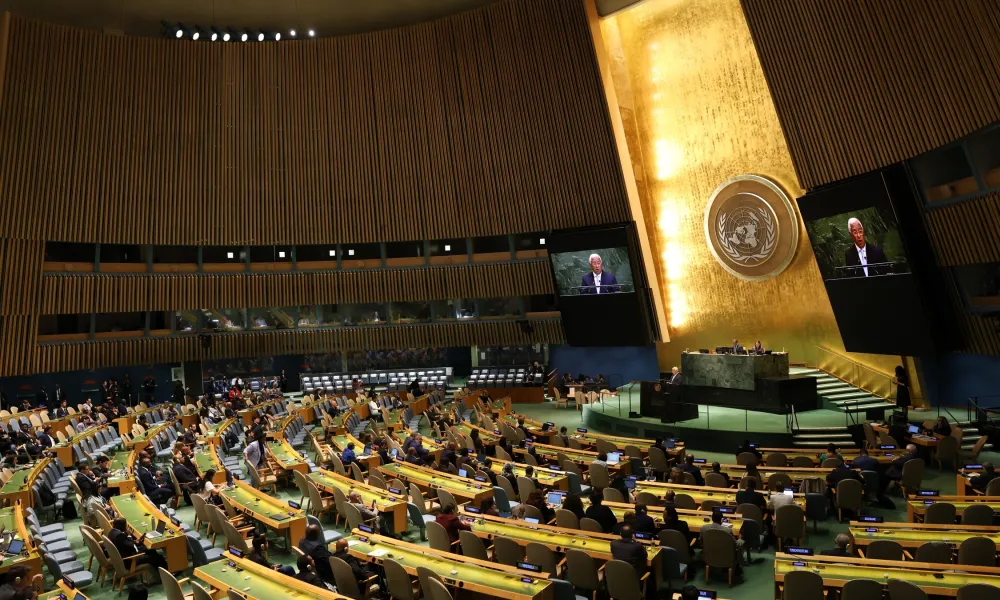
United Nations Secretary General Antonio Guterres emphasized that the international community cannot continue to treat the ocean as an inexhaustible resource. He called for urgent global cooperation based on international law and scientific research to establish a sustainable relationship with marine habitats.
Environmental pressures are further exacerbated by demographic changes. The global population increased from 7.7 billion in 2017 to 8.2 billion by the end of 2024, with more than a third of the population now living within 100 kilometres of a coastline and 11 per cent residing in low-lying areas less than 10 metres above sea level.
Fragmentation in marine governance
The ocean covers more than 70 per cent of the planet and plays a central role in climate regulation, having already absorbed 90 per cent of excess heat and 30 per cent of carbon dioxide emissions generated by fossil fuels. However, changing ocean currents pose unpredictable risks for future climate stability.
Pollution levels have also reached critical thresholds, with an estimated 52.1 million tonnes of plastic waste entering the ocean annually, resulting in 24.4 trillion microplastic particles affecting more than 4,000 marine species.
While the report acknowledges structural progress, such as the enforcement of the historic High Seas Treaty which established conservation rules for the two-thirds of the global ocean outside national jurisdictions, it concludes that international governance remains fragmented across different sectors and regions.
In response to the UN findings, environmental organizations have called on world governments to accelerate the creation of fully protected marine sanctuaries. Current international pledges aim to protect 30 per cent of the global oceans by 2030, a target that scientists consider the absolute minimum required to allow marine ecosystems to recover from industrial exploitation.