
Before assessing a high-level visit, it is important to separate expectations from actual outcomes.
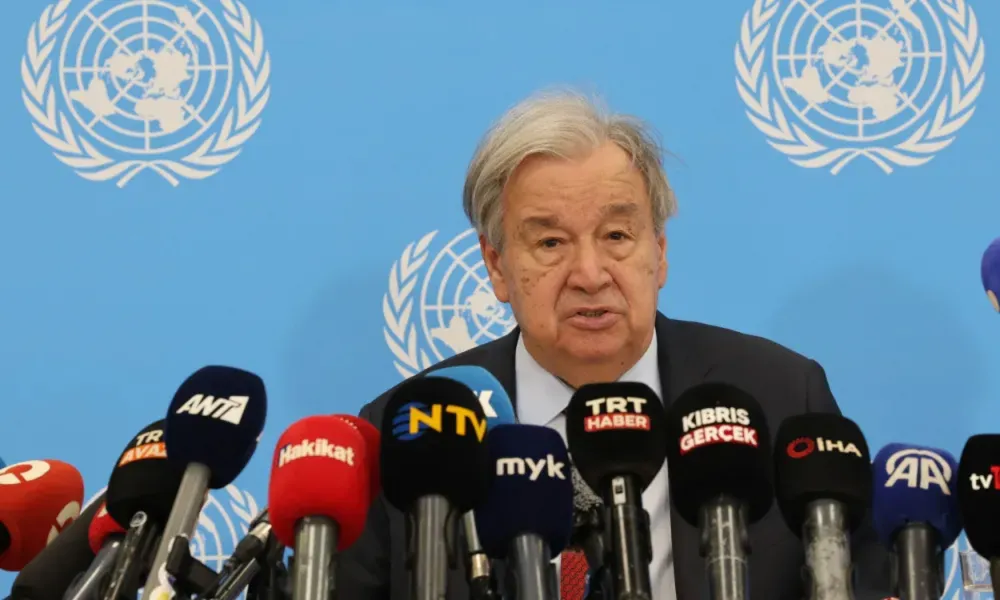
Antonio Guterres' visit to Cyprus was unquestionably significant from both a political and symbolic perspective. It was not, however, accompanied by any dramatic development or decisive step capable of changing the trajectory of the Cyprus issue. The visit succeeded in keeping the process alive, but not in moving it to a new stage.
Those expecting a major initiative or an agreement that would unlock negotiations were likely disappointed. There was no tangible outcome to justify celebrations. The Cyprus issue remains confronted by the same familiar difficulties, the divergent positions of the two sides and the challenge of moving from managing the stalemate to pursuing a genuine settlement process.
That does not mean the visit lacked value.
The Cyprus issue no longer attracts strong international attention, and the personal involvement of the UN secretary-general serves as a reminder that the United Nations has not abandoned its efforts. The process remains alive, and that in itself matters. In diplomacy, avoiding complete paralysis is often a prerequisite for any future progress.
Whether Guterres' visit ultimately leaves a meaningful legacy will be determined in the months ahead. If the contacts held during his stay lead to a new expanded five-party conference, confidence-building measures or a substantive resumption of negotiations, it will be possible to argue that the secretary-general's presence produced results. If not, it will be recorded as another well-organised diplomatic initiative that failed to overcome familiar deadlocks.
Perhaps what is most worth remembering is not what was said about procedures, but the broader message conveyed by the UN chief regarding the international environment.
Guterres noted that resolving the Cyprus problem is crucial "not only for safeguarding the interests and peace of the Cypriot people, but also as a factor of stability in a region that is becoming dangerously unstable."
The war in the Middle East has elevated stability in the Eastern Mediterranean into an international priority.
That may ultimately prove to be the most important outcome of the visit. Not immediate progress, but a reminder that international conditions have created a window of opportunity.
The island's political leadership is therefore called upon to make decisions guided by the security and prosperity of all Cypriots and residents of the country.
That is the bigger picture.
The current status quo offers only uncertainty.