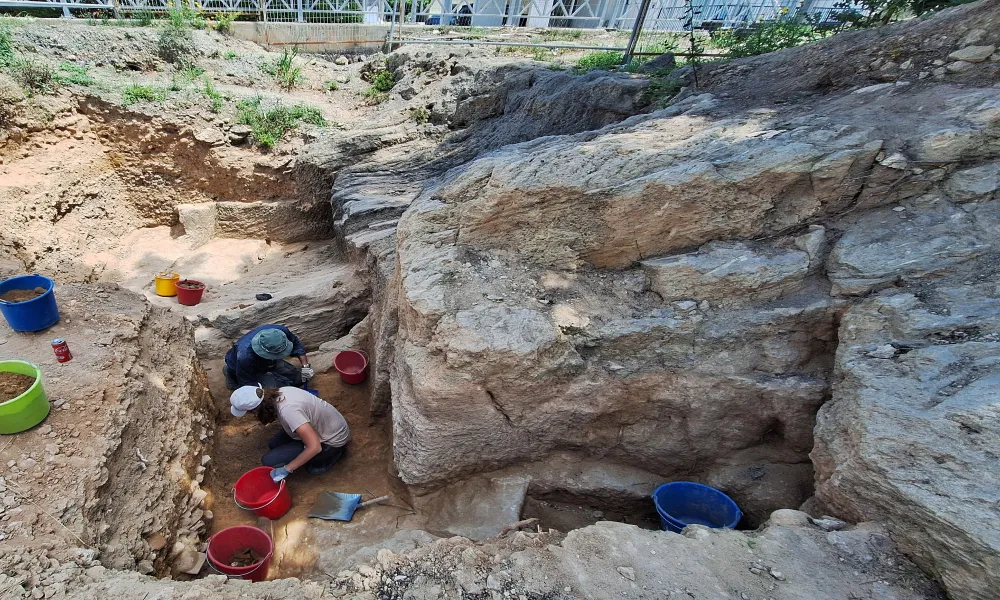

Excavations at Fabrika Hill in Kato Paphos, conducted as part of a joint research programme by the French Archaeological Mission in Paphos and the Cyprus Department of Antiquities, with the support of the French School at Athens, have uncovered an ancient water channel and a quarry dating to the early Hellenistic period.
The excavation was carried out by the French Archaeological Mission of the University of Avignon, under the direction of Professor Claire Balandier, and funded by the French Ministry of Europe and Foreign Affairs, the French School at Athens, the French National Centre for Scientific Research (CNRS), the University of Avignon, and the Municipality of Paphos.
Hellenistic walls and defensive towers
The programme's primary aim is a comprehensive study of the Hellenistic walls of Nea Paphos, combining new excavations with the publication of earlier digs carried out by the Department of Antiquities in the 1980s. At the north-western gate, the bases of the flanking towers were cleared, while topographical mapping of a section of the city wall north of the Church of Panagia Theoskepastos was completed by Lionel Fadin of the French School at Athens.
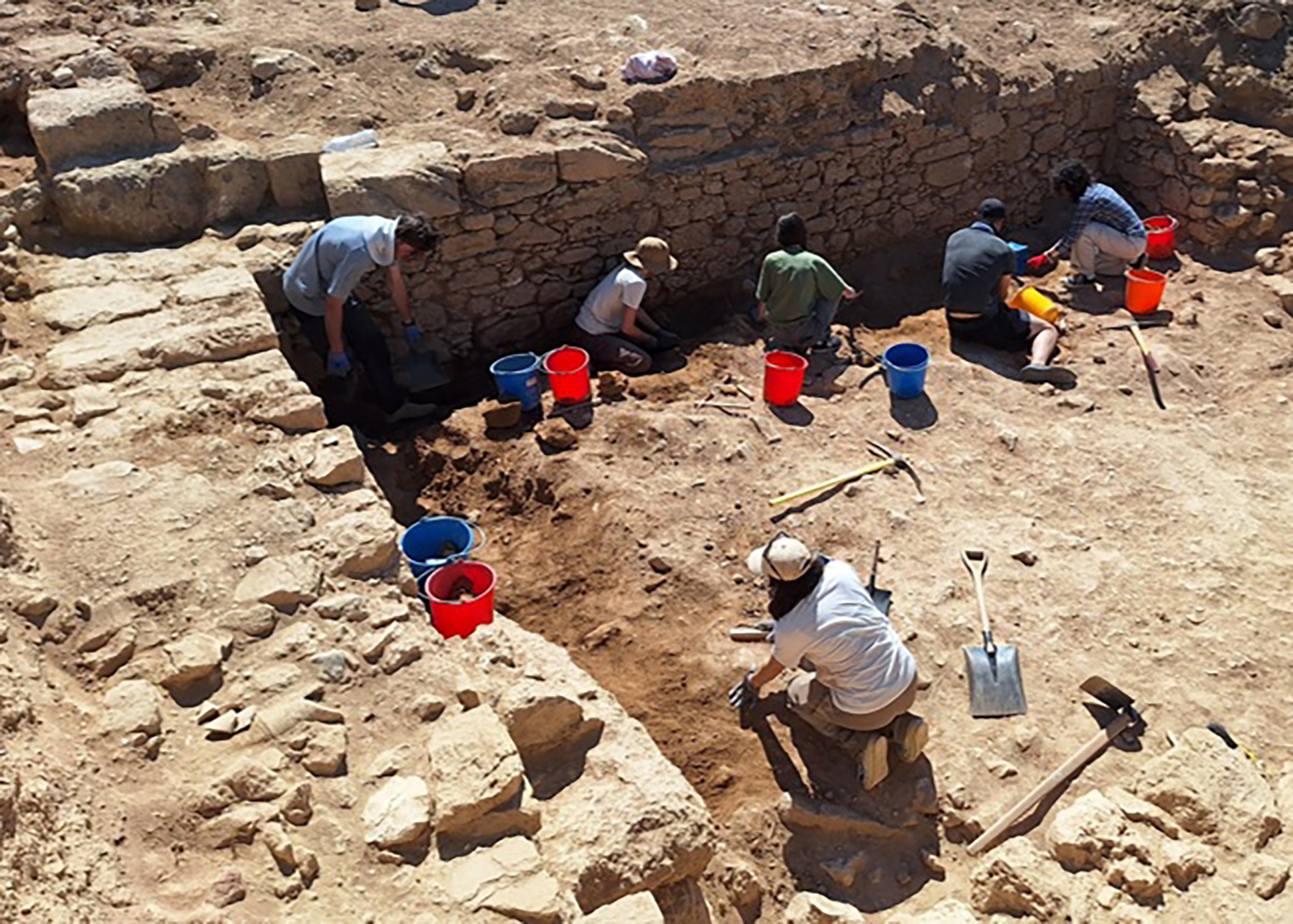
Two trenches were opened in the city wall in collaboration with Dr Sofoklís Chatzisavvas. Excavation of the south tower of the north-western gate revealed its final floor level, partially preserved, with large dressed corner stones abutting the northern wall.
At Fabrika Hill, a large square rock-cut feature at the base of the rock-cut church of Agios Agapitikos was identified as the north-eastern tower of the Hellenistic defensive wall. The facing stones were partly removed by the Romans or reused in the foundations of a church built within the tower's remains.
Water infrastructure and underground tunnel
Excavation of a well and underground tunnel at the hilltop, north of the theatre, continued this season. A rock-cut channel first identified in 2025 was found to extend further to the south-east. Analysis indicated that water originally flowed northward above the tunnel, where it was stored during the Hellenistic period, before the channel was cut off by the sinking of the well, which redirected water into the tunnel and towards a Roman cistern to the south. Fragments of a large clay water pipe were recovered from the tunnel floor.
A crack in the tunnel's western wall, likely caused by an earthquake, is believed to explain why the tunnel was abandoned. A second wall approximately three metres high was also found perpendicular to the tunnel wall, with foundations not yet reached. Researchers note this is a significant find, as it confirms that ancient ground levels were considerably lower than those of today.
From quarry to church
Excavation of Chamber 5, one of 15 underground rock-cut chambers recorded by the French Mission, revealed that the space originated as a quarry in the early Hellenistic period. It was subsequently prepared as a tomb, with rock-cut niches, but was abandoned before use, most likely when the hill was incorporated into the city's residential area following construction of the walls in the second half of the 2nd century BC. During the Roman period it was partly filled in, and in the early Byzantine period it was converted into a church.
Excavations at the site will continue next year.