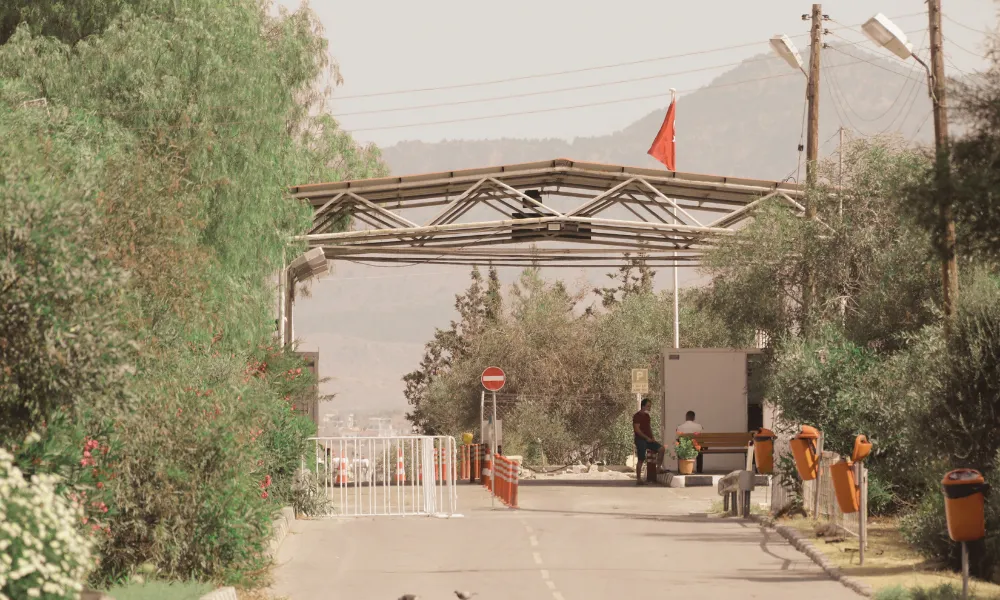

Goods worth hundreds of thousands of euros are seized every year at the checkpoints by the Customs Department, as their passage and circulation in the free areas of the Republic of Cyprus is prohibited. These are mainly tobacco products, counterfeit clothing and footwear, alcoholic beverages, animal and agricultural products, and fuel. Seized goods that can be recycled are sent to recycling facilities, while the rest are destroyed. The Customs Department tables we are publishing are particularly revealing as to the type and scale of seizures at the crossing points.
Of particular interest is the fact that, over the past two and a half years, the Customs Department has collected almost €1.5 million from out-of-court settlements for offences relating to the illegal movement of goods through the crossing points.
Goods that are permitted
The basic principle is that goods produced entirely in the areas where the Republic does not exercise effective control may enter the free areas of the Republic of Cyprus. This category includes mineral products such as salt, sand, chalk and limestone, as well as products made from them or their derivatives, such as bricks, marble and gravel.
The movement of goods that have undergone their last substantial and economically justified processing or working in the occupied areas is also permitted, such as furniture, for example.
For the lawful commercial movement of goods, they must pass exclusively through the checkpoints specified in the annex to the Green Line Regulation, and be accompanied by the required supporting document, issued by the Turkish Cypriot Chamber of Commerce, certifying their origin.
Olive oil, halva and coffee
Of particular interest is the list of processed foodstuffs of non-animal origin that may be moved both commercially and in small quantities for personal consumption. The list includes olive oil, halva, jams, black and green table olives, as well as juices, nectars and fruit drinks made from apple, grapefruit, pineapple, cherry, peach, quince, orange and pomegranate. The movement of coffee, lemonade, frozen vegetables and potatoes, pickles and dried mallow is also permitted. Under certain conditions, the movement of plant products is also allowed. For personal use, small quantities of fresh fruit and vegetables may exceptionally be carried, up to three kilos or three bunches respectively. The transport of small quantities of firewood, up to 25 kilos, is also permitted for personal use, with the exception of coniferous wood such as pine, cypress, fir and cedar, as well as plane and chestnut wood, provided that prior transport authorisation has been obtained from the Forestry Department.
The exception for fish
The movement of live animals and animal products through the Green Line is prohibited. The ban covers both livestock and pets. There is, however, one significant exception. Fresh fish may be moved for commercial purposes, following the required inspection and approval by the Veterinary Services. Their passage is permitted exclusively through the Agios Dometios checkpoint, and only with the presentation of a valid supporting document.
Purchases of up to €260
Anyone crossing the checkpoints may carry, in their personal luggage, goods worth up to €260 in total per person, provided these are not of a commercial nature and are not subject to prohibitions or restrictions. The exemption applies to goods intended exclusively for personal or family use. The carrying of 40 cigarettes and one litre of spirits for personal consumption is also permitted for persons over 17 years of age, as well as small quantities of agricultural products for personal consumption, up to three kilos or three bunches.
What does not get through
The movement of goods imported through closed ports or via the illegal Tympou airport is prohibited, with the exceptions provided for personal use. The transport of counterfeit or fraudulently altered products, as well as products that infringe intellectual property rights, is also prohibited. The list of banned products includes, among others, cigars and cigarillos, tobacco for cigarettes and hookahs, heated tobacco products, engine lubricants, live animals and animal products, honey, single-use plastic materials and items, cement, pesticides, controlled medicines, anabolic steroids, and other substances that can be used for doping purposes.
Also prohibited is the transport of plants for planting, cuttings and other propagating material, seed potatoes, hay, straw, soil and growing media, due to the risk of spreading harmful organisms and diseases.
What applies to fuel
Fuel is a special category. The customs authorities examine whether its transport is occasional and non-commercial in nature, and whether the required safety standards are met. Beyond the fuel contained in the vehicle's standard tank, the transport of fuel in a portable container of up to ten litres' capacity may be permitted under certain conditions. If the required conditions or safety standards are not met, the container and its contents may be seized.
Electrical appliances and medicines
Under certain conditions, the movement of low-voltage electrical equipment, such as electrical appliances, cables and lighting fixtures, is also permitted, provided they bear the CE marking and all other mandatory indications. The transport of materials and items intended to come into contact with food, such as plastics, ceramics and specialised food-covering films, is also permitted.
As regards pharmaceutical products, the transport of medicines for personal use is permitted, in a quantity not exceeding one month's treatment, subject to the signing of the relevant declaration.
Up to €10,000 in cash
Persons entering the free areas from the occupied areas and carrying an amount of €10,000 or more, or the equivalent in another currency, are required to make a declaration of liquid assets to the customs officers at the crossing point.
Six months in the Republic
Certain products and items are permitted to enter the territory of the Republic of Cyprus temporarily, provided they do not remain for more than six months. These are:
- Vehicles with foreign registration plates.
- Personal items and goods for sporting purposes, with the exception of hunting weapons, sporting bows and similar items.
- Professional equipment.
- Goods intended for repair.
- Goods intended for exhibition.