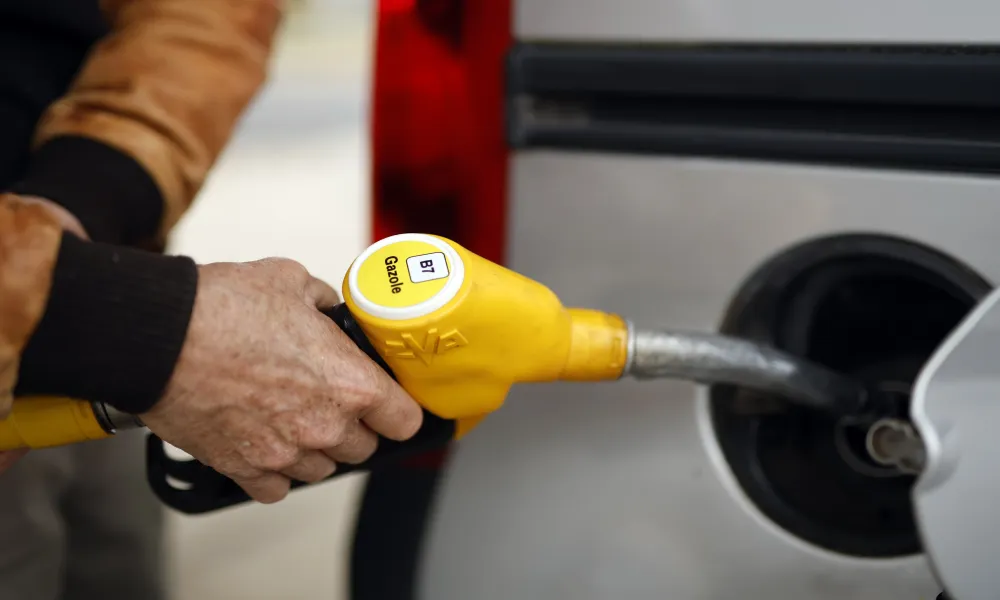

Fuel prices in Cyprus have reached one of their highest levels in recent years, with diesel now approaching €2 per litreand heating oil trading at around €1.60. A recent decline in international oil prices has yet to filter through to retail prices, and the Consumer Protection Service has warned that the international environment remains highly volatile.
No evidence of profiteering, says service director
Speaking on Politis 107.6 and 97.6, the director of the Consumer Protection Service at the Ministry of Energy, Konstantinos Karayiorgis, said the price increases are not unique to Cyprus but are being recorded more broadly across the European market.
He explained that the small recent falls in international oil prices would need to be sustained for a longer period before gradually being reflected in retail prices. "I hope they are sustained for a long period, so that they are eventually reflected in the prices consumers pay," he said, noting that a similar pattern had emerged in June, when expectations of easing international tensions had briefly led to a small decline.
Subsequent developments, however, reversed that trend. According to Mr Karayiorgis, Cyprus and other European countries have reached "perhaps the highest prices in recent years," with diesel now just short of €2 per litre.
Refinery prices up by as much as 46%
Illustrating the scale of the increases, Mr Karayiorgis cited figures showing how refinery prices, the prices at which companies purchase fuel, have changed since June. According to the data he presented, the price of 95-octane unleaded petrol has risen by around 32% at refinery level.
The increase is even sharper for diesel, with refinery prices for both motor diesel and heating oil up by approximately 46%. "We are talking about enormous increases in the prices at which refineries are selling," Mr Karayiorgis said, adding that additional costs stemming from the international situation are also being passed on to the market.
"No element of profiteering," says service
At the same time, the Consumer Protection Service said its checks have found no indication of profiteering in the Cyprus market. Mr Karayiorgis said the service monitors, within its remit, whether prices are consistent with the costs and data of companies importing fuel into Cyprus.
"What we are saying plainly is that prices are moving within acceptable parameters and there is no element of profiteering," he said.
As an additional point of reference, he cited Cyprus's continued standing compared with other European countries. According to the figures he referred to, Cyprus has remained in third place among the cheapest countries for petrol in recent months, while ranking around eighth place for diesel. He said this shows the sharp increases are not unique to the Cyprus market but are linked to the wider environment shaped across Europe.
Prices vary between petrol stations
Despite the broad wave of increases, there are notable differences among the roughly 320 petrol stations operating in Cyprus. Four fuel import companies are active in the market, and according to Mr Karayiorgis, competition between stations creates variations of several cents per litre.
For this reason, the service is urging consumers to compare prices before refuelling. Choosing a cheaper station can produce noticeable savings, particularly when calculated over a month's total refuelling costs. Consumers can use the Consumer Protection Service's Fuel Price Observatory daily to identify the lowest prices.
The service also plans to launch a new mobile phone application before Christmas, which will bring together services such as fuel prices, the e-kalathi platform and the ability to submit complaints electronically.
Heating oil a major concern ahead of winter
The picture for heating oil is causing particular concern as the winter period approaches. Its price now stands at around €1.60 per litre, with Mr Karayiorgis noting an average increase of approximately 60% to 61% compared with the previous period.
He described these as "enormous increases," which are expected to place significant strain on households needing to fill their tanks ahead of winter. The service said it hopes the international situation will change in the coming period and that prices will ease before heating demand rises significantly.