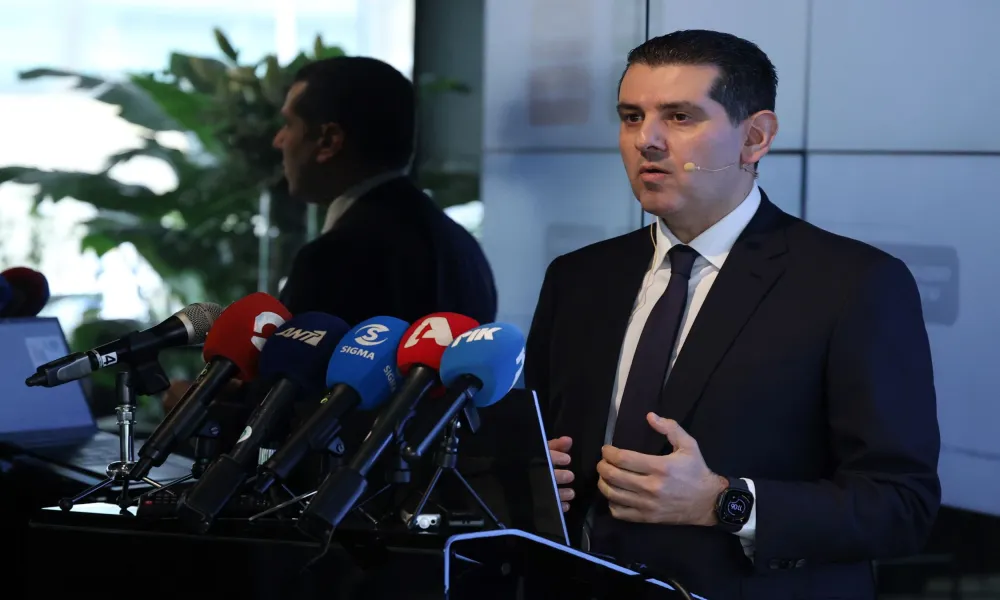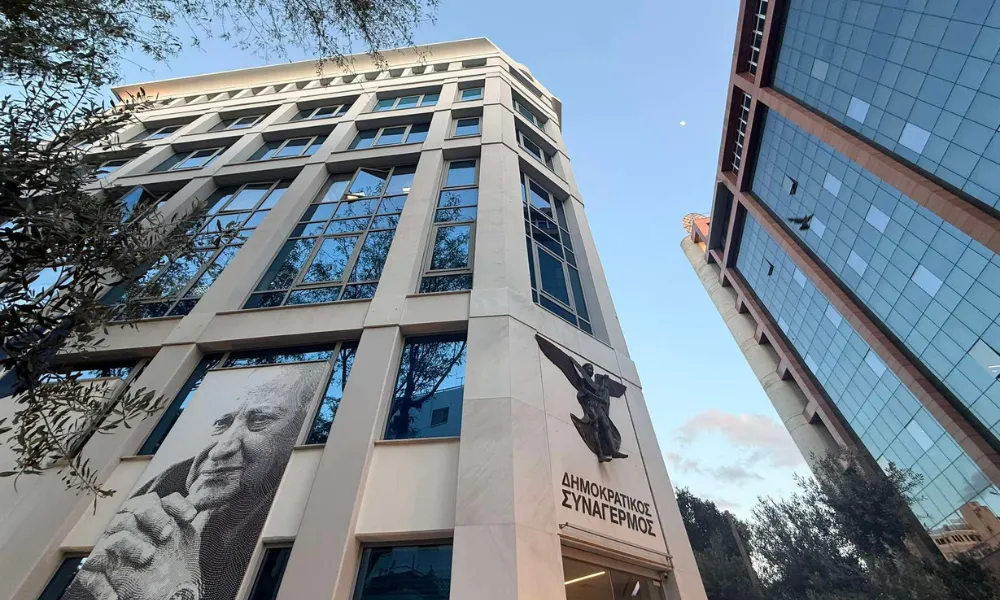



Annita Demetriou stepped aside to bring stability to the Democratic Rally (DISY), but within 24 hours of her announcement the party looked more unsettled than ever. The party president spent Friday defending a decision she insisted she had reached on her own, while George Pamborides went public with his account of what had unfolded behind closed doors at the party's Pindarou headquarters, taking aim at Frixos Koulermos, publisher of Alithia and a major shareholder in Omega, and through him at Averof Neophytou.
Possible new candidacies
As for possible new candidacies, former justice minister Ionas Nicolaou confirmed that he had requested the signature form. However, a source in a strong position within DISY rules out the possibility of him ultimately running.
There were, of course, other whispers about people possibly interested in the nomination, including Loucas Fourlas and Harris Georgiades. Taken together with what was said on Friday, the picture that emerges differs noticeably from Thursday's, after Demetriou's announcement, and shows that the situation in DISY remains fluid.
Annita Demetriou's move
Demetriou's withdrawal was a calculated move. She is framing it as an act of responsibility that turns her from a contender into the guarantor of the process, and she firmly rejects suggestions that she was pressured or blackmailed into it. Speaking of a sense of relief and of a grassroots base eager to move past division, she insists the decision was hers and hers alone. Within the party, however, her move has been read in three quite different ways.
A compromise. Some party officials see it as a compromise, or even as a decision Demetriou was forced into.
An early mistake. Others believe she erred from the start, as announcing her candidacy two days after Averof Neophytou drew her into a contest she was never able to control.
A difficult decision. Some praise her for making a hard choice that, in their view, safeguards party unity, with George Pamborides foremost among them.
Speaking on Radio Politis, Michalis Sophocleous dismissed the idea that the president had sacrificed herself. Officials who share his view point out that she remains both party leader and House president, and is well placed to deliver the unity the party has long sought. At the same time, other officials fault her for treating the matter as a personal affair rather than bringing it before the party's collective bodies. Demetriou maintains that she set no conditions, yet according to Pamborides she asked Neophytou, as she withdrew, for an assurance that he would take part in the internal process.
The great unanswered question is how much weight outside factors carried. Demetriou describes Koulermos as a veteran party figure who sits at the table like anyone else, while Sophocleous sees him as a respected figure who talks to everyone. A source within DISY paints a different picture, describing Koulermos as having pushed relentlessly for days for her to step aside. There were also reports that she came under pressure over whether she could win a presidential election.
Pamborides' criticism
Pamborides believes Demetriou was all but certain to win and that she fell victim to a coordinated effort to undermine her. Now Neophytou's main rival for the DISY nomination, he is appealing directly to her supporters and positioning himself as the natural home for a base left without a candidate. He rounded off his case on Friday by saying he would have been willing to withdraw only in her favour and never in Neophytou's, dismissing rumours that he too was about to pull out as deliberately planted leaks, and promising an internal contest that would heal the party rather than divide it.
The other side of that strategy is his open confrontation with the former president. Pamborides pointedly referred to Neophytou's "guardian", who had accompanied him to the meeting from the outset, and described how Koulermos had pressed Pamborides himself to step aside. By steering the debate towards interventions from outside the party's institutions, he cast himself as the candidate who walked into the meeting alone. His position contains a contradiction, however, since the very moves he denounces are the ones that cleared the way for his head-to-head contest with Neophytou and freed up Demetriou's supporters for him to court. His criticism of the process serves him well politically, yet it does little to obscure the fact that he stands to gain from its outcome.
Averof Neophytou's next steps
Neophytou left Pindarou on Thursday having secured what he wanted, a race in which he would not face the sitting party president. DISY sources now regard him as the favourite, and several party officials have already begun to signal their support. The same sources note, however, that his conduct in recent days has alienated many members, from his talk of "marked cards" to the doubts he allowed to linger over whether he would take part in the internal process at all. Even his written statement after Demetriou's withdrawal, while calling for unity, cast DISY as the core of a broader "pan-Cypriot movement" rather than the vehicle for his candidacy.
His participation in the race is now taken for granted, since according to Pamborides this was precisely the assurance Demetriou sought when she stepped aside. Koulermos, however, remains his biggest liability. The accounts that emerged on Friday, and Pamborides' version above all, suggest the publisher was at Pindarou to champion the former president's candidacy and to lean on Demetriou, while the Nicosia MP also went out of his way to describe Alithia as openly backing Neophytou. Whether Neophytou keeps his lead until 28 November will depend largely on how he deals with that perception, as the debate over interventions from outside the party's institutions is already stirring reactions within DISY.