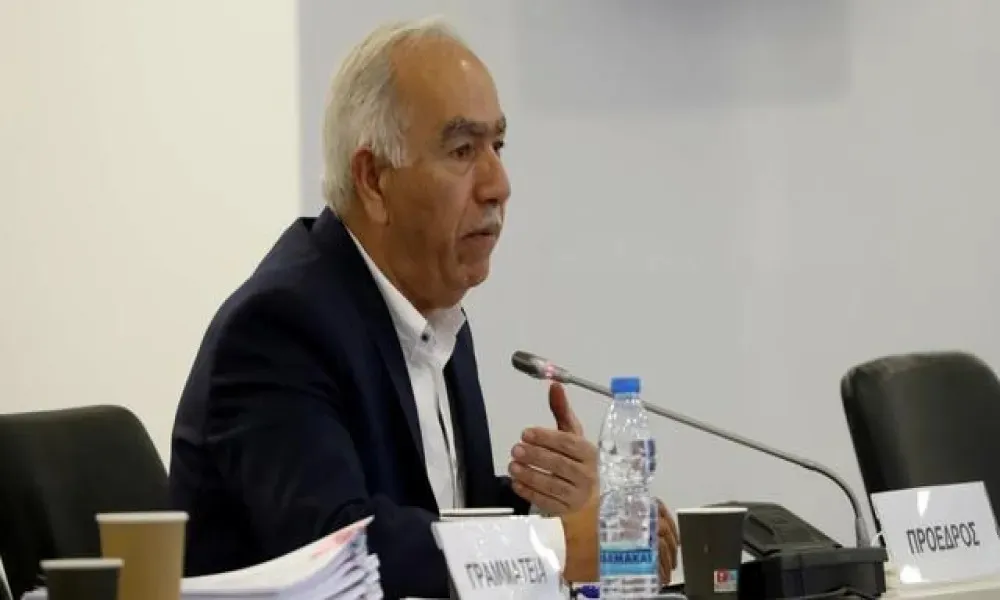

DIKO MP Zacharias Koulias has argued that the party should contest the 2028 presidential election independently with a candidate from its own leadership, while accusing President Nikos Christodoulides of already conducting an unofficial re-election campaign.
Speaking on Sigma TV's Protoselido programme, the Famagusta MP described the election of a president as the highest act of a state and said such contests should be led by party leaders rather than figures from outside party structures.
Criticism of Christodoulides
Koulias was particularly critical of Christodoulides, claiming the president insists it is too early to discuss presidential elections while simultaneously attending events and engaging extensively with voters.
He said he had no objection to the president seeking re-election but argued that voters should not be told it is premature to discuss the next election when campaigning activity appears to have already begun.
Claims of pressure on DIKO ministers
Referring to two ministers who originate from DIKO and have publicly expressed support for Christodoulides, Koulias suggested their statements were not made independently.
He specifically pointed to Health Minister Neophytos Charalambides, saying he did not believe the minister had independently decided to declare that DIKO already had a presidential candidate.
Charalambides had stated on 9 September that DIKO already had a president and was not searching for another candidate, comments that reportedly caused unease within parts of the party because they were not based on a formal party decision.
DIKO should build its own platform
Asked about differing views within the party, including support for an independent candidacy, backing Christodoulides or cooperating with the centre-right, Koulias insisted DIKO should first enter the race on its own terms.
He argued that the party should develop its own governing programme before deciding whether to cooperate with political forces on the right, left or centre.
Centre seen as kingmaker
Koulias also emphasised the electoral importance of the political centre, noting that no presidential candidate typically secures more than 50% of the vote in the first round.
For that reason, he argued, DIKO's electorate could again play a decisive role in determining the outcome of the election.