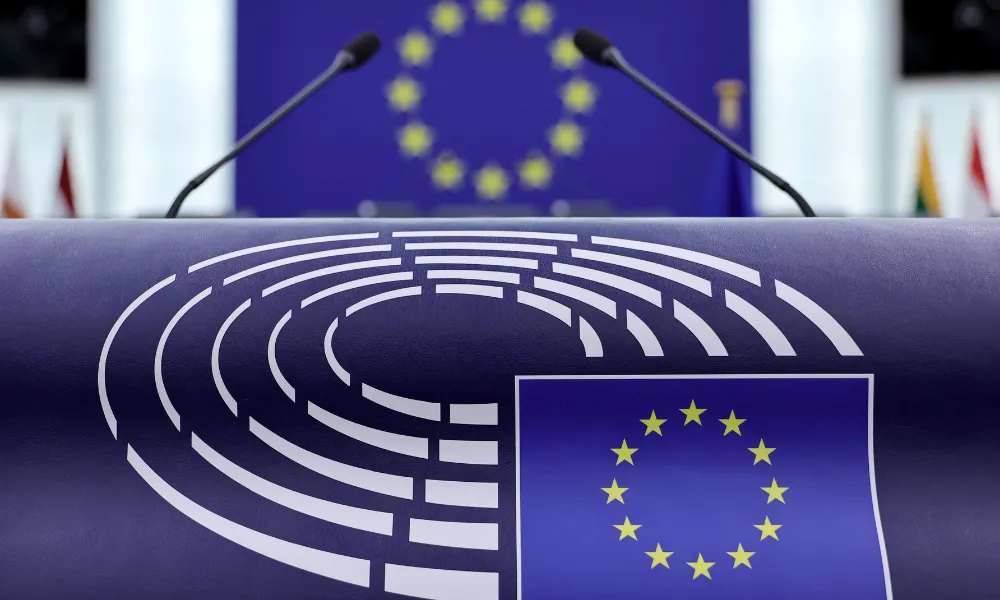

The European Parliament has awarded its 2026 Sakharov Prize for Freedom of Thought jointly to the International Criminal Court (ICC) and its officials. The court is currently under United States sanctions, which have reached its president and a senior trial lawyer. The decision was announced on Thursday in the plenary chamber by European Parliament President Roberta Metsola.
Metsola’s statement on the award
Announcing the laureate, Ms Metsola said: “The European Union has been built on respect for multilateralism and international institutions. By awarding the Sakharov Prize to the International Criminal Court and its officials, the European Parliament recognises its important work in supporting international law and delivering justice.”
According to the Parliament, the prize highlights the court’s work, in particular its investigations, prosecutions and trials, as well as the arrest warrants it has issued or approved.
How the laureate was chosen
The ICC and its officials were nominated by the Socialists and Democrats group, and were one of six nominations for this year’s prize. The court reached the final shortlist alongside Tanzanian opposition leader Tundu Lissu and the Iranian twin sisters Taraneh and Romina Rahimi.
In its nomination, the Socialists and Democrats group said that since 2025 the work of the court and its staff had been “severely damaged” by a US executive order targeting up to nine of the court’s judges, two of them from Slovenia and France, as well as three deputy prosecutors.
The court’s mandate under the Rome Statute
The ICC investigates and, where the conditions are met, tries individuals accused of the most serious crimes of concern to the international community: genocide, war crimes, crimes against humanity and the crime of aggression.
The court operates as a court of last resort, complementing national courts. It is governed by an international treaty, the Rome Statute, and is the world’s first permanent international criminal court. It was established in 2002. The court has 125 member countries.
US sanctions against the court and its officials
US President Donald Trump signed Executive Order 14203 on 6 February 2025, providing for visa restrictions and the blocking of property of designated individuals. According to Reuters, the earlier sanctions on court officials cited the ICC’s arrest warrants for Israeli Prime Minister Benjamin Netanyahu and former Israeli defence minister Yoav Gallant, as well as a past investigation into US troops in Afghanistan. Neither the United States nor Israel is a member of the court.
On 18 August 2026, Washington sanctioned ICC President Tomoko Akane of Japan and senior trial lawyer Abdoulaye Seye of Senegal. US Secretary of State Marco Rubio said the two had taken part in ICC efforts to investigate or prosecute officials of governments that have not accepted the court’s jurisdiction. The measures freeze any US assets they hold and in effect cut them off from the US financial system.
On 9 October 2026, the United States imposed sanctions on the court itself. Mr Rubio said Washington would ban transactions with the court, saying the move meant “cutting off their resources and crippling its ability to operate”. ICC Deputy Prosecutor Nazhat Shameem Khan told Reuters the sanctions would not halt the court’s work.
The measures are being challenged in US courts. Three ICC judges sued the Trump administration in June, arguing the sanctions were unlawful. On 11 August, Human Rights Watch and three other organisations filed a separate lawsuit in US federal court.
MEPs call for the EU blocking statute
In the Parliament’s 2025 annual reports on the common foreign and security policy and on human rights and democracy in the world, MEPs expressed deep concern over the growing threats and successive waves of sanctions imposed since 2025, mainly by the United States, on the ICC and its prosecutors, judges, staff and associates. They described these measures as serious attacks on the international justice system.
MEPs have repeatedly called on the European Commission to activate the EU’s blocking statute to protect ICC officials from extraterritorial measures and allow the court to continue its work with full independence. The blocking statute protects EU economic operators, regardless of size or sector, by nullifying within the EU the effects of any foreign court ruling based on foreign legislation. It also allows them to seek compensation in court for damage caused by the extraterritorial application of foreign laws.
In the same reports, MEPs welcomed the EU’s continued financial support for the court during what they described as a particularly difficult period for international justice.
The ICC President and several of its judges attended European Parliament committee meetings in 2025 and 2026 to explain to MEPs how the US sanctions affect both their duties and their personal lives.
Cyprus among states backing the court
All EU member states, including Cyprus, are parties to the Rome Statute and are therefore required to implement the court’s decisions. MEPs stressed that growing disregard for international law and the politicisation of the debate on international justice institutions pose, in their view, an existential threat to the rules-based international order.
When the first US sanctions were imposed in February 2025, Cyprus was among 79 UN member states that signed a joint declaration reaffirming support for the independence, impartiality and integrity of the ICC.
About the Sakharov Prize
The Sakharov Prize for Freedom of Thought, named after the Soviet physicist and dissident Andrei Sakharov, was established in 1988. It is awarded each year by the European Parliament to individuals or organisations for their work in defending human rights and fundamental freedoms, especially freedom of expression, protecting minority rights, upholding international law, developing democracy and defending the rule of law.
The prize carries €50,000. Last year it went to journalists Andrzej Poczobut and Mzia Amaglobeli.
The 2026 award ceremony will take place in December in Strasbourg during the Parliament’s plenary session.