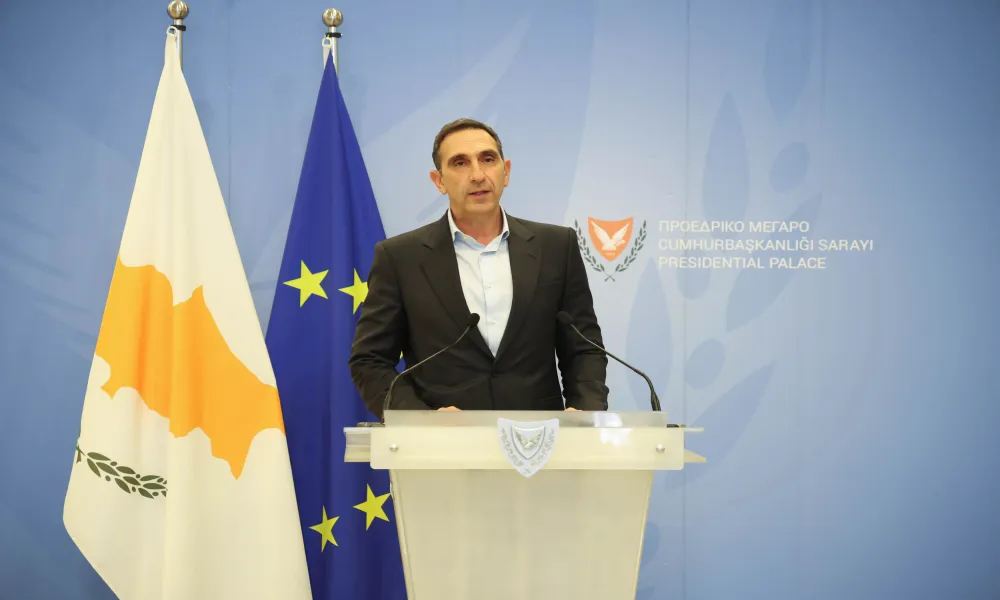
The European Union faces an annual housing investment shortfall of approximately €650 billion, Cyprus' Interior Minister Konstantinos Ioannou said on Tuesday, ahead of the Informal Meeting of EU Housing Ministers held at the Filoxenia Conference Centre in Nicosia under the Cyprus Presidency of the Council of the European Union.
"The housing crisis and the lack of affordable housing is a European challenge that requires a common response," Ioannou said in a doorstep statement before the meeting, noting that housing policy is among the Cyprus Presidency's top priorities. He said the meeting's two agenda items were both aimed at increasing housing supply so as to achieve a balance between supply and demand across the EU.
Cutting red tape
The first item on the agenda concerned reducing bureaucracy and the delays currently affecting the licensing process, and more broadly simplifying permitting procedures. The second concerned investment levels. "At present, investment in the European Union is below the level needed to meet growing demand. Approximately €650 billion in additional investment is needed per year, and part of today's discussion will focus on boosting investment, mobilising public and private resources, and identifying European financing instruments," Ioannou said.
He described the meeting's goal as providing a springboard for encouraging dialogue and identifying actions that can strengthen member states' plans to address the housing problem.
Opening the ministerial session, Ioannou told his counterparts that housing is not merely a commercial product but "a cornerstone of human dignity." He said access to adequate and affordable housing is a foundation of social cohesion, a catalyst for economic development and a basic prerequisite for the mobility of citizens, particularly young people and workers.
He cautioned, however, that "the challenges we face are complex and growing." Significant price increases, limited supply, high construction costs and demographic pressures are making access to adequate and affordable housing increasingly difficult, he said, not only for vulnerable groups but for the middle class as well. Administrative complexity, he added, is a key factor compounding the problem, causing delays in new housing projects and renovations, increasing costs and creating uncertainty for investors and households alike. He stressed that "simplification is not the same as deregulation," and that the challenge lies in striking the right balance between efficiency and ensuring environmental sustainability, accessibility and social cohesion.
Commissioner Jørgensen flags short-term rental legislation
EU Energy and Housing Commissioner Dan Jørgensen said bluntly upon arrival that "unfortunately, we are in the midst of a housing crisis in Europe." He described having a roof over one's head as a human right and called on all levels of government to ensure that people can access decent, sustainable and affordable homes.
Jørgensen identified short-term rentals as a significant part of the problem. While acknowledging that short-term rental platforms are in principle a good idea and can benefit local incomes and tourism, he said that "too many places are unfortunately today suffering from too many short-term rentals that are pushing up housing and property prices and displacing ordinary people from their homes." He announced that the Commission is preparing a legislative proposal to address these issues.
Estonian Infrastructure Minister Kuldar Leis highlighted his country's experience in tackling the housing shortage, saying that digitalisation is Estonia's key solution for accelerating housing supply. He said Estonia would share its experience with the successes and challenges of e-governance during the discussion and announced that the country will shortly publish its first comprehensive housing policy framework. He noted that digital solutions help Estonia maintain and develop regional balance, ensuring that housing can be built across the whole country and not only in major cities.
European Committee of the Regions president calls for long-term strategy
Kata Tüttő, President of the European Committee of the Regions, said her institution represents cities and regions across Europe, from large urban centres to mountainous and rural areas. She said the housing problem is widespread across major cities and stressed that the discussion must go beyond simply building homes. "It is never just about the houses, but about infrastructure and the future of the city as a whole," she said, adding that housing must form part of a long-term, integrated strategy that includes local government, encompassing transport, public services, water, waste and sustainable urban development.
Source: CNA