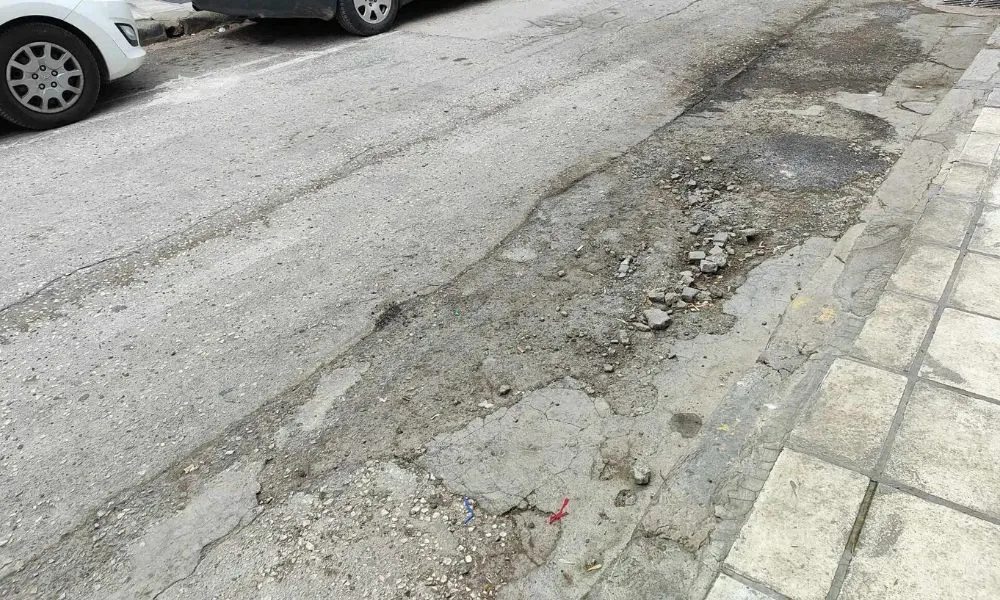
Across Cyprus’s roads, a pothole may mean little more than inconvenience or minor damage for a car driver. For a motorcyclist, however, it can lead to a crash within seconds. With nearly half of this year’s road fatalities involving motorcyclists, poor road conditions are no longer just a matter of everyday inconvenience but a serious road safety concern. This is especially critical in Cyprus, where high summer temperatures further degrade asphalt and make road conditions even more hazardous for two‑wheel users.
Seven out of 15 fatalities
A recent Road Safety Council meeting examined measures targeting motorcyclists, including subsidies for safety gear and new helmets, as well as the possible withdrawal of older motorcycles lacking modern safety systems. Stricter maintenance checks at private vehicle inspection centres were also discussed.
These measures are considered essential given that seven of the 15 road fatalities recorded so far this year were motorcyclists. According to Transport Minister Alexis Vafeades, four of the victims were not wearing helmets, while authorities are also examining whether others wore them correctly.
“The relevant committee has been tasked with recording, evaluating and proposing measures to be adopted by the competent ministries,” the minister said. He also announced an upcoming inspection campaign to assess maintenance standards for motorcycles.
“A motorcycle that is not properly maintained may fail to handle a critical situation, which can result in a very serious accident,” he added.
Poor road conditions
While discussion has focused on helmets, enforcement and vehicle maintenance, the issue of road infrastructure has been largely absent. This is despite the fact that municipalities are now responsible for a significant portion of the road network.
For motorcyclists, potholes, worn asphalt and poor road surfaces represent a constant and often unseen danger. Data from the FixCyprus platform reveal the scale of the issue, with 16,151 reported problems across the road network nationwide.
In March 2025, there were 10,611 reports. Within roughly a year, this figure rose sharply to over 16,000. The most significant increase was recorded in Nicosia, where reports climbed from 4,697 to 7,258. Similar rises were noted in Limassol, Larnaca, Paphos and Famagusta.
Cases still awaiting action have also increased. In Larnaca, unresolved reports rose from 371 in March 2025 to 618 by May 2026. In Paphos, they increased from 11 to 123, and in Nicosia from 44 to 65.
At the same time, reports simply marked as “authority notified” have also risen, without necessarily indicating that repairs were carried out. In Nicosia, such cases increased from 2,276 to 3,914, while in Limassol they rose from 1,689 to 2,699 and in Larnaca from 741 to 1,274.
Even where repairs have been scheduled, the rise in numbers underlines the growing scale of the problem. In Paphos, scheduled repairs nearly tripled, from 94 to 265, with increases recorded in other districts as well.
These figures show that road defects are not only persistent but worsening. As the president of the Cyprus Motorcyclists’ Rights Association, Marios Konstantinidis, previously told Politis, the issue goes beyond driver behaviour.
“Worn asphalt and faded road markings create an environment that may forgive a car driver’s mistake, but not a motorcyclist’s,” he said.