
The developments in the Mafia State case are taking shape following the report of the Anti-Corruption Authority and the possible commission of criminal offences. The report records the names of 13 individuals and two law firms, with explicit reference to the offences for which they should be investigated, within the framework of the criminal inquiry that will follow.
During yesterday, answers were given to two key questions that arose after the explosive report of the Anti-Corruption Authority. The first concerns the appointment of independent criminal investigators by the Council of Ministers, and the second the exclusion of the leadership of the Legal Service from the criminal investigation process.
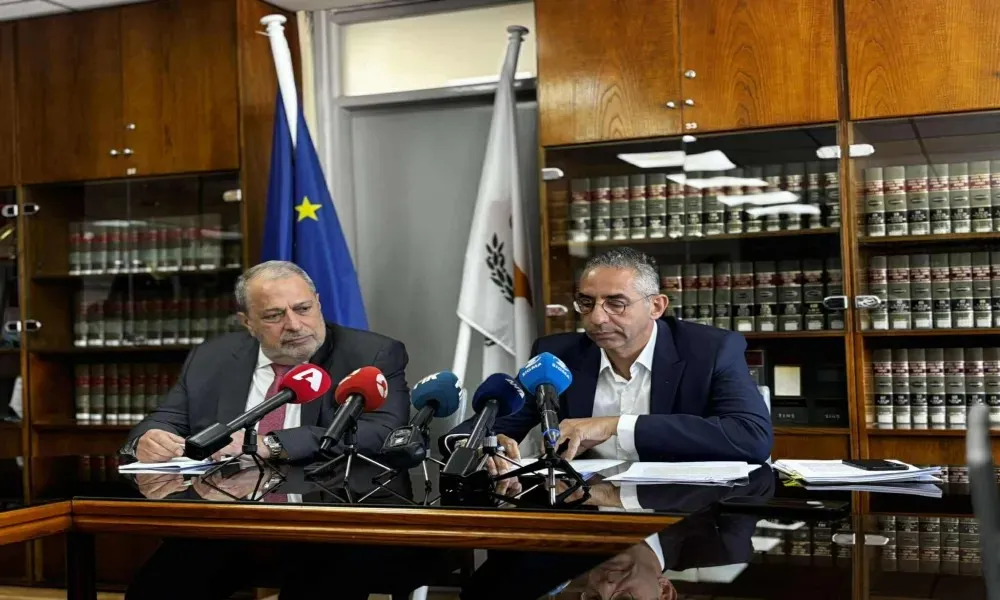
Following yesterday’s Cabinet meeting, Government Spokesperson Konstantinos Letymbiotis announced that the intention of the government is to appoint an independent criminal investigator or investigators to examine the findings of the Anti-Corruption Authority. He also stated that “taking into account the need for a full investigation of what is referred to in the announcement of the Independent Anti-Corruption Authority within the established legal and institutional framework, the Council of Ministers intends to appoint an independent or independent criminal investigators, in order to assist the investigative work.”
This decision is subject to the steps that will be taken once the full report is formally forwarded by the Anti-Corruption Authority to the Legal Service. Mr Letymbiotis stressed that the government is acting with full respect for the Constitution, the competences of each institution, the independence of the competent judicial authorities, and the presumption of innocence.
Recusal of Attorney General and Deputy
The Legal Service, in a statement, announced the decision of the Attorney General Giorgos Savvides and the Deputy Attorney General Savvas Angelides to recuse themselves. According to the statement:
a) The Attorney General of the Republic decided that he will abstain from any evaluation and decision-making in relation to the report, due to the involvement of former President Nicos Anastasiades, both because of his personal relationship and friendship with him and in order to ensure objective impartiality in the handling and decision-making process.
b) The Deputy Attorney General of the Republic, Savvas A. Angelides, decided that he will abstain from any evaluation and decision-making in relation to the report in order to ensure objective impartiality.
c) State Prosecutor and head of the Criminal Law sector of the Legal Service, Elena Kleopa, will also abstain from the process, as she was called and testified as a witness before the inspectors of the Anti-Corruption Authority in one aspect of the case.
According to the Legal Service, the Prosecutorial Council met yesterday in an extraordinary session. The Attorney General assigned its senior officials the evaluation and further handling of the report expected from the Anti-Corruption Authority, as well as the taking of any further measures and decisions.
It is noted that, following communication between the Attorney General and the Commissioner for Transparency, it was clarified that the report and its annexes will be sent to the Legal Service next week.
What about the President and ministers?
The intention of the Council of Ministers to appoint independent criminal investigators raises new questions as to whether the President of the Republic and two ministers of the current government, who served under the former President, will also recuse themselves from the Cabinet meeting that will take this decision.
Nicos Christodoulides served as Government Spokesperson during the first term and as Minister of Foreign Affairs during the second term of Nicos Anastasiades. Interior Minister Konstantinos Ioannou served as Minister of Health during the second term, while Defence Minister Vassilis Palmas served as Deputy Minister to the President. Therefore, the issue of conflict of interest is expected to arise in this case as well.
Who will decide?
Following the announcement of the Legal Service and the recusal of the Attorney General, the Deputy Attorney General and the head of Criminal Law from the next steps, namely the criminal investigation, the question arises as to who will have the final say after the investigative process is completed, in deciding whether criminal prosecutions will be brought and charges filed.
The current procedure is that, once a criminal investigation is completed, whether by the Police or appointed investigators, the case file is submitted in full to the Legal Service. After examination by the criminal law sector, in consultation with the Deputy Attorney General, a decision is made on whether the persons involved will be charged.
In this case, with the investigation into Mafia State, who will decide? It will evidently be assigned to other senior officials of the Legal Service with experience in criminal matters. However, the timeline of the process also comes into play, given the possibility that by the time it is completed, Attorney General Giorgos Savvides may have retired, as he is expected to take pre-retirement leave in 2027.
They will not start from zero
With the appointment of independent criminal investigators, the Legal Service is expected to hand over all the material collected by the investigators of the Anti-Corruption Authority. This includes witness statements taken from those under investigation and other individuals, as well as all the evidence gathered in order to reach their findings.
Legal experts note, however, that the investigative process does not necessarily mean it will lead to the same conclusions. Additional offences may be identified, while it is also possible that further names could be included in the final recommendations for criminal prosecutions.