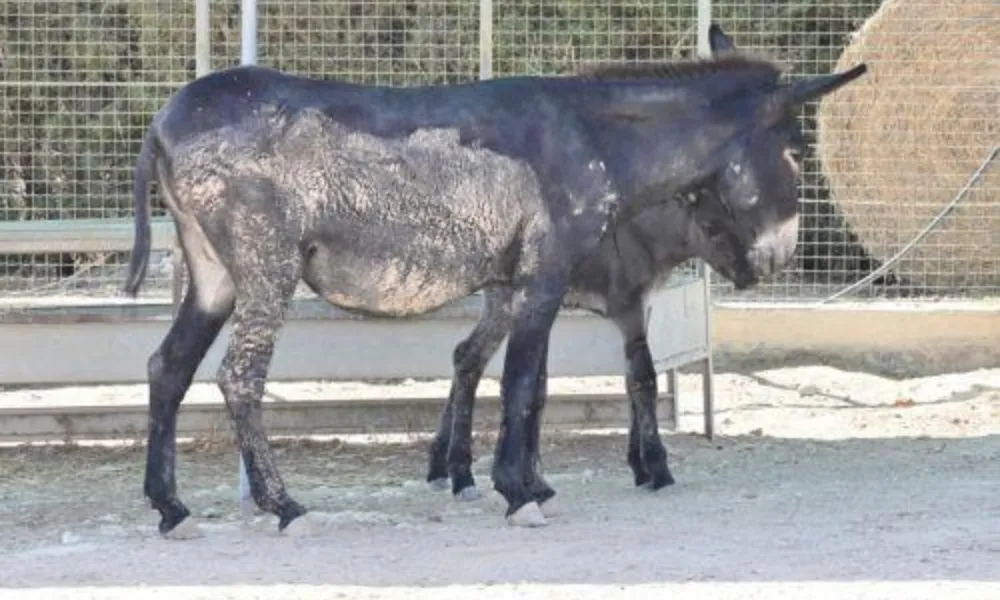

Spain is home to almost 4,000 donkeys across five native breeds, and a growing number of them are being put to work preventing wildfires by grazing down the undergrowth that fuels them. The animals, once relied upon for agricultural labour, are also finding new roles in therapy programmes for patients with a range of conditions, according to reporting by the Efe news agency.
Census data from the Ministry of Agriculture puts the number of native-breed donkeys in Spain at close to 4,000. Animal protection groups say the real figure could be higher still, since some donkeys are not formally registered and the count does not include those that are not purebred.
Pascual Rovira, founder of the Donkey Defence Association (Adebo), said the donkey may have lost its traditional role in farm work, but it retains a historic function as nature's principal "firefighter" through its grazing habits. His organisation runs a sanctuary in Rute, in the province of Córdoba, home to 80 donkeys. Although these animals are not deployed specifically for fire prevention, their grazing keeps the surrounding hills clear.
"Where there are donkeys, there is no risk of fire," Rovira said, though he cautioned that donkeys need a basic level of care and support if they are to be put to work clearing land.
Fire prevention across Spain
In Tarragona, the Tivissa Donkeys Firefighters project now has 62 animals working to clear low vegetation from the surrounding area. The project's founder began the initiative in 2021 with three abandoned donkeys and has since taken in considerably more. The donkeys work in groups across plots of between 15 and 25 hectares, organised in a hierarchy in which a female donkey leads and neutered males occupy the lowest tier.
In Huelva, the association El Burrito Feliz keeps 12 donkeys it describes as "preventive firefighters." Its founder said prevention involves far more than simply letting animals graze in one spot, and instead requires a deliberate strategy built around large, mobile firebreaks that are planned in advance. He pointed to the donkey's selective eating habits, which favour dry grass over other vegetation, as a key advantage over goats or sheep, which will eat almost anything and can end up damaging more sensitive environments.
A role in patient therapy
Beyond fire prevention, donkeys are also proving beneficial to human health. The Huelva association keeps four additional donkeys, chosen for their empathetic temperament, for use in therapy programmes.
Following the success of an early project during the Covid-19 pandemic, in which exhausted healthcare workers visited the donkeys after their shifts, the association has continued to run sessions with patients. These now include deaf and blind children in serious cases, as well as elderly people living with Alzheimer's disease, for whom interacting with the donkeys can help recall memories from childhood, according to specialists involved in the programmes.
Source: CNA