The European Commission today published its annual reports on the implementation of the Green Line Regulation and of the Aid Programme for the Turkish Cypriot Community, reaffirming the EU's unwavering support for Cyprus' reunification through strengthened cross-community ties and targeted socio-economic development.
Crossings
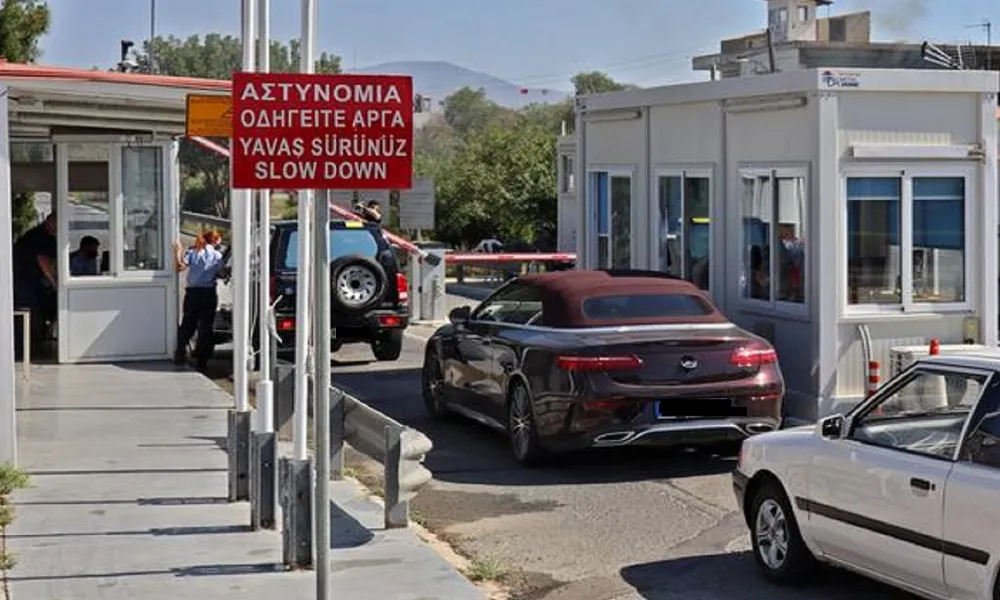
The 2025 Green Line Report reveals a historic high of 7.79 million authorised crossings, highlighting the growing connections between Greek Cypriot and Turkish Cypriot communities. Meanwhile, irregular crossings continue their downward trend, falling to 2,433, according to a European Commission press release. To further facilitate movement, the EU funded the expansion works at the Agios Dometios crossing point, increasing capacity at one of the island's busiest checkpoints.
Green Line trade
According to statistics provided by the Republic of Cyprus, the total value of trade in goods with accompanying documents that actually crossed the Green Line decreased by 5.3% in 2025 to €14,430,669 (previously €15,238,221).
Trade from the government-controlled areas to the northern part of Cyprus is not regulated by the Green Line Regulation. However, it is encouraged for economic reasons as it contributes to building relations and trust between the two communities. In 2025, this trade increased by around 13.5%, from €1,314,705 in 2024 to €1,491,582 in 2025, according to figures from the Cyprus Chamber of Commerce and Industry.
Trade from the government-controlled areas to the northern part of Cyprus represented 10.3% of the trade in the opposite direction (8.6% in 2024).
Regarding trade across the Green Line, building and construction materials were the most traded products in 2025 in terms of value in euro, counting for 33%, followed by furniture at 19%, plastic products 15%, scrap/waste 11%, mosaics, marbles, granites 8%, fresh fish 5%, mattresses and divans 5%, and commercial items 3%.
Support to reunification efforts
The 2025 Aid Programme Report outlines efforts to support Cyprus reunification by fostering the socio-economic development of the Turkish Cypriot community, confidence-building and strengthening civil society. With €33.7 million allocated in 2025, the programme continued to enhance food safety and animal welfare standards, including through rapid emergency measures in response to the foot-and-mouth disease outbreak in December 2025.
Additionally, EU-funded investments in water and wastewater infrastructure, energy efficiency, air quality and noise monitoring continued to raise living standards in the Turkish Cypriot community and across the island.
Furthermore, the report shows that 142 Turkish Cypriots studied at universities across the EU, while 18 students from both communities enrolled at United World Colleges.
Lastly, under the 9th Cypriot Civil Society in Action grant scheme, 16 grants worth €2.22 million were awarded to projects focusing on environmental protection, sustainable development, reconciliation, confidence-building and civil society engagement in the settlement process.