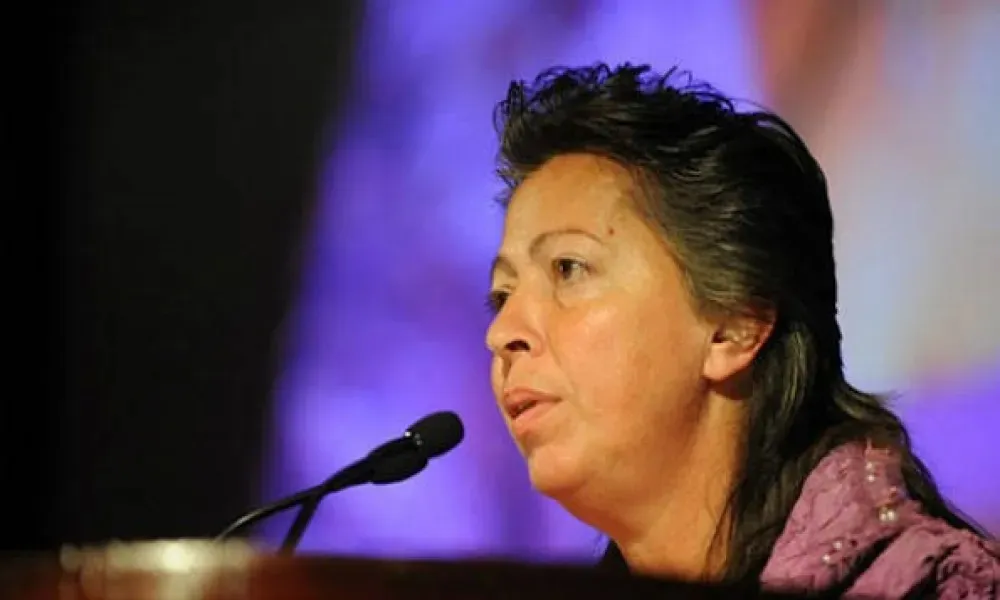

By Michalis Stavrou
Today, in her memory, Politis republishes excerpts from two series of articles by the late journalist. One focused on what is and is not being done for the missing, drawing on her experiences at excavation sites. The second presented her own proposals for confidence-building measures aimed at bringing the island's two communities closer together.
They Kept Their Belongings
When someone is "missing" within a family, the lives of those left behind become completely paralysed, especially the lives of spouses and parents whose loved ones have disappeared.
During her investigative work on the missing, Uludağ encountered many heartbreaking stories.
When visiting the home of a woman whose husband had disappeared, she often found everything spotless and perfectly arranged. Why? Because many believed their husbands were still alive and could return at any moment, so everything had to be ready for them.
One particularly striking case was a woman whose husband and son disappeared in 1974. Forced to flee her home in Kömürcü (Komi Kebir), she took all their clothes, pyjamas, shoes and even her son's toys with her and kept them for years.
Another woman painted and polished her husband and son's shoes and boots, stuffing them with newspaper to preserve their shape, convinced they would need them when they returned.
A Turkish Cypriot mother whose son was missing forbade her grandchildren from picking fruit from her trees. Every orange and mandarin in her garden had to remain untouched so her son could harvest them when he came home.
Unsung Heroes
Uludağ described as unsung heroes both the relatives who searched independently for their loved ones and the ordinary people who provided information.
Many Greek Cypriot and Turkish Cypriot relatives of the missing, frustrated by decades without answers, took matters into their own hands. They searched for information about what had happened to their loved ones while also helping uncover information about other missing persons.
There were also countless quiet heroes working across Cyprus to help resolve this deeply humanitarian issue without politicising it or taking sides.
For two decades, many Greek Cypriots and Turkish Cypriots contacted Uludağ, shared information and identified possible burial sites. They did so voluntarily, without seeking anything in return.
Mass Graves
Uludağ also wrote extensively about mass graves.
Mass burial sites exist throughout Cyprus, and they were not created by outsiders but by Cypriots from both communities, beginning in 1963 and continuing in 1974.
From Paphos to Lithrodontas, from Polis to Galateia, from Sinda to Lysi, from Tziaos to Trikomo, such sites can be found across the island.
She argued that political figures and people in positions of authority on both sides often attempted to conceal these graves because each side preferred to see itself as the sole victim of the conflict. Acknowledging that members of one's own community had killed and buried people in unmarked graves was something many found difficult to accept.
Threats From Both Sides
Uludağ also wrote openly about the threats she received.
She said she faced intimidation from both sides of the divide.
Some of the most serious threats came from individuals connected to Tziaos, Sinda, Agia Kebi̇r, Galateia and from certain Greek Cypriots from Trikomo who had been involved in killings and disappearances in 1964.
She was repeatedly harassed by phone. Some individuals even came to her workplace and threatened her directly.
Others attempted to pressure political leaders into intervening. At one point, people reportedly abducted her newspaper editor at the time, Cenk Mutluyakalı, taking him to a warehouse and demanding that he stop her from writing.
A Vision of Reconciliation
Uludağ consistently urged Cypriots to focus on shared experiences rather than competing narratives.
She asked how stories of the missing could be used in schools to teach children that the suffering of families searching for their loved ones is neither "Greek" pain nor "Turkish" pain, but fundamentally human pain.
She argued for educational materials that would allow teachers on both sides of the divide to explore common themes, sharing the stories of ordinary people and helping future generations understand this sensitive chapter of Cyprus' history.
What Can Be Done
The journalist proposed many ideas over the years.
She observed that public debate often becomes trapped in simple "yes" or "no" positions, leaving little room for "maybe" or alternative approaches.
Over four decades, she noticed that people often supported or opposed ideas with the same loyalty they would show a football team.
Life, she argued, requires something more.
With a better understanding of why people hold certain positions, Cyprus might draw inspiration from ideas that have already been tested elsewhere in the world.
As a peace activist running workshops, she frequently observed a lack of imagination when people discussed the future.
Sevgül's Confidence-Building Measures
Following announcements of additional confidence-building measures by President Nikos Christodoulides, Uludağ proposed her own ideas to bring the two communities closer together.
1. Bringing Families Together
- Family exchange and introduction programmes between the two communities.
- Shared visits and hosting opportunities.
- Building personal relationships and trust.
2. Helping Through Translation
- Establishing a free translation centre for bicommunal activities.
- Funding through European programmes.
- Easy access to translation services.
3. Confronting the Past
- Organising joint discussions on Cyprus' recent history.
- Exploring historical events to promote understanding rather than confrontation.
- Highlighting personal testimonies and stories of humanity from all communities.
4. Institute for Dialogue and Reconciliation
- Promoting dialogue and exchanges with other conflict regions, including Israel and Palestine.
- Organising seminars, research and educational initiatives on peacebuilding.
- Drawing on Cypriot expertise and civil society participation.
5. Permanent Exhibitions on the Past
- Creating permanent and temporary exhibitions on Cyprus' history.
- Displaying artefacts and stories from intercommunal conflict.
- Developing an interactive map documenting historical events and acts of solidarity.
6. Cooperation Among Private Schools
- Encouraging educational partnerships.
- Presenting lesser-known aspects of Cypriot history and examples of humanitarian action.
- Involving trade unions from both communities.
- Launching pilot projects in private schools before wider implementation.
7. Professional Exchange Opportunities
- Creating exchange programmes for professionals.
- Cooperation between professional associations and chambers of commerce.
- Allowing professionals to gain experience in the other community.
- Organising joint visits and exchanges across the EU.
8. Opportunities for Youth Cooperation
- Promoting joint volunteer projects in Cyprus and abroad.
- Participating in humanitarian missions in disaster-affected areas.
- Joint visits to care homes.
- Support from youth and trade union organisations.
9. Shared Books
- Expanding the multilingual publications of the Association for Historical Dialogue and Research (AHDR).
- Strengthening literary translation programmes.
- Promoting mutual understanding through literature.
10. Youth Camps
- Expanding bicommunal youth camps in Cyprus and abroad.
- Using the Kormakitis Community Centre for educational activities.
- Encouraging friendships and intercultural cooperation.
11. Cypriot Food
- Developing programmes showcasing Cypriot cuisine.
- Promoting local flavours through broadcasts, presentations and competitions.
- Encouraging cooperation between chambers of commerce and restaurants.
Uludağ believed that reconciliation begins with human contact, shared experiences and a willingness to imagine a common future. Her work on the missing and her proposals for cooperation remain part of that legacy.