
Back in April, after the collapse of the apartment building in Germasogeia, Limassol, we discovered, once again, that Cyprus has a serious problem with dangerous buildings.
Meetings, emergency discussions, decisions, measures, notices to apartment blocks, inventories of other dangerous structures and a host of related actions followed.
Who was responsible for the collapse? Who should have done what? Why did municipalities not act? Why did the district local government organisations not do something else?
Meanwhile, those who genuinely understood the issue kept repeating what anyone who has covered dangerous buildings already knew:
"The necessary legal tools do not exist."
There were, of course, those who disagreed and insisted the law already provided for everything.
Where are they now, and what would they say today?
Will they explain why an evacuation order has still not been issued?
From the first day after the Limassol tragedy, attention turned to other buildings requiring urgent intervention.
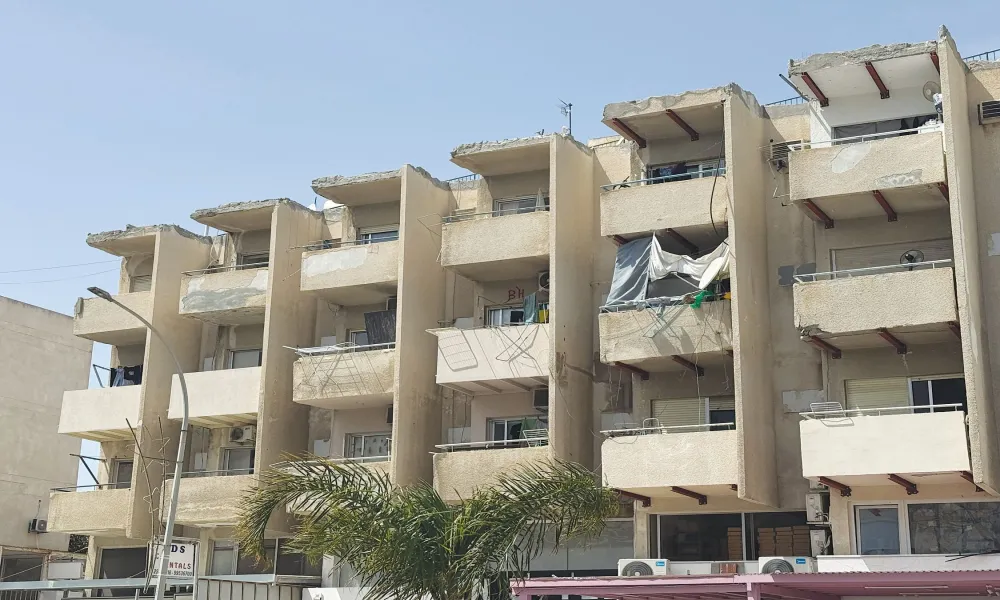
At the centre of the debate was the Seagate apartment block in Germasogeia, which repeatedly made headlines.
Initially, we heard about a three-day deadline. Later it became clear that this was merely an informational letter.
Then confusion followed regarding how the letter would reach the correct recipients. Process servers entered the discussion.
After that, everyone waited for the local government organisation and the law firm appointed to handle the case to move forward with obtaining a court order.
When did that process begin?
20 May.
What has happened since then?
Essentially nothing.
After all, what are three months?
If there is one party that has been fully vindicated by this entire affair, it is the local District Local Government Organisation (EOA), which has been warning from the outset about the lack of effective legal tools.
"The legal tools at our disposal are ineffective and time-consuming, and this is being proven in practice," said the president of the Limassol EOA.
And how can anyone argue with that?
More interestingly, the law firm handling the case is directly linked to a member of parliament, while the matter became stuck on a hierarchical appeal to the Interior Minister.
Perhaps that is a somewhat simplistic explanation.
But the case has nevertheless become trapped within the very framework defended by those who insisted that EOAs already possessed all the legislative tools needed to do their job.
Well, it turns out they do not.
The Seagate case is evidence of the shortcomings of the current legislation.
It is evidence of what must change in the new law if future tragedies are to be prevented.
As long as those responsible continue shifting blame to one another when it matters most, we will unfortunately be waiting for another apartment block to collapse and for more lives to be lost.
The Seagate building, and many others like it, has officially been deemed highly dangerous by the state itself through its institutions.
Yet people continue to live there.
Some continue to collect rent.
Others knowingly fail to maintain the property, even when they have the financial means to do so.
Ultimately, if evacuating dangerous buildings is truly as straightforward as some claim, and if the problem is simply that EOAs are unable to act, then why not return responsibility for this issue to the Ministry of the Interior?