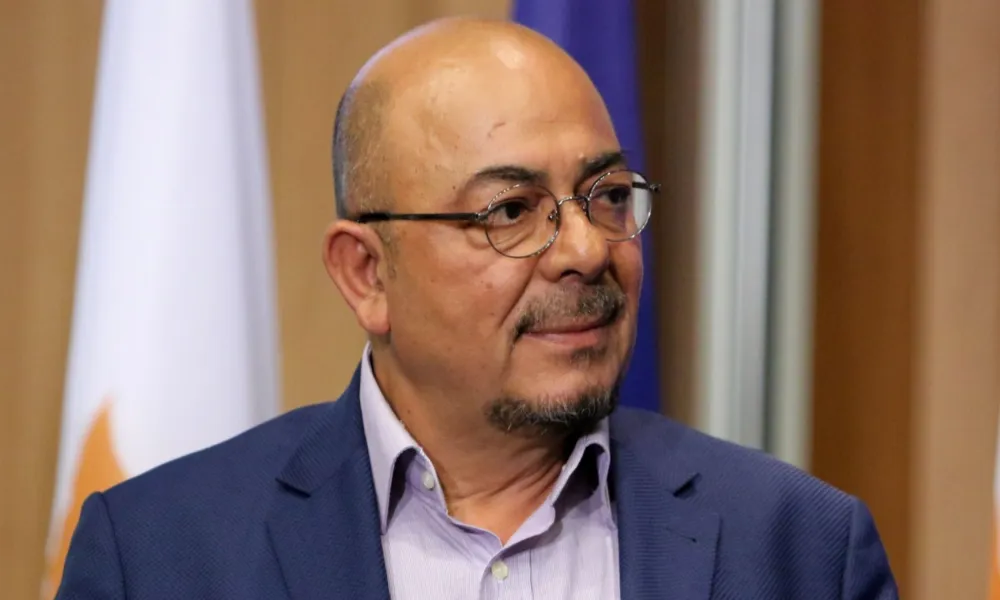

Former AKEL MEP Niyazi Kizilyurek has returned to the debate triggered by his social media post on the murders of Tassos Isaac and Solomos Solomou, responding directly to Anastasia Isaac during an interview with Alpha TV.
He said he fully supported efforts to identify, arrest and hold those responsible to account, while arguing that Cyprus must confront crimes committed against both communities rather than address them selectively.
Kizilyurek said there was no disagreement over the demand for justice for Isaac and Solomou. He maintained, however, that crimes committed in Cyprus should be addressed through a comprehensive approach covering both Greek Cypriots and Turkish Cypriots.
“No one disagrees with that. I, too, want the killers, killers in general, to be held accountable,” he said.
He also noted that one of those linked to the murder of Tassos Isaac later served as a “minister” in the occupied areas.
The murder of Kutlu Adali
Kizilyurek spoke at length about the climate that prevailed during the summer of 1996. He said the murder of Turkish Cypriot journalist Kutlu Adali, whom he described as a champion of peace and reconciliation and a personal friend, had taken place shortly before the events in Deryneia.
He said Adali’s murder had deeply shocked him and prompted him to write, under a pseudonym, an article in a Turkish magazine condemning the killing.
The violent events in Deryneia followed a few weeks later.
Kizilyurek argued that nationalist circles and organised groups linked to the Turkish “deep state” were behind the violence of that period, making particular reference to the Grey Wolves.
He said the events of August 1996 compelled him to intervene publicly once again, describing this as a “matter of conscience” and an act of political responsibility for an academic and public intellectual.
Rejecting collective responsibility
Kizilyurek reiterated that responsibility cannot be assigned collectively to entire communities.
“There are Greeks of peace and Greeks of hate. There are Turks of peace and Turks of hate,” he said, arguing that making this distinction is essential if Cyprus is to move forward.
In his view, attributing collective blame to either Greek Cypriots or Turkish Cypriots prevents society from dealing meaningfully with the past and achieving reconciliation.
His response to Anastasia Isaac
Asked specifically about Anastasia Isaac’s strongly worded response, in which she said she was not seeking an apology but responsibility and punishment for the killers, Kizilyurek said he did not disagree.
“No one disagrees that the killers of Tassos Isaac should be tried,” he said.
He maintained, however, that the question of justice must be viewed more broadly, pointing to crimes committed during different periods of the Cyprus conflict whose perpetrators were never brought before the courts.
He cited the events of 1958, the intercommunal violence of 1963 and 1964, and the period of the invasion.
“We are a society that did not put those responsible on trial, in either community,” he said.