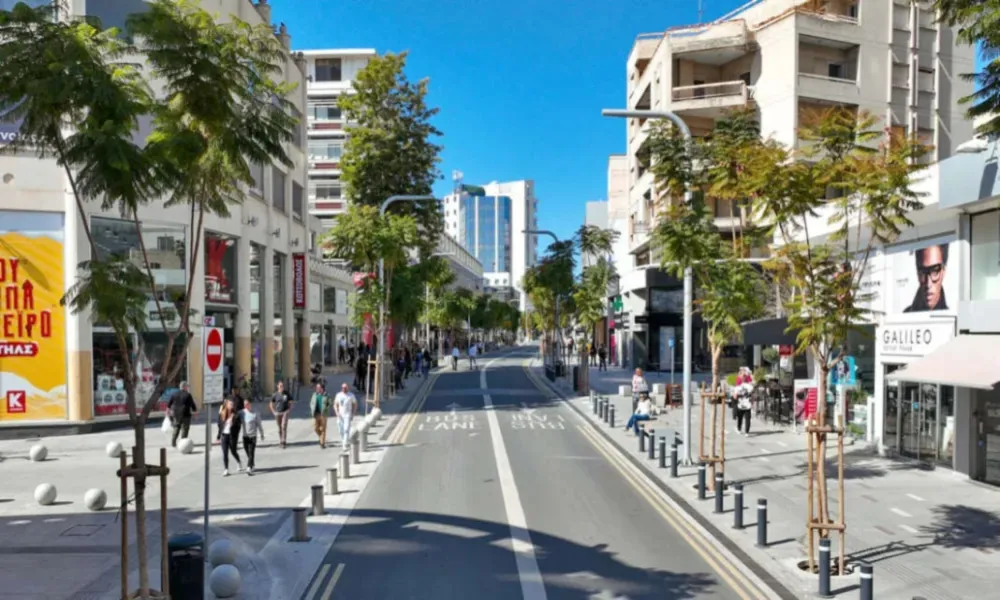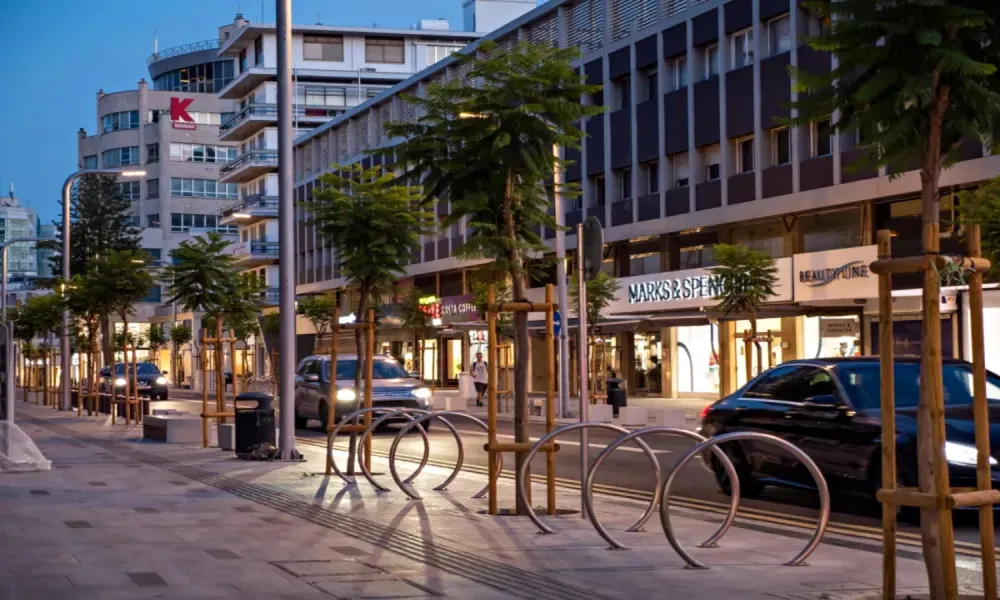

The Ministry of Transport is unwilling to approve changes to Makariou Avenue that could lead to the recovery of European funding and ultimately shift the cost onto taxpayers.
According to information obtained by Politis, this is the ministry's central position as debate continues over proposed modifications to the current traffic arrangements in central Nicosia.
A ministry source told Politis that any alteration to the philosophy of the Makariou project must first ensure there is no risk of funding being reclaimed by the European Commission, which co-financed the project.
The position effectively establishes the protection of public finances as a red line at a time when organised groups of shop owners continue to press for the avenue to be opened to a larger number of vehicles.
The municipality's study
At the same time, new information obtained by Politis indicates that the Ministry of Transport has decided not to fund the study requested by the Municipality of Nicosia to support the proposed changes to Makariou Avenue.
According to the same sources, the ministry has already formally informed the municipality through a written response that it will not cover the cost of the study.
The development is significant as the municipality seeks to advance the municipal council's decision to modify traffic arrangements, while an assessment is under way regarding the potential impact such changes could have on the project's funding.
Nicosia Mayor Charalambos Prountzos has repeatedly stressed that the municipal council's decision should be implemented only if there is no risk of having to return European funds, describing this as the key issue currently under examination.
The retail picture
Data reviewed by Politis presents a different picture from that described by organised shop owners, who have argued that Makariou Avenue is experiencing widespread commercial decline.
Of the 106 ground-floor premises recorded along the avenue:
- 70 are occupied
- 36 are vacant
Of the vacant properties, only 20 are currently available for rent.
These figures differ considerably from claims that two out of every three shops on Makariou remain empty, as argued by the Joint Action Platform for the Revitalisation of Urban Commercial Centres.
The platform renewed its call on Tuesday for the avenue to be reopened and for the restoration of two-way traffic along its southern section.
Meetings on sustainable mobility plans
In a parallel development, the Transport Minister is expected to invite mayors to separate meetings in the coming period to discuss each city's Sustainable Urban Mobility Plan (SUMP).
According to ministry sources, the aim is to review planning priorities and challenges that have emerged during the implementation of the schemes.
The discussions come as local authorities seek to balance sustainable mobility objectives with the need to support commercial centres.
For Nicosia, however, the ministry's message appears clear: any modification to Makariou Avenue must remain compatible with the project's funding conditions and must not lead to financial burdens that would ultimately be borne by the public.
The agreement with the EU
Under the funding agreement, the project must be evaluated over a five-year period to determine whether it achieved the objectives for which it was approved and financed.
The assessment period does not begin from the date the project became operational but from the final disbursement of EU funds.
Since the last payment was made only recently, approximately four years remain before the evaluation period is completed.
According to information available to Politis, this is a position that is also understood by the ministry.