
The debate over Nicosia's new Local Plan has entered the public consultation phase, with residents highlighting issues that directly affect daily life.
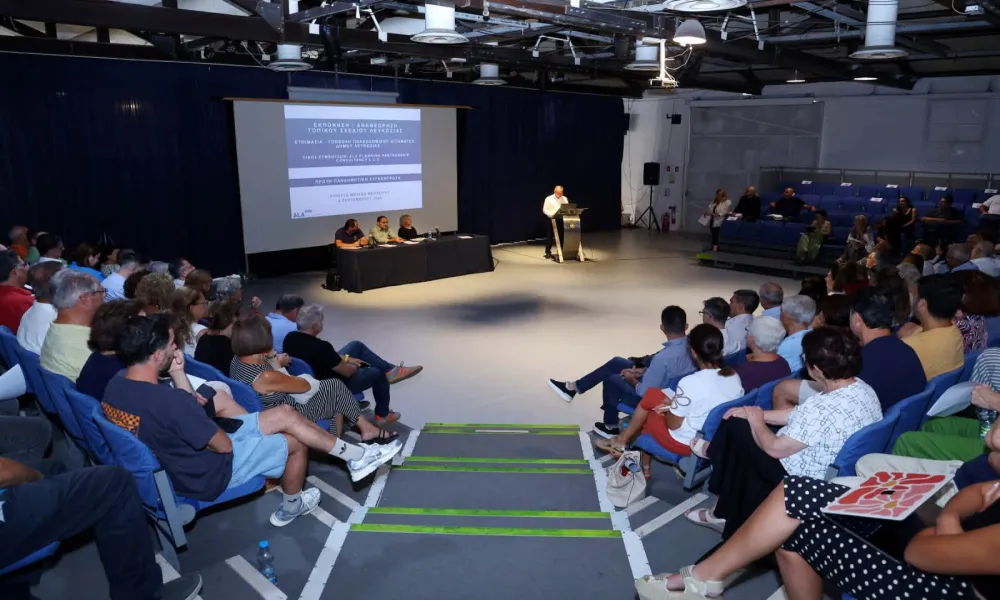
At public meetings held in recent weeks in Latsia and Geri, Strovolos and the Metropolitan Municipality of Nicosia, discussions extended well beyond requests for changes to individual planning zones. Traffic congestion, urban development, infrastructure and quality of life all featured prominently, with residents warning that long-standing problems could worsen if they are not properly addressed in the next revision of the plan.
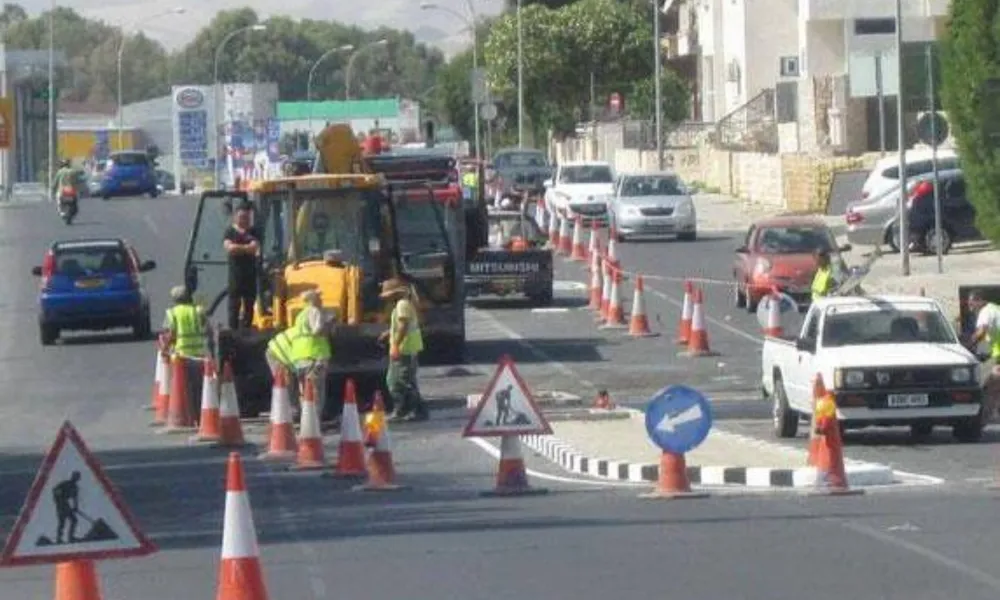
Two themes appeared consistently across almost all discussions: traffic congestion and the need to re-examine building density coefficients, with many residents and landowners seeking greater development potential for their land.
Beyond those issues, broader debates have emerged around student housing, green spaces, schools, nuisance land uses, large public landholdings and buffer-zone neighbourhoods.
The consultation process for the new Local Plans of Nicosia, Limassol, Larnaca and Paphos was launched in June. Citizens, municipalities, organisations and private stakeholders have until 18 October to submit proposals through the IPPODAMOS planning platform.
Submissions will first be assessed by planners and subsequently by the Planning Council. The overall review process is expected to take approximately two years.
More development, but under what conditions?
Requests for increases in building density coefficients are among the most common submissions.
No single density coefficient applies across Nicosia, as different planning zones permit different levels of development. Existing residential zones currently range from:
- 40% in Ka9
- 60% in Ka8
- 80% in Ka7
- 90% in Ka6
- 100% in Ka5
- 120% in Ka4
- 140% in Ka3
Many residents want planners to consider higher density allowances where conditions permit, particularly within the existing urban fabric, in order to reduce pressure for continued suburban expansion.
The demand for planning-zone changes is particularly evident in Latsia and Geri.
According to figures obtained by Politis, between 2020 and today 275 private requests and consultation submissions have been filed, relating to approximately 300 plots of land.
Of those requests:
- 75% concern Latsia
- 25% concern Geri
- 70% seek inclusion in residential zones or an upgrade of existing residential zoning
- 5% involve commercial zoning requests
- 10% concern special-use zones
- 5% relate to protection-status amendments
- 10% cover various other requests, including industrial zoning
The figures illustrate that the debate is not simply about increasing building density. In many cases, it concerns the categorisation of land itself and efforts by landowners to secure greater development rights for their properties.
Urban planners will need to balance those pressures against infrastructure capacity, road networks and broader planning objectives.
At the same time, concerns have been raised about the height of new buildings and the impact of high-density projects on neighbourhoods traditionally characterised by detached housing.
Residents are calling for smoother transitions between low-density and higher-density areas rather than abrupt changes in scale.
Urban sprawl and returning to the centre
A key issue highlighted during consultation presentations is that Nicosia has spent decades expanding outward towards the suburbs, gradually shifting housing, commercial activity and services away from its historic and commercial core.
Planners argue that incentives are needed to encourage people to return to the city centre, buffer-zone districts and the walled city, where substantial housing stock remains available.
Speaking to Politis, Nicosia Mayor Charalambos Prountzos said the initial presentation had been "particularly enlightening", confirming both the ageing population near the Green Line and the city's capacity to accommodate a significantly larger population than recorded in the 2021 census, even under current building coefficients.
He noted that comparative data suggest uncontrolled outward expansion has weakened both population density and commercial activity in the city centre.
According to Prountzos, the merger of the former municipalities of Nicosia, Engomi, Aglantzia and Agios Dometios creates major opportunities but also highlights significant internal disparities.
He recalled a remark made during consultations by a resident of Kaimakli directed at residents of Engomi:
"We've been listening to you complain for so long because Engomi has development and young people. Send them to us because we need them."
According to the mayor, the comment captures the need for targeted policies instead of uniform solutions.
Engomi is not Kaimakli
In Engomi and Aglantzia, the large student population has transformed housing into a major planning issue.
In Engomi there is concern over the concentration of students and the continued construction of student accommodation projects. In Aglantzia the focus is more on the need for properly planned student housing.
Several major land areas have also entered the discussion, including:
- The Cyprus State Fairgrounds
- The Nicosia Racecourse
- The SOPAZ area
Residents are calling for more green spaces and public areas, while leaving open the possibility of using part of those sites for affordable housing.
Prountzos said consultations also addressed:
- Macedonia Avenue
- The extension of Glafcos Clerides Avenue
- The Metropolitan Park at the State Fairgrounds
- Makariou Avenue
- Commercial activity in the city centre
- High-rise buildings in low-density areas
- The Racecourse site
- Central Prisons
Demographic challenges
In Pallouriotissa, Kaimakli and Taht-el-Kale, concerns are more heavily focused on social and demographic trends.
Residents raised issues including:
- An ageing population
- The departure of younger families
- Migration trends
- School infrastructure
- The ability of these neighbourhoods to attract younger residents again
In Strovolos, discussions centred on Strovolos Avenue and traffic flows into central Nicosia, with concerns that new developments could place additional pressure on roads that are already heavily congested.
Similar concerns have been expressed elsewhere, where higher-density development is increasingly linked to calls for improved road infrastructure and better public transport.
Special treatment sought for buffer-zone areas
Particular emphasis has been placed on neighbourhoods near the Green Line, where residents are calling for stronger support and specialised planning policies.
Nicosia remains a divided city, and communities along the buffer zone continue to face challenges not experienced elsewhere in the capital.
Prountzos said the "semi-occupation of the capital" continues to influence the city's urban fabric and development prospects, creating unequal conditions compared with coastal regions.
According to the mayor, the state must place greater focus on the metropolitan municipality, arguing that planning and spatial decisions made over past decades, under the influence of both small and large interests, have not always served the capital's long-term interests.
As consultation on the new Local Plan continues, residents are making clear that they want more than zoning changes. For many, the process represents an opportunity to rethink the future of Nicosia, from its transport network and housing strategy to the revitalisation of neighbourhoods that have been losing population and investment for decades.