
Limassol has been left without funding for any major or minor traffic-relief projects in the 2027 state budget, despite repeated acknowledgements by the government that congestion has become one of the city's most pressing challenges.
While a series of road schemes have been discussed for years, none has received clear construction funding in the new budget, leaving key interventions stuck at the study and planning stage.
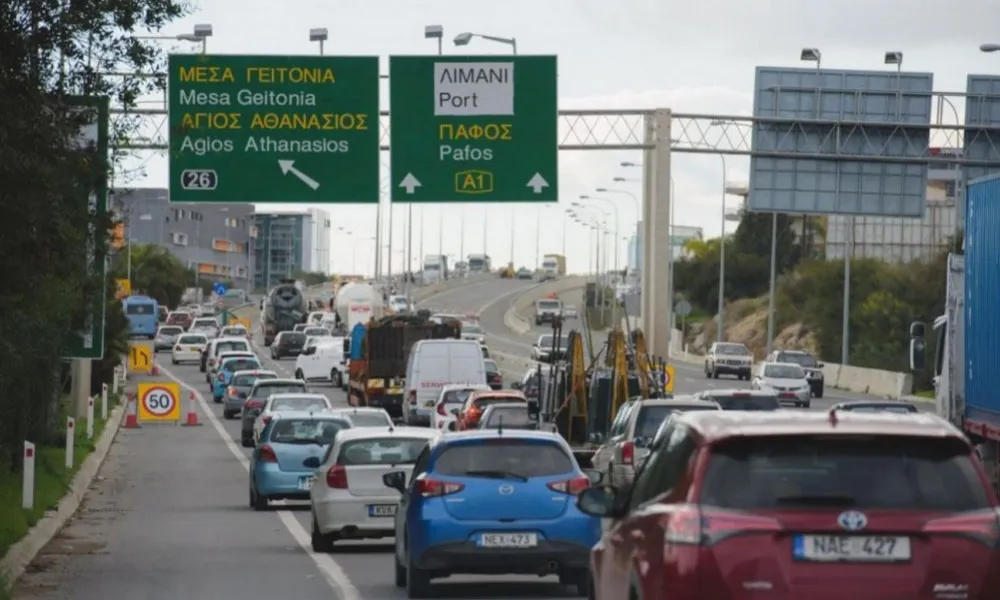
Traffic congestion is no longer confined to peak hours or isolated locations. Queues and bottlenecks now affect much of the city throughout the day, while the Limassol–Nicosia motorway remains one of the country's most heavily congested routes.
The bypass section between Agios Athanasios and Mesa Geitonia records approximately 105,000 vehicles daily, making it the busiest road segment in Cyprus.
Growing frustration in Limassol
The absence of major road projects from the budget has triggered disappointment and criticism across Limassol, with mayors already voicing concerns.
According to reports, MPs from all parties representing Limassol are also expected to raise the issue during parliamentary discussions on the budget.
There is broad agreement that bureaucratic delays and poor adherence to timelines continue to hamper the implementation of major infrastructure projects.
Local officials note that while significant road developments are included elsewhere in Cyprus, Limassol is absent from the list of the budget's 20 largest projects despite being one of the country's key economic centres and facing some of its most severe traffic pressures.
Transport Minister Evi Tsolaki, who is from Limassol, is said to be familiar with the city's needs and traffic challenges. However, her relatively short time in office has not yet translated into progress on the projects under discussion.
Even if approvals are secured soon, many of the proposed schemes would require three to four years of construction work, meaning any meaningful improvement in traffic conditions may not be felt until the next administration or even later.
Government sources insist that the absence of construction funding does not mean projects have been frozen. They argue that once the necessary studies are completed, funds can be released and works could begin, potentially even during 2027.
Projects awaiting funding
Among the major schemes Limassol expected to see progress on are:
- Northern Limassol Bypass: The first two phases involving Evagoras Lanitis Avenue and the Nikaia–Synergatismou Avenue corridor, with a combined estimated cost of about €62.5 million.
- Limassol–Saittas Motorway, Phase A2: The Palodia–Alassa section, estimated at €80-83 million, which remains stalled amid environmental review requirements linked to the Natura 2000 network.
- Agias Fylaxeos Avenue: Plans to widen and upgrade the avenue and improve the junction with Makarios Avenue.
- Agios Athanasios Connector Road: Upgrading Agios Athanasios Avenue and linked sections of Kolonakiou and Griva Digeni avenues, at an estimated cost of €30 million.
- Smaller interventions such as motorway access improvements, road widening projects and new park-and-ride facilities, for which no construction funding has been allocated.
Funding for studies only
The budget includes €100,000 for studies related to the upgrading of Agias Fylaxeos Avenue, Gladstonos Avenue, the second phase of Franklin Roosevelt Avenue, Ilias Kannaourou Avenue in Ypsonas and a road connecting the seafront with Parekklisia.
A further €100,010 has been allocated for studies covering the first two phases of the northern Limassol bypass.
Although planning documents refer to the implementation of these phases during 2027, key feasibility studies remain outstanding, while preparations for the Evagoras Lanitis Avenue section have been delayed by the incorporation of major flood-protection works.
As for the Limassol–Saittas motorway, the budget provides €210,000 for the continuation of design work and the construction of a roundabout on the Limassol–Platres road near Palodia. However, this allocation does not constitute funding for the construction of Phase A2 itself, which remains subject to further approvals and procedures.