
"We wish we had had a mountain communities strategy 20 years ago."
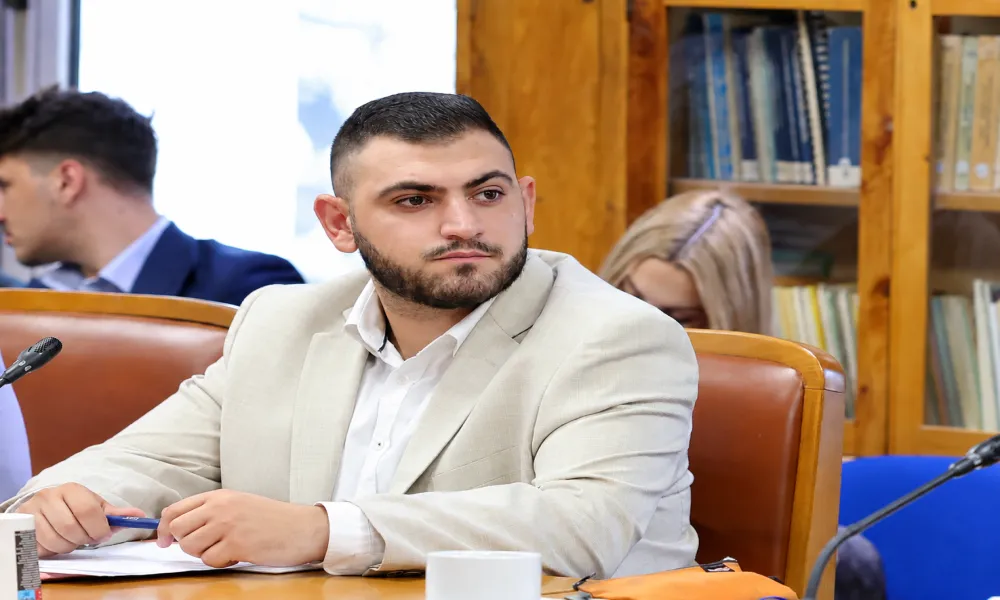
With that frank admission, Charalambos Christofinas, Commissioner for the Development of Mountain Communities, describes the scale of the challenge facing rural Cyprus.
Population decline, ageing communities, limited services, housing shortages, restricted educational opportunities and difficulties accessing healthcare did not emerge overnight. They are the result of problems that accumulated over decades.
"The truth is that, as a state, we were late," he says. "Especially in the smaller communities. We are now talking about depopulation and largely ageing populations."
According to Christofinas, the National Strategy for Mountain Communities is not a static plan but a framework that is continuously updated and shaped by the communities themselves.
The roots of the initiative stretch back to 2016. He points to the work of former Mountain Communities Commissioner and former Kalopanayiotis community leader Yiannis Papadouris, who helped launch early local initiatives before they gradually expanded across Marathasa and eventually the wider Troodos region.
The philosophy was simple: a single intervention in one village could never succeed without a broader regional strategy.
380 actions with a horizon to 2035
Today the strategy comprises approximately 380 individual actions and touches almost every area in which the state can intervene on behalf of mountain communities.
The original cost estimate stood at approximately €680 million, although Christofinas notes that the figure cannot be treated as fixed today and was never intended to be funded in a single year.
That is one reason the strategy extends to 2035.
What matters most, he argues, is prioritisation.
Every government must determine which interventions create the conditions for people to return and remain in rural areas.
"You have to place weight where it matters most. You have to establish priorities."
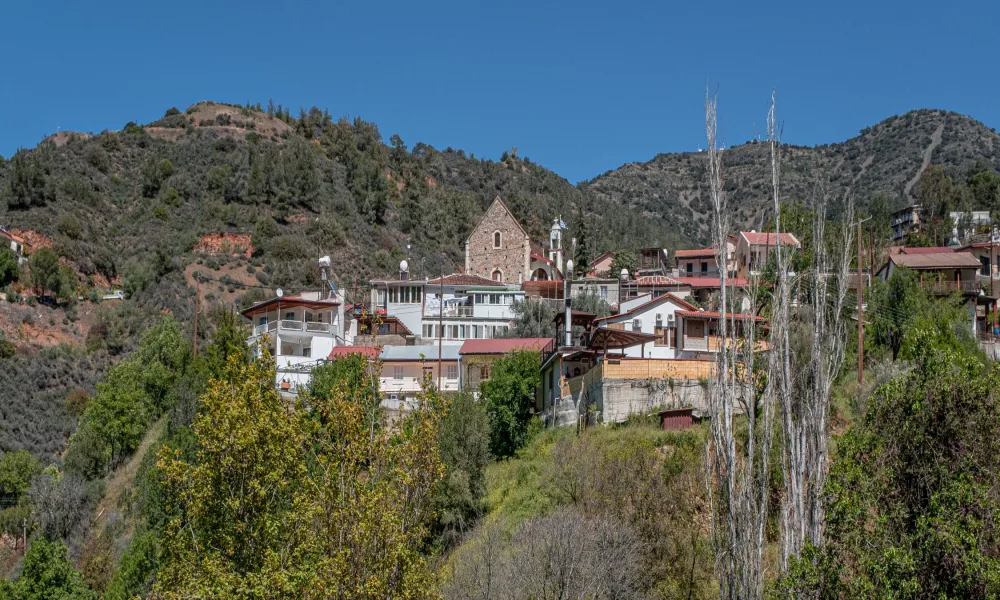
The strategy covers 160 communities across four districts. Following a government decision, it has also been expanded to parts of Larnaca and Paphos and to additional communities in Limassol district.
Of those 160 communities, 157 remain inhabited. Three have no permanent population, including Trozena, which recently drew attention because of an Israeli investor.
Three pillars come first
According to Christofinas, the Government identified three sectors as prerequisites for population retention:
- Healthcare
- Education
- Road connectivity
"With these three pillars we begin building a new future," he says.
The logic is to establish the basic infrastructure first and create the conditions necessary for families to remain in mountain areas.
At the same time, he stresses that smaller projects should not be neglected simply because they lack the scale of a hospital or motorway.
The Nicosia-Troodos motorway
Road infrastructure remains one of the highest priorities.
Distance from urban centres and travel times affect not only residents' daily lives but also economic and tourism development prospects.
Following the completion and opening of the Astromeritis-Evrychou section five months ago, authorities launched the tender in late August for the remaining link required to complete the new Nicosia-Troodos motorway.
The project concerns the Deneia-Akaki-Astromeritis section, a four-lane road approximately 18 kilometres long.
The deadline for bids is 18 December.
Construction is expected to take 54 months, meaning that if works begin in mid-2027 as planned, completion should come in early 2032.
The estimated cost is approximately €138 million.
Other roads leading to Troodos
Christofinas also highlighted several other strategic road projects.
Regarding the Nicosia-Palaichori road, he says the current phase is approaching completion. The next objective is connecting it with the Nicosia ring road to improve access to mountain communities.
The Limassol-Agros road presents greater engineering challenges. A major study has already been completed after 24 months of work, but difficult terrain and safety concerns, including landslide-prone sections, may require route adjustments.
He also points to the Limassol-Saittas corridor. The first phase extended to Palodia, while the second is expected to reach Monagri.
Christofinas describes the project as particularly important for communities in Pitsilia and Marathasa, including villages such as Prodromos and Lemythou.
The discussion, he notes, dates all the way back to 1998.
Another project concerns the Fterikoudi-Alona-Polystypos-Chandria road, which had been delayed because of expropriation issues but has now restarted.
He also highlights the long-standing issue of the main road serving northern Marathasa, including Kalopanayiotis, Moutoullas and Pedoulas.
According to community leaders, the condition of that road has become one of the region's most pressing problems.
For Christofinas, it demonstrates that development depends not only on major projects but also on resolving long-standing planning and administrative obstacles.
"We do not play with people's health"
Healthcare forms the second major pillar of the strategy.
Christofinas argues that the conversation should not focus solely on whether a healthcare facility exists.
"We must make it clear that we do not play with people's health."
A centre operating with a single doctor and a single nurse, he argues, is not necessarily a safer option than a larger, more organised facility located slightly further away that can deliver proper treatment and emergency transport.
Primary-care facilities nevertheless remain crucial, particularly for older residents who require regular access to doctors and prescription services.
Healthcare centres operate in locations including Platres, Pedoulas and Evrychou, while similar services are available in other rural areas.
Kyperounta Hospital
At the heart of healthcare efforts is Kyperounta Hospital.
"When we started, we said we must finally rebuild the only hospital we have in the countryside, which serves multiple purposes," Christofinas says.
The accident and emergency department has already been upgraded.
The figures, he says, are indicative of the change.
Before the upgrade, the maximum number of patients seen annually was approximately 3,500.
Today that figure has exceeded 10,000.
"The reason is simple. People now trust it. Services have improved. They are no longer going somewhere they do not feel safe."
The hospital's location is also important because it serves residents across Solea, Marathasa, Pitsilia and mountainous Limassol.
A major intervention involved bringing the respiratory clinic into operation after years in which it remained unused despite having been created by the previous administration.
The hospital also now includes a modern radiology department with a CT scanner.
The next major step concerns the central hospital building, parts of which date to the 1950s.
"The conditions in the patient wards are unacceptable," Christofinas says.
The first phase of a complete upgrade is expected to cost approximately €5.5 million.
Supporting older residents
Social care represents another priority.
Day-care and support centres are considered essential for a population that is predominantly elderly in many villages.
According to Christofinas, the key objective is not simply constructing buildings.
"We must stop creating buildings that remain closed. We built museums and many other things, but they remain shut. They are not accessible."
To strengthen care services, authorities have provided 13 vehicles for transporting elderly residents and delivering home-care assistance.
The goal is to create conditions that support active and dignified living.
"We owe it to people to enter these facilities and not feel they have come there to die. They have come to live better. However many years they have left, they should live them well."
The first sign of success: children
For Christofinas, the clearest indicator of whether the strategy is working is the number of children.
"The way we measure whether the strategy is making an impact is through our children."
He argues that evidence of change is already visible.
Population numbers in nurseries and kindergartens are beginning to rise.
A second kindergarten class has opened in Kyperounta, while increased enrolment is also being recorded in Agros, Kivides and Pachna.
In Trimiklini, the area's first nursery has been established.
Christofinas believes such facilities should operate on a regional basis so they remain viable while serving several neighbouring communities.
Secondary school classes with only two pupils
One decision taken in the education sector may seem small from an urban perspective but carries major implications for rural families.
Cabinet approved a policy allowing secondary-school classes in mountain communities to operate with as few as two students.
Christofinas describes it as transformative.
"If your child wants to pursue a specific educational pathway and that pathway is not available locally, the first thing you will think about is your child's future. You will think about moving to the city."
Across the strategy area there are:
- Seven secondary schools with approximately 1,300 students
- Twenty-six primary schools with around 1,380 pupils
- Twenty-five kindergartens with approximately 560 children
In some communities, demand is now creating the opposite problem.
According to Christofinas, Kivides and Trimiklini are seeking additional classrooms because existing facilities are becoming insufficient.
Growth is also being recorded in Agros.
The primary sector remains critical
Agriculture remains central to the strategy.
Authorities are encouraging younger people to enter farming and take advantage of available funding programmes.
In the high mountain region alone, approximately 40 to 45 young farmers have registered through the agricultural office in Agros.
"That is a major achievement."
When a young farmer registers, Christofinas says, it usually means at least a decade or more of economic activity and settlement in the area.
Similar activity is being recorded in Solea and Pitsilia, where younger producers are entering sectors such as vegetables, perishables and other agricultural products.
€2.5 million for vineyards
Viticulture occupies a prominent place within the strategy.
"For the first time we introduced a vineyard replanting scheme worth €2.5 million."
The funding aims to support the re-establishment of vineyards and strengthen the wine sector.
Christofinas notes that more than 100 wineries now operate in areas covered by the strategy and believes the quality improvement seen in Cypriot wine production is creating new opportunities for mountain communities.
Small industry and home-based businesses
Efforts are also being made to strengthen small manufacturing and craft businesses.
Christofinas highlights the planned industrial estate serving Solea and Marathasa.
A small business operating beneath a private home often struggles to expand or access funding programmes.
Purpose-built facilities, he argues, can help such enterprises become more competitive, productive and sustainable.
Home-industry schemes originally faced a different problem.
"The programme existed, but there were no applications."
Authorities responded by organising regional information campaigns to ensure residents understood the opportunities available.
Applications subsequently increased across crafts, food production and other activities.
A proposal for zivania
Authorities are also trying to resolve issues surrounding small-scale zivania production.
According to Christofinas, a proposal is nearing completion and is expected to be submitted to parliament.
The plan would allow small producers to manufacture and legally sell up to 1,000 litres of pure alcohol under specific health and taxation regulations.
Christmas Villages and festivals
Tourism is another important component of the strategy.
Particular emphasis has been placed on the Christmas Villages programme.
According to Christofinas, visitor numbers in participating communities exceeded those typically recorded during the August holiday period.
"That means support for the local economy. It means people staying. It means accommodation fully booked."
Traditional festivals also provide what he describes as a "huge injection" for rural communities by generating movement and economic activity.
The same applies to visitor farms, which create links between tourism, agriculture and education by helping visitors, particularly children, understand how local products are produced.
Housing remains essential
Attracting or retaining population is impossible without available and affordable housing.
For that reason, housing schemes administered by the Interior Ministry play a central role.
Christofinas says the schemes are continually reviewed and amended where weaknesses are identified.
In one review alone, changes were introduced in 11 areas to strengthen incentives for mountain communities.
Whenever budgets are exhausted, authorities seek supplementary funding.
"The budget is exhausted every time, and we do not reject applicants. We pursue additional funding so that beneficiaries are not excluded."
A more targeted programme designed specifically for mountain communities is also under preparation.
Retirees matter too
The discussion about repopulating villages is not limited to young families.
Many people who spent decades working in urban areas wish to return to their communities upon retirement.
Christofinas believes their impact can be underestimated.
"Life expectancy has increased. For someone who spends another 20 years living in a village, that's a whole life."
Such returns support local shops, cafés and services.
"Everything plays its role."
Resilience and safety
Keeping villages alive also requires protecting residents and the natural environment.
Fire prevention and emergency response form important parts of the strategy.
This includes funding schemes for clearing abandoned land and creating fire-protection zones around communities.
Projects include:
- The operational Pachna Fire Station
- The planned Pedoulas-Marathasa Fire Station
- A new station at Eptagonia
New heliport under construction
Christofinas also highlights the Solea-Marathasa heliport under construction in Linou.
The project will cost approximately €5 million and will support firefighting, search-and-rescue operations and medical air evacuations.
"We have a duty to ensure safety for both residents and our natural environment."
"The resilience of villages is built through preparation and through specific projects that protect life itself."