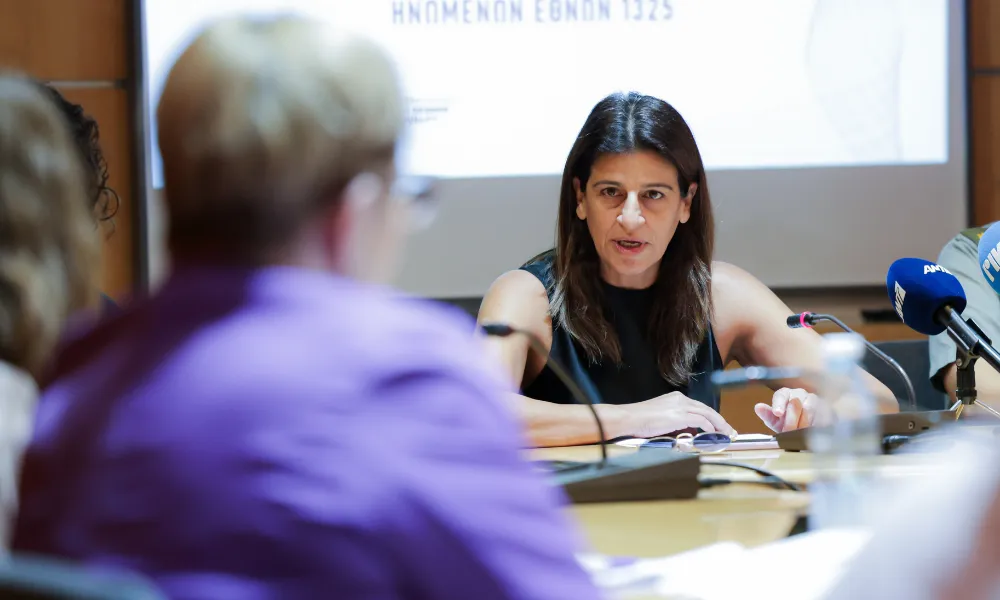




The Pancyprian Coordinating Committee of Students (PSEM) is calling for a framework that would allow school trips to continue while providing for student safety and the presence of chaperones, either teachers or parents, its president, Despina Kyprianou, said.
Speaking to CNA, Kyprianou said PSEM had been raising the issue of regulating school trips for years and had submitted a specific proposal to the Ministry of Education which, she said, was not discussed. The proposal was presented again to the House Education Committee and received a positive response. The parties, she added, said they would submit their own suggestions for shaping a framework.
The proposal provides for the “establishment of a committee comprising two representatives of the Central Student Council, one representative of the school management and one representative of the Parents’ Association. The committee would decide on the date, destination, means of transport and other parameters of the trip,” the PSEM president said.
Banning trips is 'unrealistic'
Kyprianou said that although the problems arising during these trips, as well as the risks concerning both safety and the exploitation of students, are recognised, some stakeholders are cautious or opposed to establishing a framework.
She said that in discussions with the Ministry of Education, OELMEK and OLTEK, she had found a negative approach to PSEM’s proposal. The Confederation of Parents, by contrast, was positive and expressed its willingness to assist, she said.
In her view, a complete ban on the trips is not a realistic solution. She explained that they are organised by students aged 16 and 17, who can make hotel bookings in their free time, making them difficult to monitor.
“We all agree that there is a problem with these particular trips and recognise the risks, whether they concern safety or the exploitation of students,” she said. She added that the disagreement among those involved is mainly about how to address the issue and whether this should include an institutional or legislative framework.
Chaperones
Asked whether PSEM’s proposal includes chaperones on the trips, Kyprianou replied that it does, clarifying that they could be either teachers or parents.
She acknowledged that having chaperones may not be the students’ preferred option, as it restricts their freedom to some extent. However, PSEM prefers this solution to the complete abolition of the trips.
“We would rather have chaperones than have them banned altogether,” she said.
The issue returned to the forefront following the death of 17-year-old student Kyriaki Anastasiou during a student trip to Kakopetria. These outings are not official school activities and are organised on the initiative of the students themselves, without teacher supervision.
During a discussion at the House Education Committee on 25 November, PSEM and the Commissioner for the Protection of Children’s Rights supported the continuation of the trips under conditions. Committee chairperson Chrysanthos Savvides announced that an amendment to the legislation governing Parents’ Associations was being considered, so that they could organise the trips in cooperation with students and ensure the presence of adult chaperones.
Source: CNA