
The Cypriot economy is recording the highest growth rate in the EU, having recently secured the maintenance of its A‑ investment grade with a positive outlook from Fitch.
Despite this positive momentum, the distinguished Emeritus Professor Joe Nellis CBE warns of five critical risks facing the Cypriot economy.
Speaking at an event titled 'Uncertain times, critical decisions: global and European economic prospects,' held as part of an anniversary event by Baker Tilly on Wednesday evening, the professor stated that the first risk is the heavy dependence on tourism and exposure to external shocks.
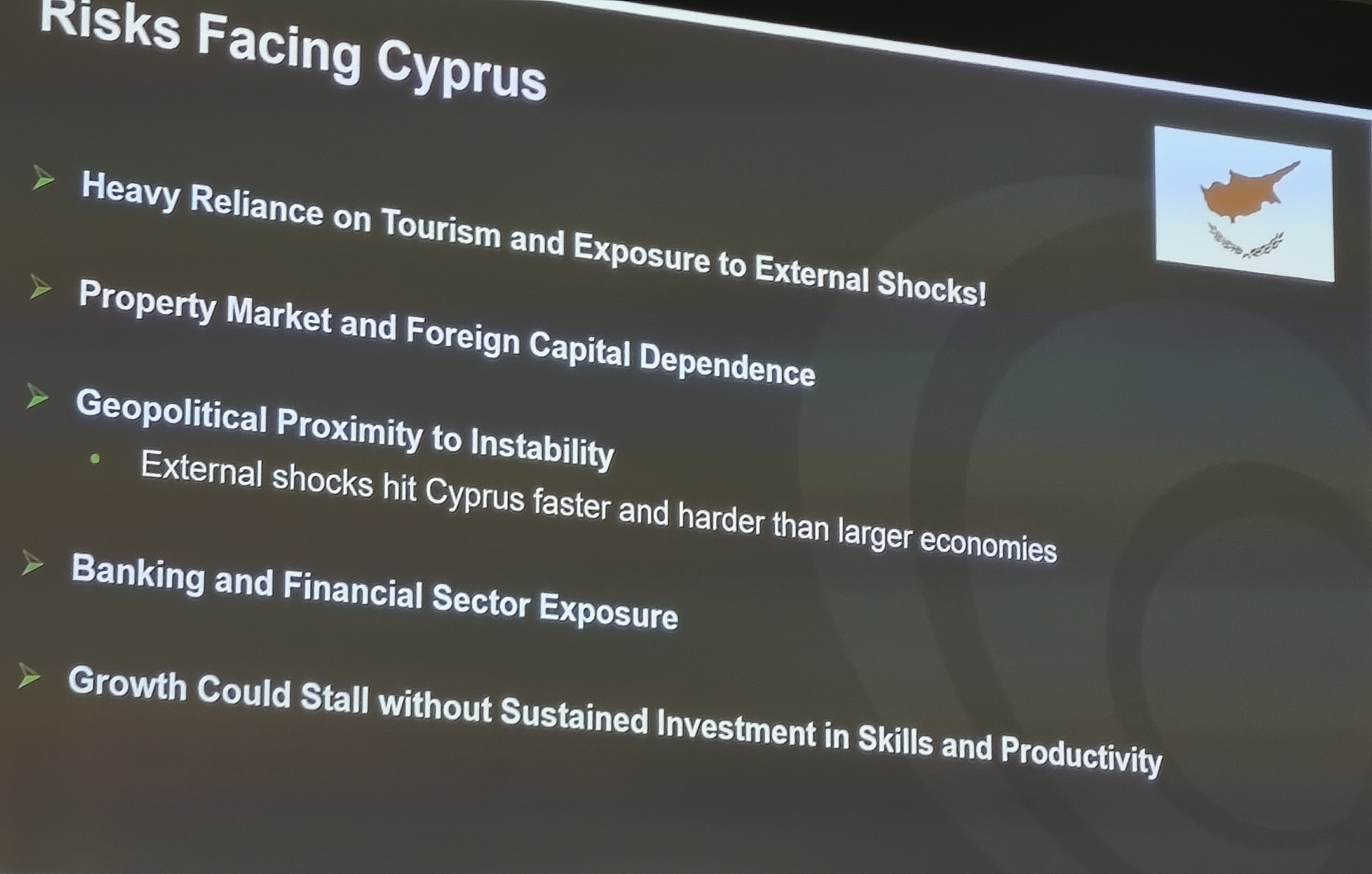
The second risk concerns the property market and its reliance on foreign capital.
Geopolitical proximity to instability constitutes the third risk, according to the professor, who noted that external shocks tend to affect Cyprus more quickly and more severely than larger economies.
The fourth risk is exposure to the banking and financial sector, while he also stressed that growth could stall without sustainable investment in skills and productivity, forming the fifth risk.
Why Cyprus stands out in growth
Referring to the reasons Cyprus has outperformed other European economies in terms of growth, he highlighted the dynamism and quality of the tourism sector, which supports employment, consumption and tax revenues.
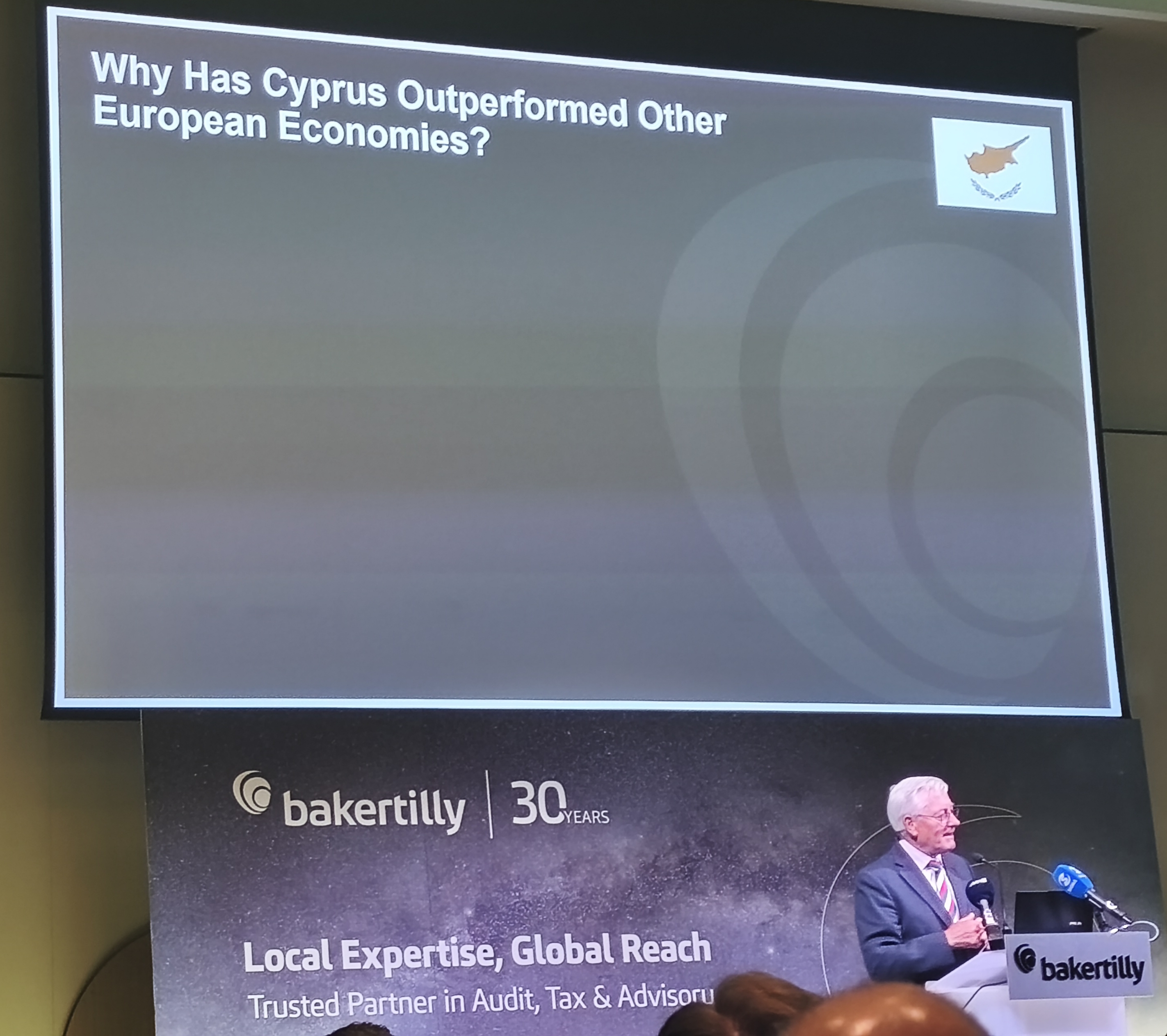
At the same time, he underlined the contribution of business services and international investment, with the Cypriot economy acting as a gateway between Europe, the Middle East and Asia, while there is a steady flow of foreign direct investment and high value‑added service exports.
Among the factors supporting the economy, he included the rapid growth of the technology, fintech and digital services sectors.
He also pointed to fiscal discipline and the restructuring of the banking sector, which have improved investor confidence, reduced borrowing costs and enhanced macroeconomic stability, as well as the country’s strategic geographical position and energy potential.
Regarding the crisis in the Middle East, he highlighted the risk of prolonged instability and weakened growth, with Europe once again coming under pressure.
Strategic priorities for business leaders
As for the strategic priorities facing business leaders, he stressed that they should include:
- Reassessing energy exposure and supplier concentration
- Embedding pricing flexibility in contracts
- Protecting liquidity and extending financing maturities
- Increasing scenario planning for shocks in interest rates, exchange rates and demand
- Accelerating investment in productivity, including artificial intelligence, automation and skills
- Exploring opportunities for geographic expansion beyond weaker markets