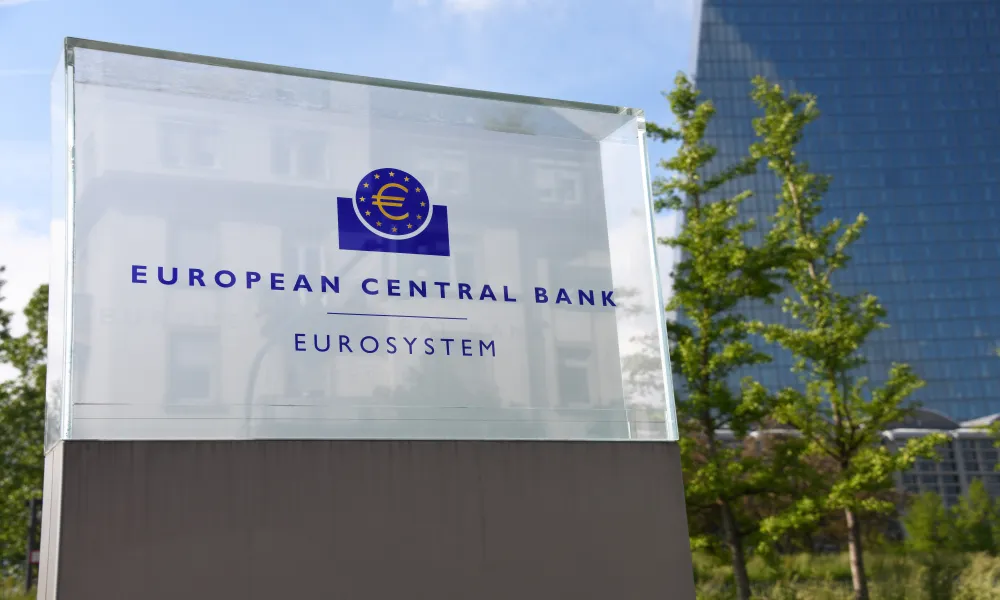

The eurozone’s financial system is facing renewed pressure, the European Central Bank has warned in its May 2026 Financial Stability Review, pointing to increased risks from geopolitical tensions and energy supply disruption.
“Financial stability has become more vulnerable as the geoeconomic shock evolves,” the ECB said.
According to the report, the outlook for financial stability is being affected by geoeconomic tensions and disruption to energy supplies, while the scale and duration of the impact remain uncertain.
“The current energy supply shock poses upside risks to inflation and downside risks to economic growth,” ECB Vice-President Luis de Guindos said.
“It could also increase market volatility and make debt servicing more difficult, as financing costs rise in an environment of weaker economic growth.”
Geoeconomic pressures and global uncertainty
The ECB said the global financial system and the real economy showed resilience as they entered 2026, despite a series of shocks. However, that resilience is now being tested by the geoeconomic shock triggered by the war in the Middle East.
Continuing uncertainty over global trade and international cooperation is adding to the pressure, while cyber risks and hybrid threats against critical infrastructure are also increasing. The ECB said these factors have created an exceptionally complex geopolitical environment.
Markets and investor sentiment
Financial markets are adjusting to geoeconomic pressures and energy disruption. Initial market moves proved short-lived, while equity valuations remain high by historical standards.
Risk premia on corporate bonds also remain compressed, leaving valuations vulnerable to the heightened level of uncertainty.
The ECB warned of a significant risk that investor sentiment could deteriorate, as negative factors linked to geopolitical and fiscal developments appear to be underpriced.
Fiscal expansion could also place additional pressure on the public finances of some highly indebted eurozone countries.
Banks and non-bank financial institutions
Non-bank financial institutions remain resilient but face risks from a possible market downturn. The combination of low liquidity, high valuations and concentrated exposures increases the risk of forced asset sales.
Although opaque private markets are not seen as a systemic risk for the eurozone, the ECB said they require close monitoring, mainly because of their links with the United States.
Eurozone banks have managed the uncertainty relatively well, supported by profitability and capital buffers. However, their growing reliance on non-bank sources of funding could expose them to liquidity risks if markets become more volatile.
At the same time, asset quality could deteriorate if macro-financial conditions worsen as a result of the war in the Middle East.
Strengthening resilience
The ECB said strengthening the resilience of the financial system is crucial in the current uncertain geoeconomic environment.
Macroprudential authorities should maintain capital requirements and borrower-based measures to safeguard banking stability, the report said.
Liquidity and leverage vulnerabilities in the non-bank financial sector also require a comprehensive policy response.
The ECB added that accelerating the EU’s Savings and Investments Union is essential to support growth and competitiveness while preserving financial stability.
Source: businessdaily.gr