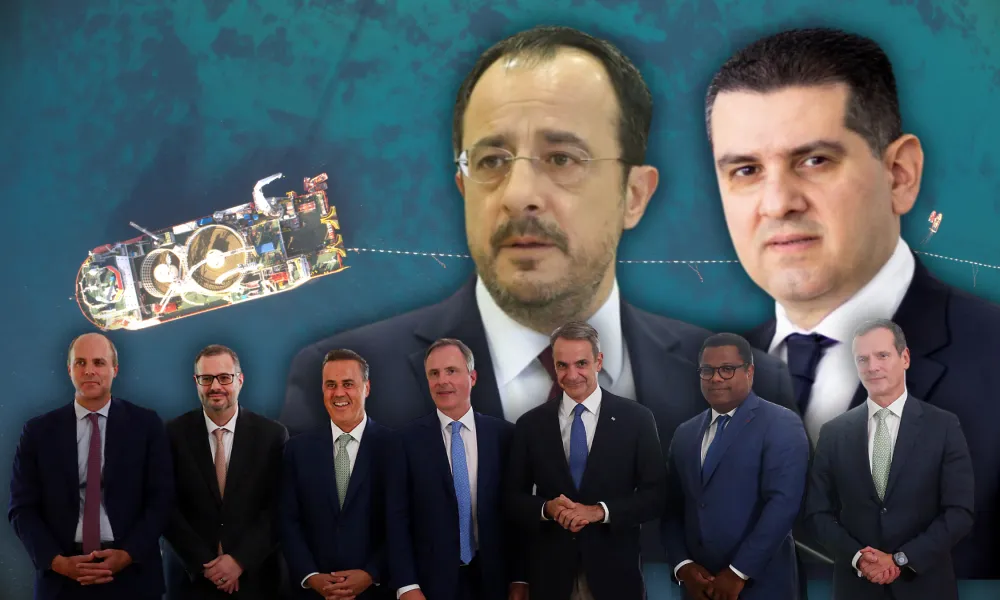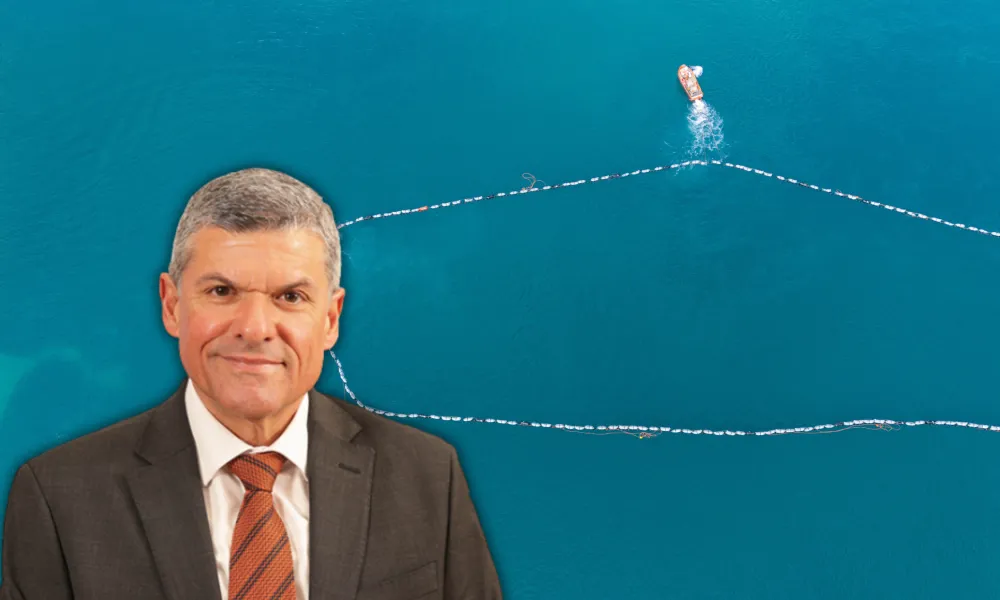

The entry of French investment firm Meridiam into the Great Sea Interconnector marks a significant shift in the project’s financial and geopolitical prospects, according to former Energy Minister Giorgos Papanastasiou.
Speaking to Politis 107.6 and the programme Defteri Matia, he urged the Republic of Cyprus to seek a role in the project, warning that remaining outside would allow others to make decisions affecting the country.
Meridiam investment ‘a vote of confidence’
Papanastasiou said the agreement did not come as a surprise, noting that the project promoter had long been seeking major investors capable of supporting infrastructure of this scale.
He described Meridiam as a large French investment fund backed by institutional investors, including pension funds and major private investors, with a presence in energy, transport and other infrastructure projects across Europe, Africa and North America.
The agreement followed discussions between Meridiam and Greece’s Independent Power Transmission Operator, known as IPTO or ADMIE. Papanastasiou also highlighted that the deal leaves open the possibility of additional investors joining the project.
According to the former minister, the involvement of a major investment fund amounts to “a vote of confidence” in both the project and the Eastern Mediterranean.
Large investors, he said, examine not only potential financial returns but also the technical and geopolitical risks surrounding a project before committing capital.
Discussions held behind closed doors
Asked whether the Cypriot government had been aware of the negotiations, Papanastasiou said he did not know whether Nicosia had received information while the discussions were under way.
He noted, however, that ADMIE is the project promoter and that negotiations of this nature are generally conducted privately.
“These agreements and discussions do not take place in public. They are held behind closed doors and, once an agreement is reached, the doors open and announcements are made,” he said.
He added that it was reasonable for the Greek government to have been among the first parties informed because of its relationship with ADMIE. The agreement was announced in the presence of the Greek Prime Minister.
Financial, technical and geopolitical challenges
Papanastasiou identified three main categories of challenges facing the Great Sea Interconnector: financial, technical and geopolitical.
Meridiam’s entry, he said, begins to ease the project’s financial difficulties by bringing a major private investor into the arrangement. Technical challenges, including the laying of the cable in deep waters, will have to be addressed by the specialist companies involved.
The geopolitical challenge remains, although Papanastasiou argued that it is closely connected to the project’s financial dimension.
“Economic interests and geopolitical interests are linked, particularly in the energy sector,” he said.
He added that the interconnector should not be viewed solely as a link between Cyprus and Greece, but as part of a wider strategy to connect the Eastern Mediterranean with Europe.
Papanastasiou also referred to broader plans for energy connections stretching from regions further east, including India, towards European markets.
“The Great Sea Interconnector is a major opportunity to connect all these plans, moving from east to west and specifically towards Europe,” he said.
Cyprus urged to participate
Papanastasiou reiterated the position he held while serving as energy minister, arguing that Cyprus should participate directly in a project with major implications for its energy future.
“My personal view is that the Republic of Cyprus should participate in the project so that it can be part of developments, rather than allowing others to make decisions for the Republic of Cyprus,” he said.
Asked whether the government should actively pursue participation, he replied that Cyprus must be involved as the project acquires a wider regional and European dimension.
“If we remain outside this system, others will simply make the decisions,” he warned.
How the interconnector would operate
The former minister also rejected the suggestion that the interconnector would oblige Cyprus to import electricity regardless of domestic needs.
He said the Cyprus Energy Regulatory Authority would be able to determine how the connection is used, depending on domestic production and demand.
If Cyprus produces sufficient electricity at competitive prices, domestic generation could cover local consumption and any surplus could be exported through the cable. When domestic production is insufficient, electricity could instead be imported.
This, he said, is the purpose of interconnections within the wider European grid: to carry electricity from areas where it is produced to those where it is needed.
“Cyprus cannot keep saying no,” Papanastasiou said. “It must overcome any fears it has and examine the current situation with a clear mind. The environment has changed.”
He argued that the involvement of a major investment fund from a country with considerable influence in the Eastern Mediterranean represents a new factor that should prompt Cyprus to reassess its position.
Why 2029 matters
Papanastasiou also highlighted the project’s timetable, noting that the interconnector, previously known as the EuroAsia Interconnector, was originally expected to be operational by 2026.
Delays, further studies and objections have since pushed the target to 2029.
That year is particularly important for Cyprus because derogations allowing the operation of polluting and costly thermal power units are due to expire, he said.
The interconnector is also included in the Republic of Cyprus’ National Energy and Climate Plan submitted to the European Commission.
If the project is not completed, Papanastasiou said, Cyprus would have to reconsider a significant part of its energy strategy.
“If this electricity interconnection does not go ahead, then the National Energy and Climate Plan will have to be redesigned,” he said.