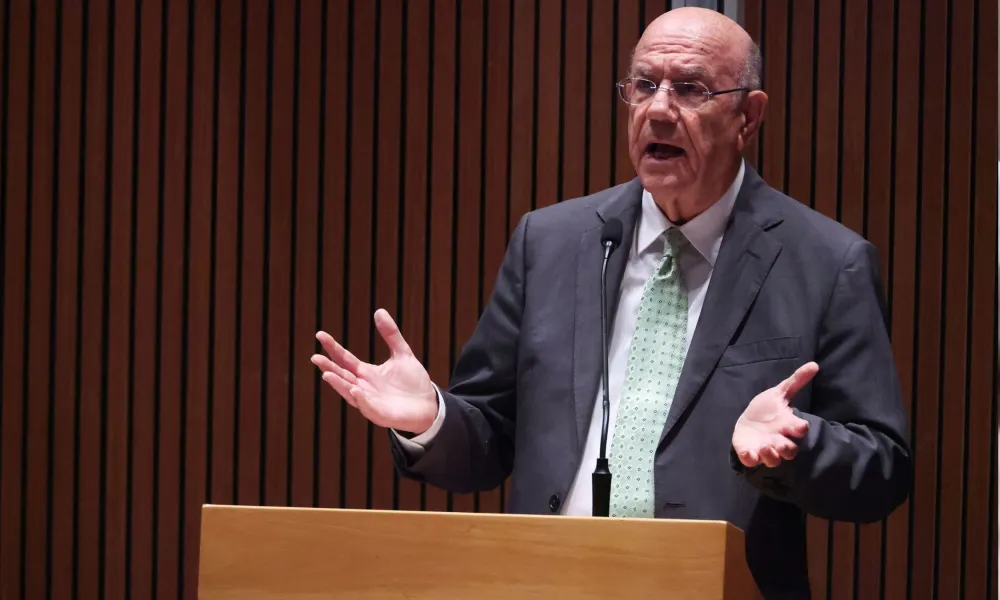

The Cypriot government is seeking specific exemptions and derogations from European Union rules in an effort to introduce additional measures to reduce energy costs for households and businesses.
Announcing a new support package on Wednesday, which together with existing measures amounts to approximately €160 million, Finance Minister Makis Keravnos said discussions had already begun with the European Commission on both energy taxation and public spending limits.
Push for lower heating oil tax
One of the government's main priorities is heating oil.
Although the Council of Ministers has already approved a reduction in excise duty from 7.4 cents to 2.1 cents per litre between 1 November 2026 and 30 April 2027, reaching the minimum level currently permitted under EU rules, Keravnos said Cyprus has requested a special derogation from the Commission.
The aim is to secure approval to reduce the tax even further, providing additional relief for households during the winter months.
Cyprus challenges VAT-on-tax practice
The government is also pursuing changes related to electricity bills.
Cyprus is challenging what it describes as the practice of imposing VAT on other taxes included in Electricity Authority of Cyprus bills.
Keravnos said discussions with the European Commission were under way in an effort to demonstrate that the practice should not continue.
The issue was also raised during his recent meeting with the relevant European commissioner at the ECOFIN Council, where Cyprus requested targeted relief measures in light of ongoing regional crises.
Concerns over EU spending ceilings
Beyond energy taxation, Keravnos also voiced concerns about the EU's revised economic governance framework, which has applied since July 2024.
While acknowledging the value of fiscal rules in preventing excessive public spending, he argued that current expenditure ceilings have a disproportionately restrictive impact on economies such as Cyprus.
With public debt reduced to 49% of GDP and expected to fall towards 45% by the end of the year, while the state budget is on track to record a fourth consecutive annual surplus, Cyprus believes it should have greater flexibility.
Keravnos argued that the country is contributing more as a net contributor to the EU budget while at the same time facing restrictions on increasing spending to return some of its budget surpluses to citizens.
Discussions with Brussels continue
The finance minister said he had raised the matter with both the responsible commissioner and the head of the relevant European Commission directorate.
He expressed optimism that, together with several other EU finance ministers, there is growing support for a more balanced approach to the rules.
According to Keravnos, discussions are creating favourable conditions for what he described as a necessary rationalisation of the current framework.