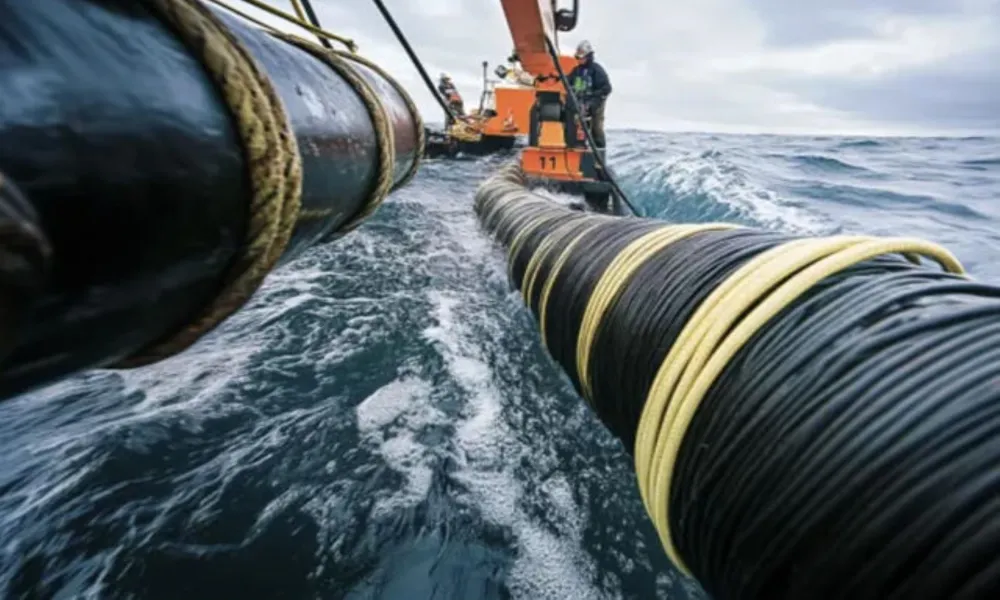

The countdown has begun for seabed surveys linked to the Great Sea Interconnector (GSI), the planned electricity interconnection between Greece and Cyprus, with fresh activity emerging after more than two years of stagnation amid Turkish objections.
The involvement of French investment company Meridiam has injected new momentum into the project. An exemption request has been submitted to Greece's Ministry of Maritime Affairs for the use of the French-flagged vessel Abeille Marengo to conduct marine surveys for the installation of high-voltage direct current subsea cables as part of the interconnection project.
The application is considered the first formal step towards the issuance of a NAVTEX by the Greek authorities for the survey works. The development reinforces earlier reports by Politis that October would be a key month for progress on the NAVTEX process.
Expected response from Turkey
Turkey remains the major uncertainty in the process.
According to assessments cited in the report, an application involving a French-flagged vessel would likely not have been submitted without some form of prior contact with Ankara.
The main, and most favourable, scenario is that the French side will issue a communiqué informing coastal states, including Turkey, about the planned survey activities.
Based on the exemption request, the Heraklion Station of the Hellenic Navy Hydrographic Service is expected to issue a NAVTEX. Turkey could then respond with its own NAVTEX while also replying to the French communiqué.
The cable route passes through areas where the continental shelf has not been formally delimited.
Under this scenario, the issue could be managed through separate Greek and Turkish NAVTEX notices without either side departing from its long-standing positions. The absence of agreed continental shelf or Exclusive Economic Zone boundaries does not prevent the execution of such works, while a NAVTEX is regarded as a navigational safety notification rather than an authorisation.
Cyprus expects NAVTEX within weeks
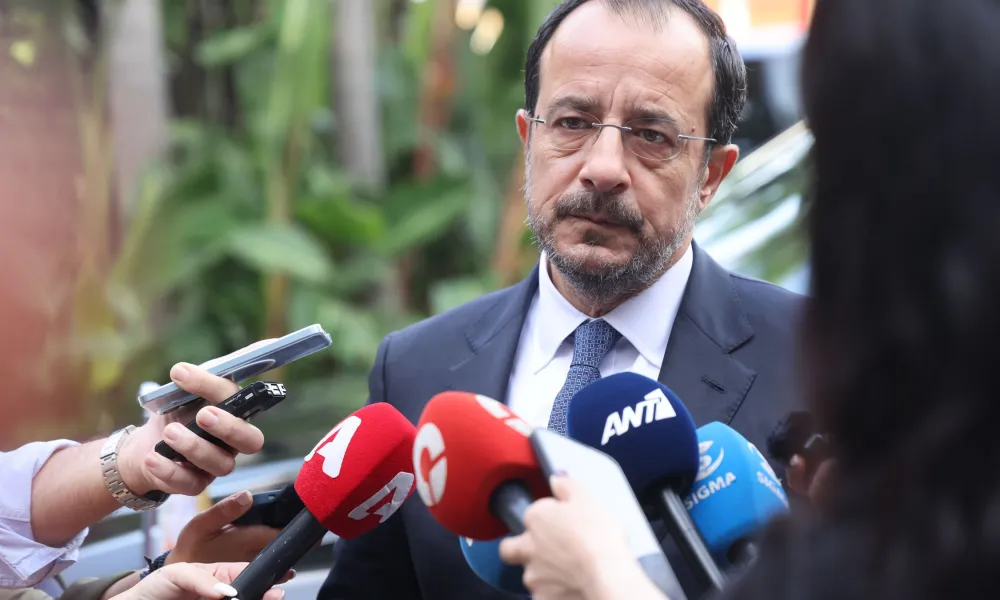
Minister of Energy, Commerce and Industry Michalis Damianos also expects a NAVTEX to be issued within the next two to three weeks, enabling work on the Cyprus-Greece electricity interconnection project to begin.
Speaking on Politis Radio 107.6 & 97.6, Damianos confirmed that once the NAVTEX is issued, the Republic of Cyprus will proceed with the payment of €25 million, in line with the agreement reached with Greece to provide revenue support to the project promoter during the construction phase.
Investment bank study due by year-end
Damianou also said the European Investment Bank's due diligence study on the project is expected to be completed by the end of the year.
The study is regarded as an important milestone for the future financing and implementation of the interconnector, which is intended to link the electricity networks of Cyprus and Greece through a subsea cable system.